
 en
en
 English
What are the symptoms of a bad ac capacitor?
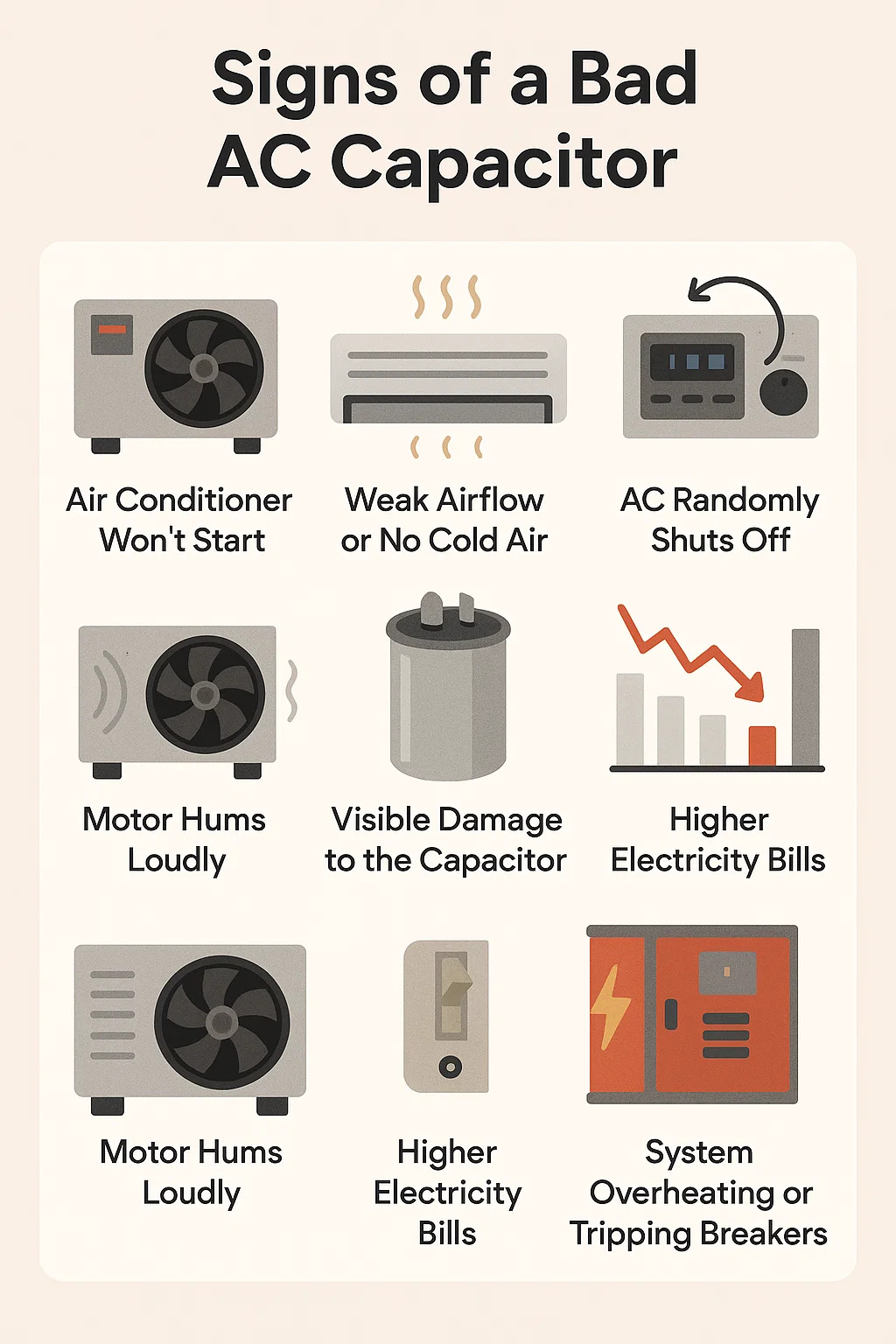
Here are the common signs that an AC capacitor might be going bad or has failed:
1.Air Conditioner Won't Start or Struggles to Start:
This is a very common symptom. You press the thermostat for cool air, hear a faint humming or buzzing sound from the outdoor unit (condenser), but the fan doesn't spin up and the compressor doesn't kick on. It's like the motor is trying to move but just can't get going. The capacitor provides the essential initial "jolt" needed for startup.
2.Weak Airflow or No Cold Air:
The outdoor fan might be running, but the air coming from your indoor vents isn't cold. This could happen if the compressor, which is also powered through the capacitor circuit, fails to start due to a weak or failed capacitor. Even if the fan runs, the system can't cool without the compressor.
3.Air Conditioner Randomly Shuts Off:
Your AC system might run for a while but then unexpectedly turn itself off before reaching the set temperature. A failing capacitor can cause the system to overheat or trip internal safety mechanisms because components like the compressor or fan motor aren't getting consistent power.
4.Outdoor Fan Isn't Spinning:
You look at your outside unit while the AC is supposed to be running, and the fan blades are completely still. Sometimes the compressor might be running (you'll hear it), but without the fan spinning to expel heat, the system can't cool properly and will shut down to prevent damage. The fan motor relies heavily on its capacitor.
5.Motor Hums Loudly or Buzzing Noise:
A persistent, loud humming or buzzing sound coming from the outdoor unit, especially when trying to start or while running, is a strong indicator. This noise often comes from the compressor or fan motor straining because the capacitor isn't providing the necessary boost to keep them running smoothly.
6.Visible Damage to the Capacitor:
If you feel comfortable (and SAFELY - power OFF!) looking at the capacitor inside the outdoor unit's electrical panel, you might see physical signs:
Bulging or Swelling: The top or sides of the cylindrical capacitor look rounded, domed, or swollen instead of flat. Think of a battery that's puffing up.
Leaking Oil: Capacitors contain insulating oil. If you see any dark, oily residue around the bottom or base of the capacitor, it's a clear sign it's leaking and failed. It might look like tar or thick grease.
Burnt Smell or Marks: Sometimes you might smell a faint electrical burning odor near the unit, or see scorch marks on the capacitor itself.
7.Higher Than Usual Electricity Bills:
A struggling capacitor forces the compressor and fan motors to work much harder than they should. This inefficiency uses significantly more electricity. If your bills jump up unexpectedly during cooling season without other obvious reasons, a bad capacitor could be a culprit.
8.System Overheating and Tripping Breakers:
Because a failing capacitor makes motors work harder and get hotter, the entire outdoor unit can overheat. This excess heat can cause the unit's internal overload protector to shut it down or even trip the circuit breaker at your home's main electrical panel.

- Tel: +86-13600614158
- E-mail: mina@cxriyi.com
- Address: Zonghan Street,Cixi City, Zhejiang Province, China.
Copyright © CIXI RIYI CAPACITOR FACTORY
All Rights Reserved.
