 en
 English

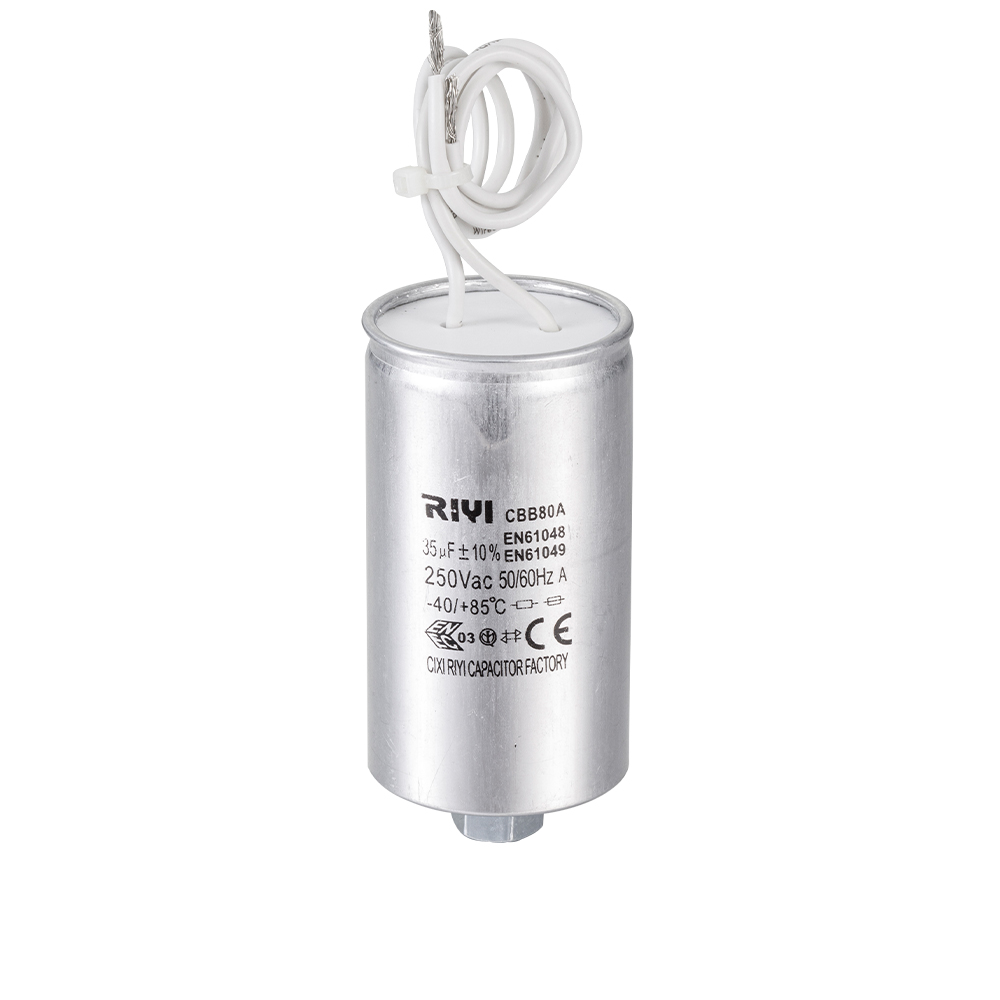
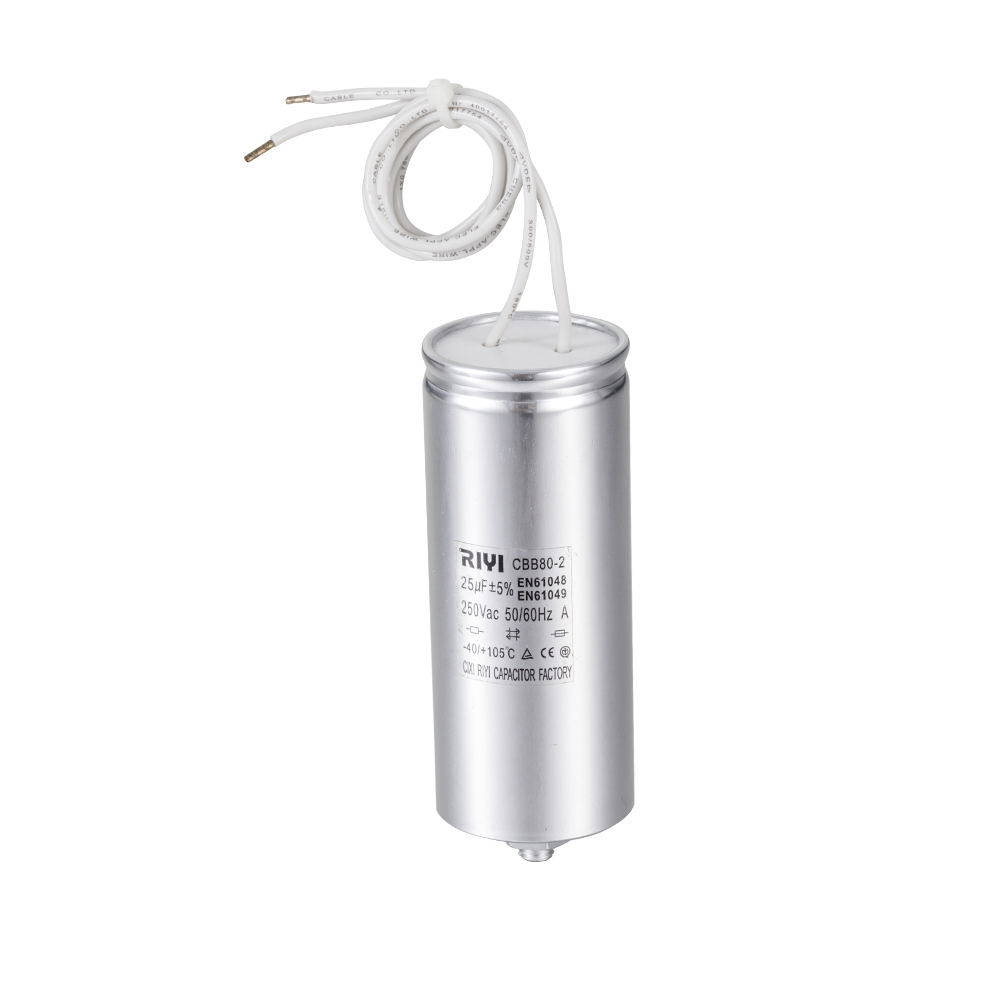
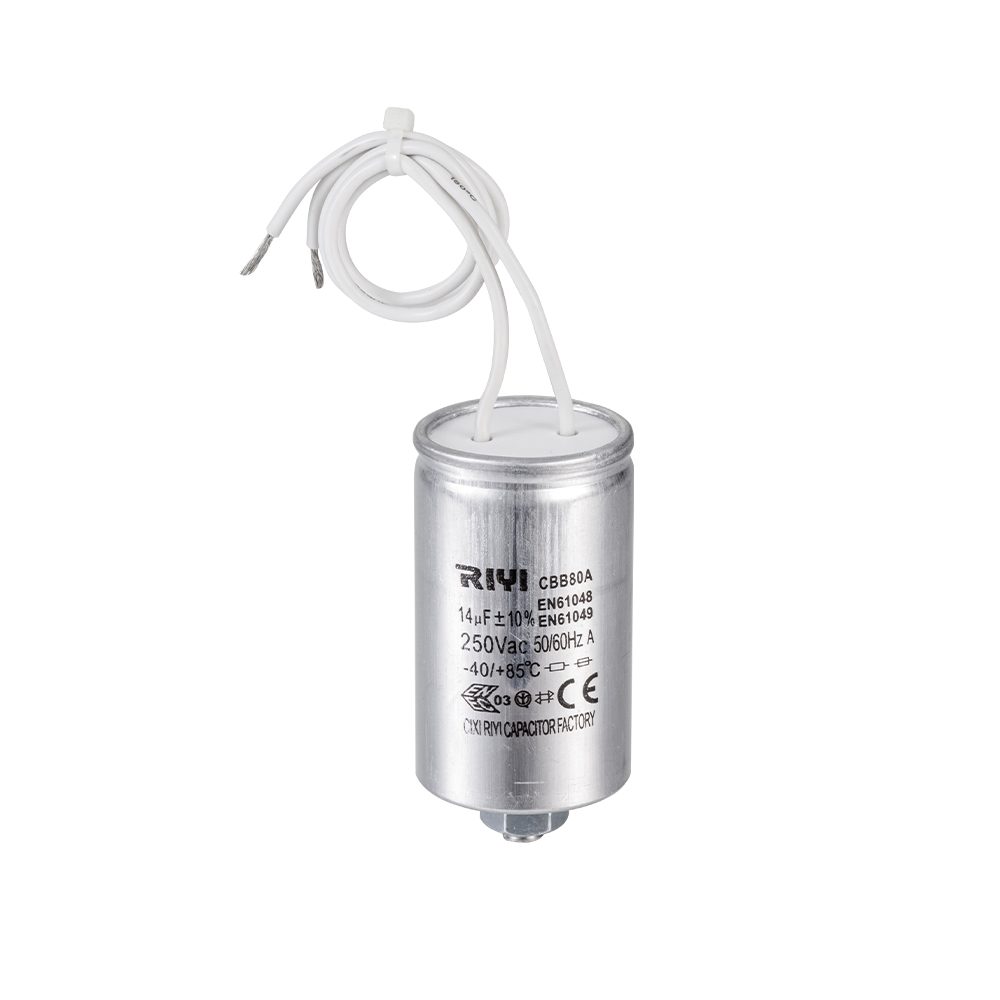
As China cbb80 lamp power factor aluminum housing compensation capacitor suppliers and ac cbb80 aluminum housing compensation capacitor factory, CIXI RIYI CAPACITOR FACTORY is a professional enterprise specializing in the production of AC motor capacitors, compensation capacitors for lighting fixtures, filters, and other products. The company is located on the south bank of Hangzhou Bay Bridge, where traffic is very convenient.
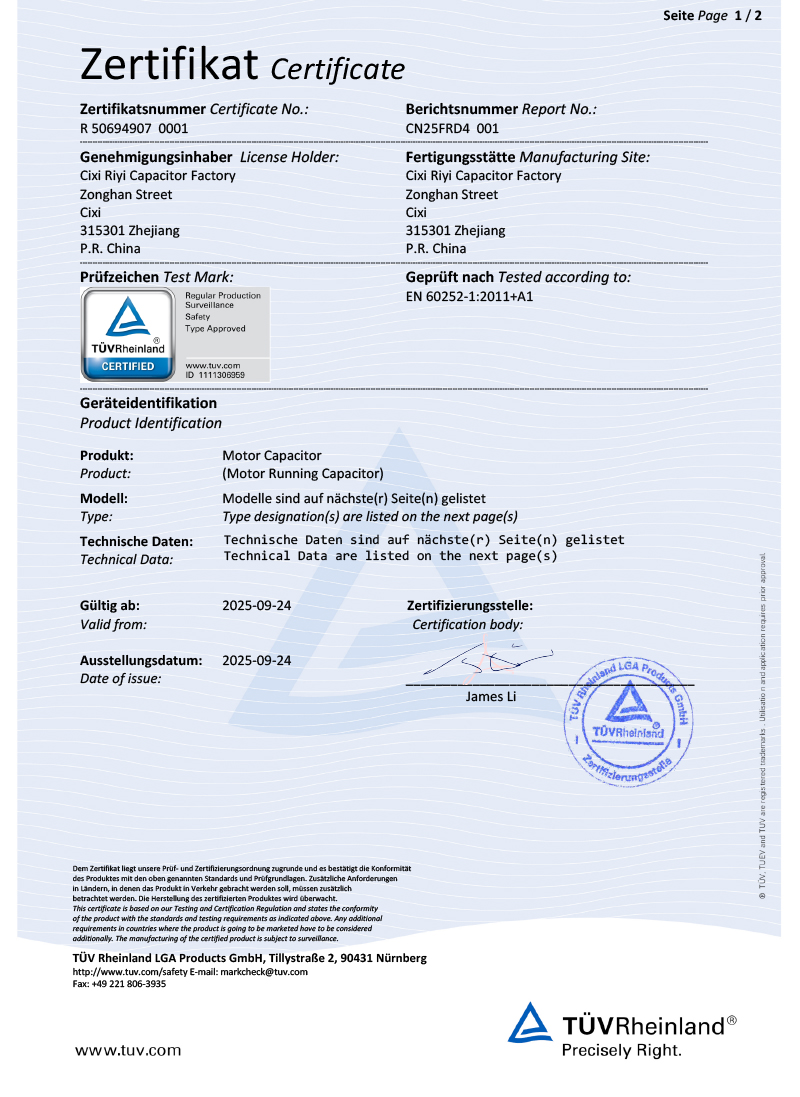
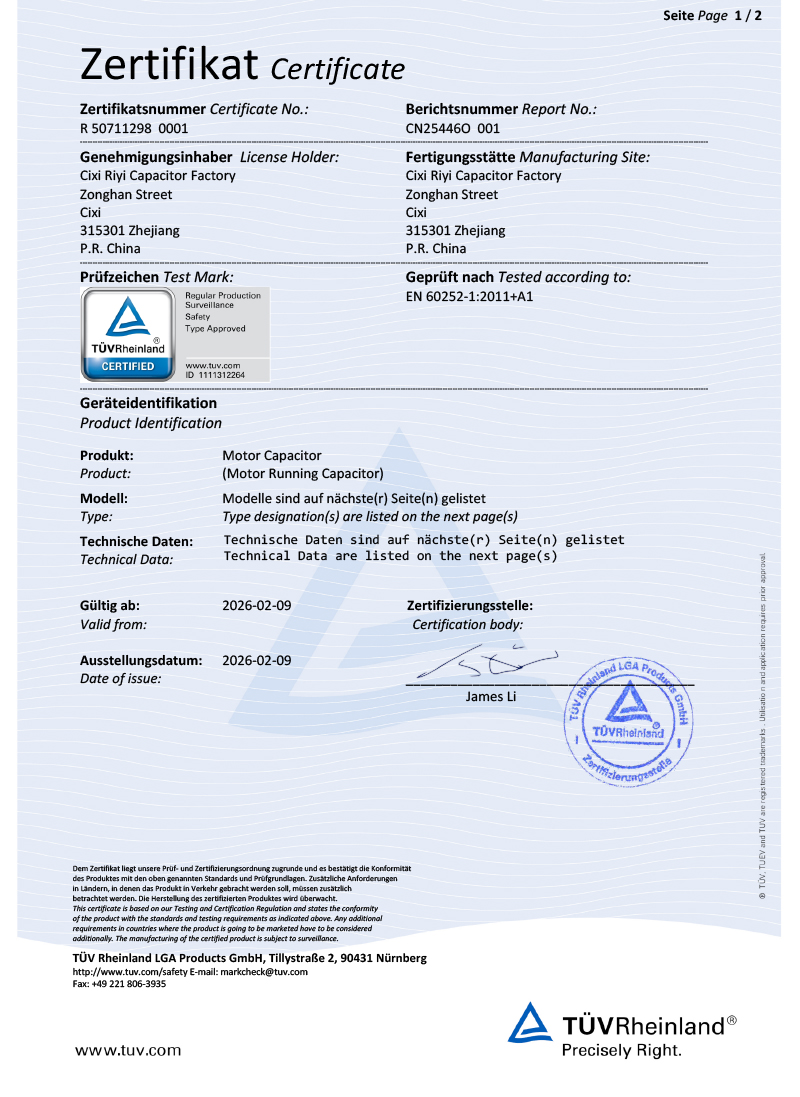
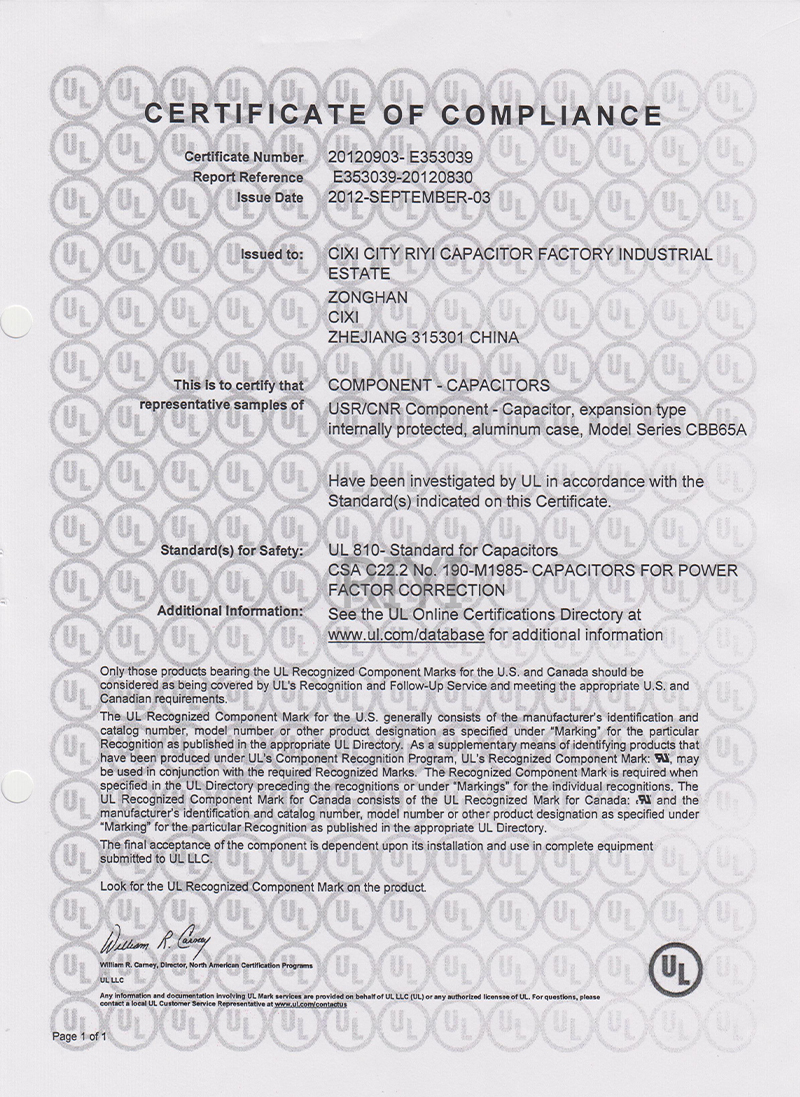
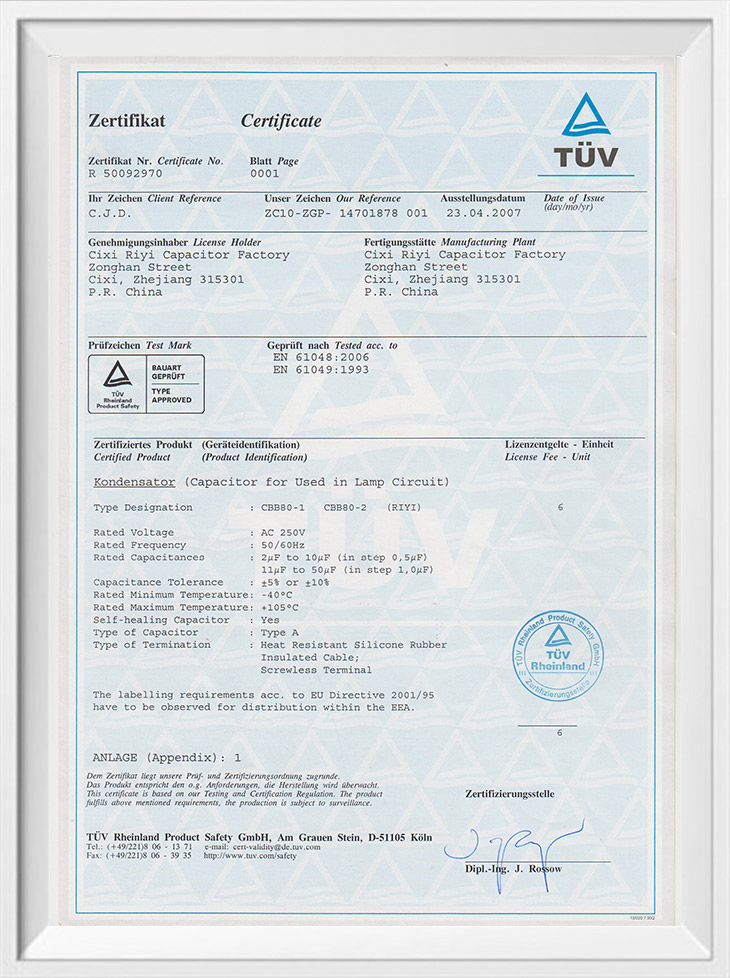
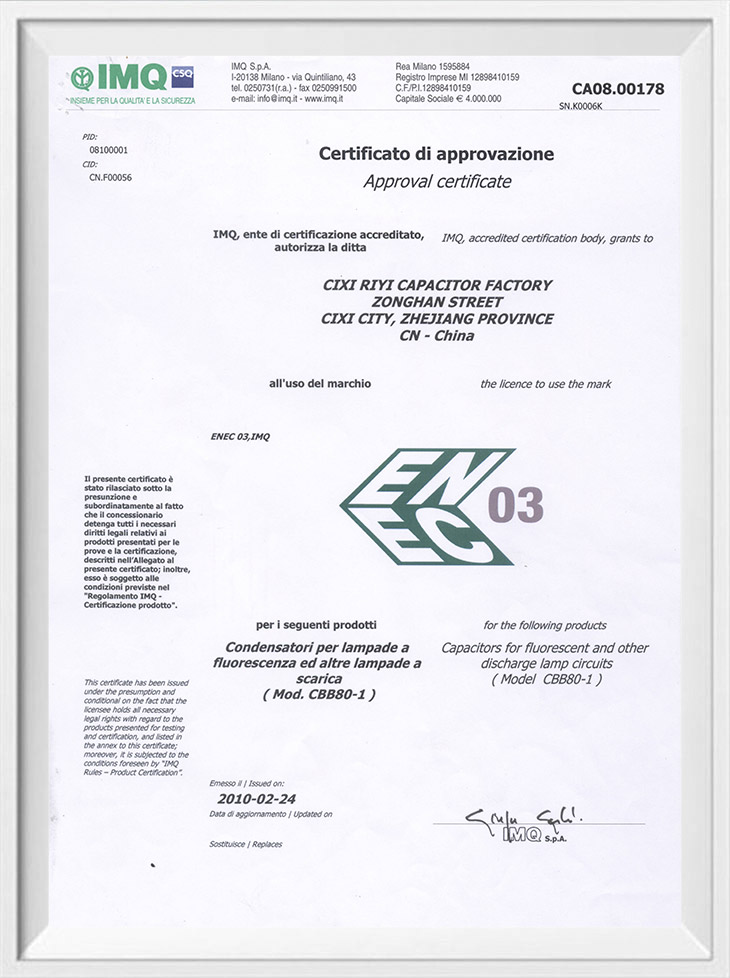
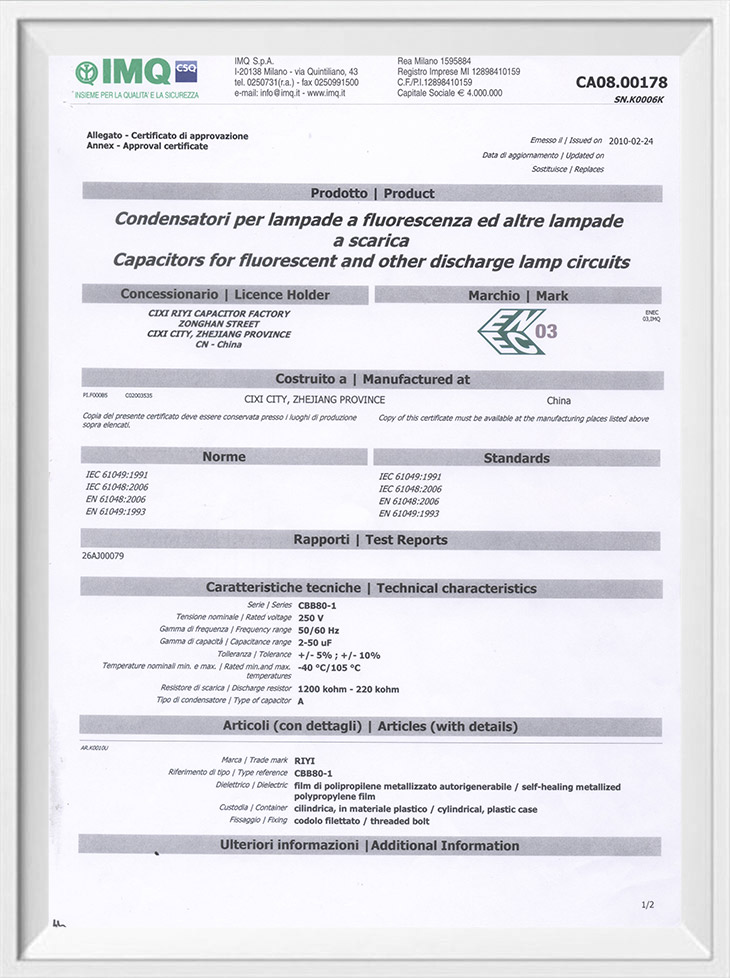
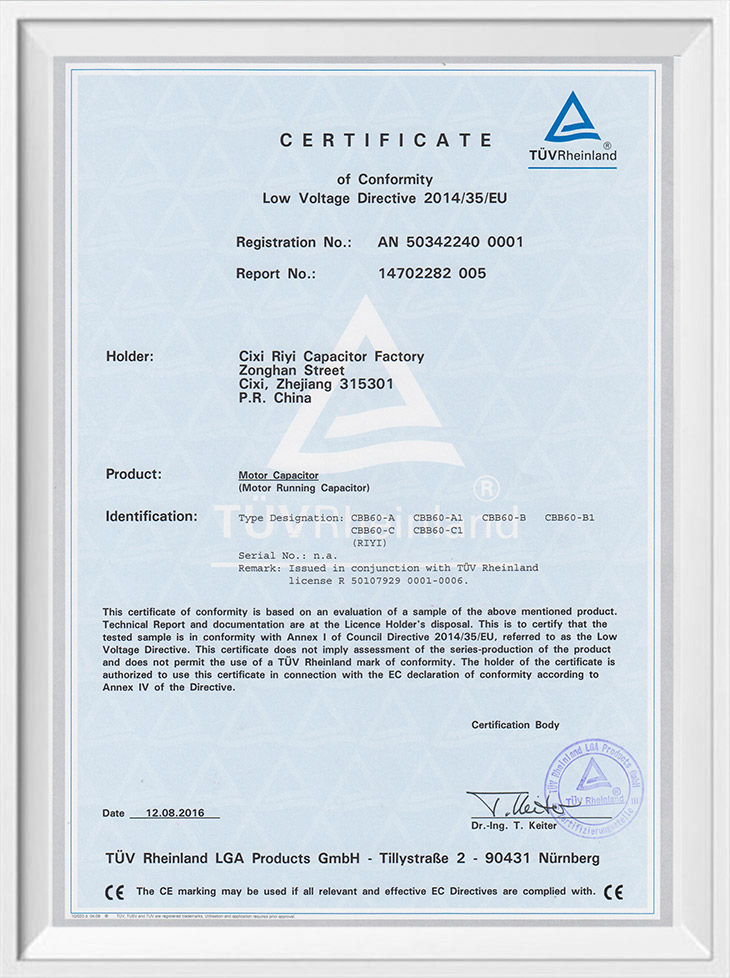
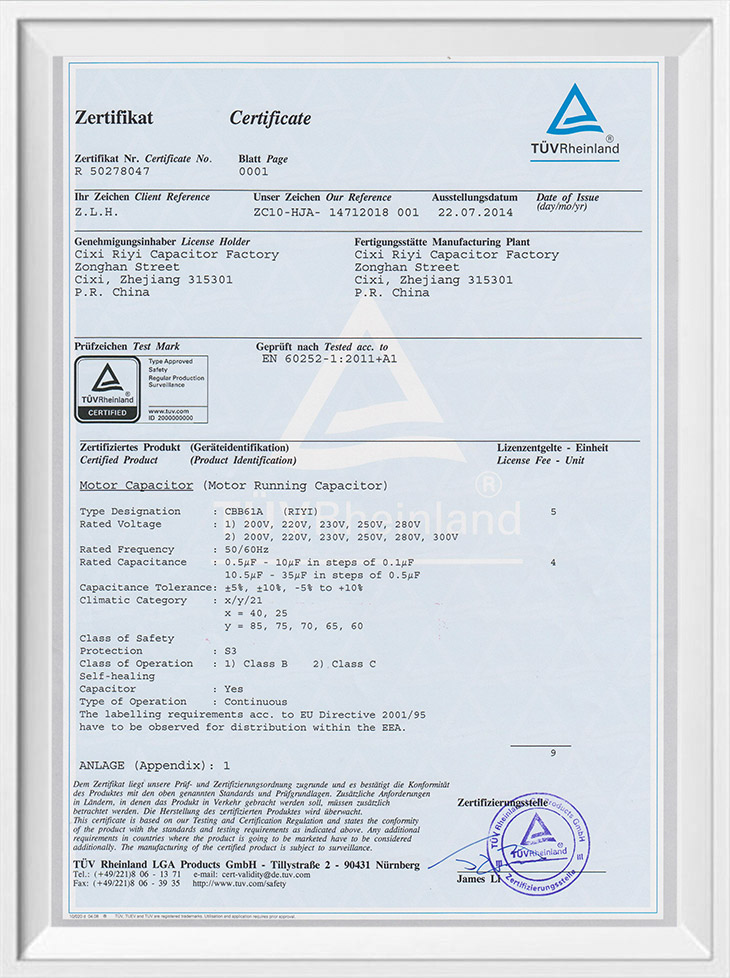
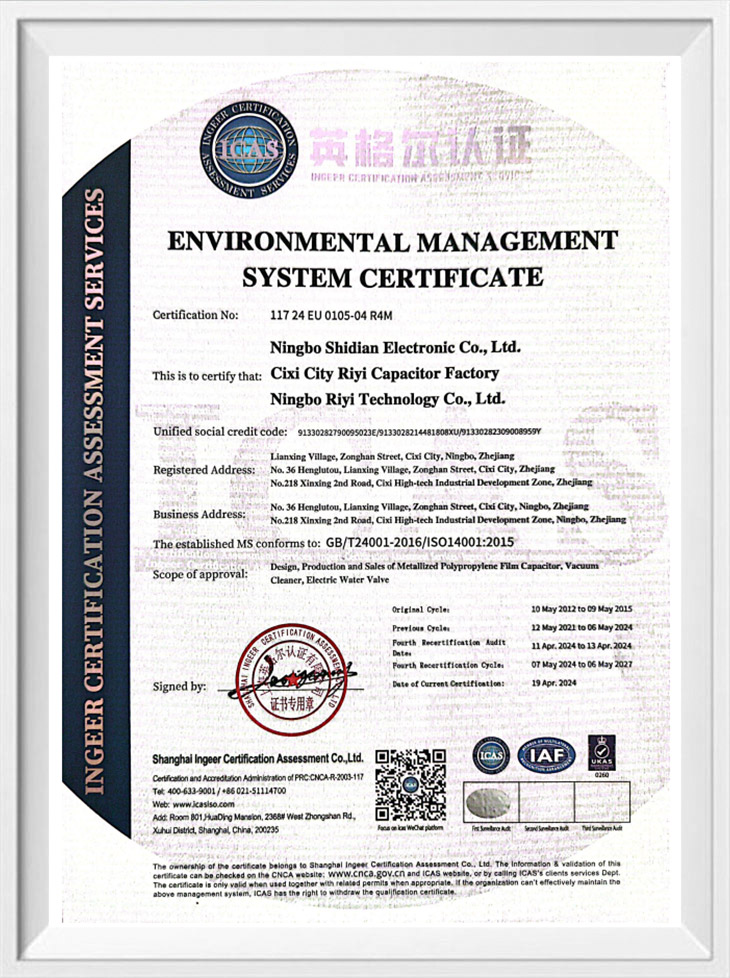
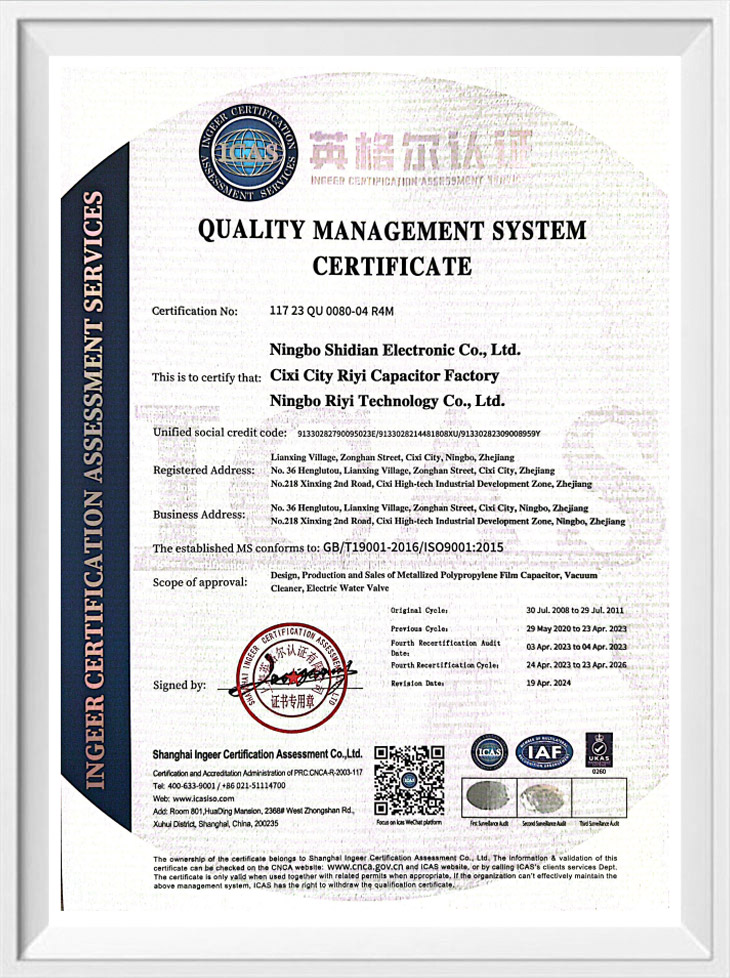
The company has 25,000 square meters of industrial plants and production for the workshop. Has strong technical force, advanced equipment, exquisite workmanship, and perfect detection means. It is market-oriented and based on the principle of meeting the customer's needs, while researching and producing a series of products. It had passed the ISO9001 quality management system and the ISO14001environmental management system certification, and all kinds of products have obtained certificates such as CQC, TUV, VDE, IMQ, UL, CE, etc.
Since its inception, the company has worked hard, strives for excellence, and with utmost dedication, it serves the electronics industry, power industry, household electrical appliance industry, and provides support services for high-tech enterprises. And as a result, we won the trust of our customers and became a well-known enterprise at home and abroad.
RIYI looks forward to working with your cooperation and creating a better tomorrow!

Cbb80 Lamp Power Factor Aluminum Housing Compensation Capacitor Suppliers
Aluminum Housing is the metal-shell group inside our CBB80 Lamp Power Factor Compensation Capacitor range. These capacitors provide power compensation for lighting, and the aluminum shell models are described as key compensation components for industrial lighting.
Models Listed:
• CBB80 aluminum shell, lead 85℃, with screw, resistance and electric fuse.
• CBB80 aluminum shell, lead 105℃, with screw, resistance and electric fuse.
• CBB80 aluminum shell, VDE silicone wire 85℃, with screw, resistance and electric fuse; this model is designed for power compensation in high-intensity discharge (HID) lamps.
How the Models Differ:
• Temperature rating: 85℃ or 105℃ for the lead versions, and 85℃ for the VDE silicone wire version.
• Wire type: lead or VDE silicone wire.
• All three come with a screw fitting, a resistance and an electric fuse.
Browse Also: Plastic Shell for the plastic-case CBB80 models. Cixi Riyi wholesales these lighting capacitors and develops custom products from your drawings or samples.
CIXI RIYI CAPACITOR FACTORY
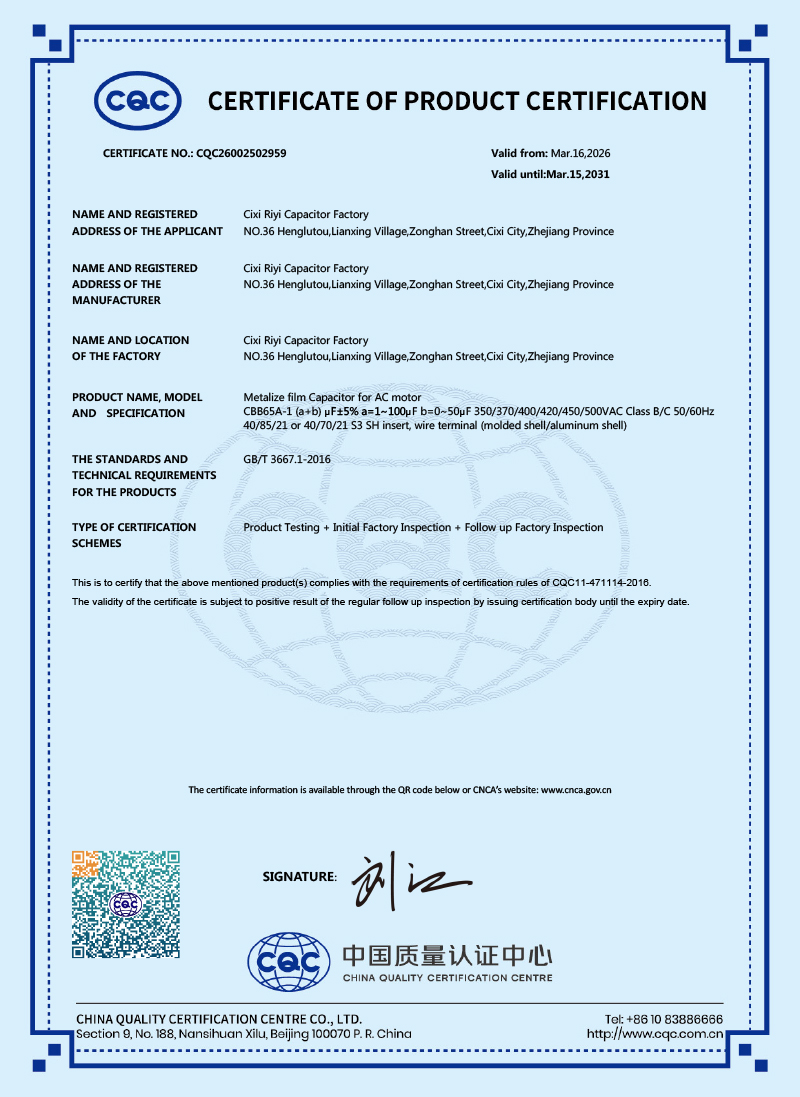
CERTIFICATE OF HONOR
- <
- <
- <
- <
- <
- <
- <
- <
- <
- <
- <
MESSAGE FEEDBACK
Industry knowledge
Cixi Riyi Capacitor Factory: Aluminum-Housing CBB80 Compensation Capacitors
We produce the aluminum-housing branch of our CBB80 lamp power factor compensation capacitor line at our 25,000 m² plant in Cixi, on the south bank of Hangzhou Bay in Zhejiang. These metal-can units compensate the inductive load of lamp ballast circuits, cutting the reactive current a luminaire draws from the mains while holding the lamp operating point steady. Every model in this group, catalogued under Cbb80 Lamp Power Factor Aluminum Housing Compensation Capacitor Suppliers, follows one build logic: self-healing metallized film inside an aluminum alloy housing, screw fitting, discharge resistance and an internal electric fuse.
| 25,000 m²plant and production workshops | 60,000 pcsdaily capacitor output | ISO 9001 / 14001quality and environmental systems | CQC · TUV · VDE · IMQ · UL · CEcertificate sets held by product type |
Three Aluminum-Shell Models in Our CBB80 Range
All three carry the same screw fitting, discharge resistance and electric fuse; the difference is the wire system and the temperature class of the dielectric and lead insulation. Choose by the ambient inside the ballast compartment, not by luminaire wattage alone.
| Model | Temperature rating | Wire system | Built-in protection | Typical fit |
|---|---|---|---|---|
| CBB80 aluminum shell, lead 85 °C | 85 °C | Lead wire | Screw, resistance, electric fuse | Industrial lighting ballast circuits using German-made high-temperature film |
| CBB80 aluminum shell, lead 105 °C | 105 °C | Lead wire | Screw, resistance, electric fuse | Demanding lighting systems with higher internal compartment temperature |
| CBB80 aluminum shell, VDE silicone wire 85 °C | 85 °C | VDE silicone wire | Screw, resistance, electric fuse | Power compensation in high-intensity discharge (HID) lamps |
Luminaires with an insulated case are covered by our Cbb80 Lamp Power Factor Plastic Shell Compensation Capacitor Suppliers range, which uses the same compensation principle in a plastic housing.
| 85 °C class lead and VDE silicone-wire versions |
105 °C class high-temperature lead version |
Reading the Rating: Capacitance, Voltage and Frequency
Rated capacitance is the first number to fix, because it is what sets the compensating current at the ballast operating point. Rated AC voltage is then chosen with margin over the highest sustained mains voltage the luminaire will see, and the temperature class is set by the hottest ambient measured at the capacitor body inside the gear compartment.
- Capacitance and tolerance — declared in µF at the reference frequency and ambient, with tolerance band confirmed on the order.
- Rated AC voltage — continuous sinusoidal rating at 50/60 Hz, matched to the ballast supply.
- Temperature class — 85 °C or 105 °C, referring to the case and wire insulation limit.
- Dielectric and sealing — self-healing metallized polypropylene film, aluminum alloy can, sealed against moisture ingress in outdoor luminaires.
Related build variants across the whole lighting and motor platform are listed under CBB80 Lamp Power Factor Compensation Capacitor Manufacturers.
Compensating Current vs Capacitance
At a fixed mains voltage and frequency, the compensating current rises in direct proportion to capacitance: I = 2πfCU. The bars below are computed at 230 V, 50 Hz to show the relationship a ballast designer works with.
| 10 µF | 0.72 A | |
| 20 µF | 1.45 A | |
| 30 µF | 2.17 A | |
| 40 µF | 2.89 A |
Calculated reference values, not catalogue ratings. Declared capacitance and voltage for each order are confirmed from the drawing.
Where the Aluminum-Housing CBB80 Fits
HID and discharge lightingPower compensation for high-intensity discharge lamps, where the capacitor sits in the ballast circuit and holds the lamp current within its designed range. |
Industrial and high-bay luminairesMetal-shell units for factory, warehouse and area lighting, where heat, vibration and long duty cycles are the governing conditions. |
Outdoor and street lightingSealed aluminum casing and silicone or high-temperature leads suit flood and street fittings exposed to humidity and wide temperature swings. |
The aluminum housing also suits retrofit programmes: the screw fitting and the lead or silicone wire match the mounting points and terminal blocks already used in existing gear trays, so a failed compensation capacitor is replaced without altering the ballast assembly.
Installation, Terminals and Circuit Integration
- Confirm the ambient measured at the capacitor mounting position against the selected temperature class — 85 °C or 105 °C.
- Fix the aluminum can through the screw fitting, keeping the case in contact with the metal tray where the design allows, and leave clearance for heat dissipation.
- Wire the lead or VDE silicone wire to the ballast circuit terminals; silicone insulation is chosen where cable runs pass close to the lamp or choke.
- Keep the discharge resistance and the electric fuse in the circuit. The fuse limits fault current if the film fails, and the resistance bleeds stored charge after the luminaire is switched off.
- Before any service work, discharge the capacitor through a rated resistor and verify with a meter that residual DC voltage has fallen below 1 V.
Production Resources, Quality Control and Certification
| Imported automatic winding machines | 15 | |
| Automatic slitting machines | 11 | |
| Professional technical personnel | 21 | |
| Engineers | 3 |
Bar lengths are scaled to the largest figure shown (25). Daily output reaches 60,000 capacitors with more than 150 employees across the plant.
Our quality system is certified to ISO 9001 and our environmental management system to ISO 14001; product certificates held across the range include CQC, TUV, VDE, IMQ, UL and CE, applied per product type. Incoming film, wound elements, impregnation and finished units move through fixed inspection points, and capacitance, insulation resistance and dielectric withstand are the values normally fixed for acceptance on a lighting capacitor order.
Where a project specifies a particular reference standard or test voltage, we confirm the corresponding declaration against the certificate set that applies to that product type.
Information We Use to Configure Your Solution
| Project input | What we need from you | Why it decides the build |
|---|---|---|
| Lamp and ballast data | Lamp type, wattage, choke inductance | Sets the required compensating current |
| Electrical rating | Mains voltage, frequency, capacitance and tolerance | Fixes the film element and voltage class |
| Thermal condition | Ambient at the capacitor position | Selects 85 °C or 105 °C version |
| Termination | Lead wire or VDE silicone wire, length, screw fitting | Matches gear-tray layout and routing |
| Protection and compliance | Discharge resistance, fuse, required certificate | Defines internal protection and declaration |
| Commercial frame | Annual volume, packing, drawing or sample | Drives tooling, batching and quotation |
Custom Builds, Documentation and Delivery
We develop custom units from customer drawings or samples, including non-standard capacitance values, alternative lead lengths, silicone insulation and specific terminal arrangements. Many of the capacitors in this group install universally, which keeps replacement stock simple across mixed luminaire fleets.
- Engineering review of the drawing before the first production batch.
- Capacitance and voltage data stated on the order confirmation and packing documents.
- Export packing for sea freight from Ningbo, with air shipment where timing is critical.
- Payment by T/T with 30% advance and balance against the bill of lading, or by L/C.
- Established shipments to markets including the United States, Indonesia, the Philippines, Turkey and Egypt.
Alongside the lighting range, we produce motor and pump capacitors; the wider platform is indexed at our AC capacitor range.
Frequently Asked Questions
What separates the 85 °C and 105 °C aluminum-housing models?
Both use the same aluminum shell, screw fitting, discharge resistance and electric fuse. The 105 °C version is built for gear compartments with a higher internal ambient; the 85 °C versions cover standard industrial and HID lighting installations, with the VDE silicone-wire model intended for HID lamp power compensation.
Why does this capacitor carry a screw fitting, a resistance and an electric fuse?
The screw fixing holds the metal can firmly in the gear tray so it resists vibration and conducts heat. The resistance bleeds stored charge once the luminaire is de-energised, and the internal fuse isolates the element if the film breaks down, limiting fault current inside the fitting.
Can you match a capacitance value that is not in your standard list?
Yes. We develop and produce from customer drawings or samples, so a non-standard µF value, a longer lead, silicone insulation or a different terminal layout can be built into the aluminum shell. Send the drawing or a physical sample and we return a configuration with the electrical rating confirmed.
How do I confirm the right voltage rating for a lamp circuit?
Start from the highest sustained mains voltage at the installation and add margin for regulation and transients, then check the temperature class against the measured ambient at the capacitor body. The compensating current follows I = 2πfCU, so capacitance and voltage are fixed together with the ballast design.
Which certificates apply to the aluminum-housing CBB80?
The factory operates under ISO 9001 and ISO 14001, and product certificates held across our capacitor range include CQC, TUV, VDE, IMQ, UL and CE. The applicable set depends on the product type and the rati

CONTACT US
MESSAGE US RIGHT NOW!
QR Code
Quick Links
Our Product
Contact us
- Tel: +86-13600614158
- E-mail: mina@cxriyi.com
- Address: Zonghan Street,Cixi City, Zhejiang Province, China.
