 en
en
 English
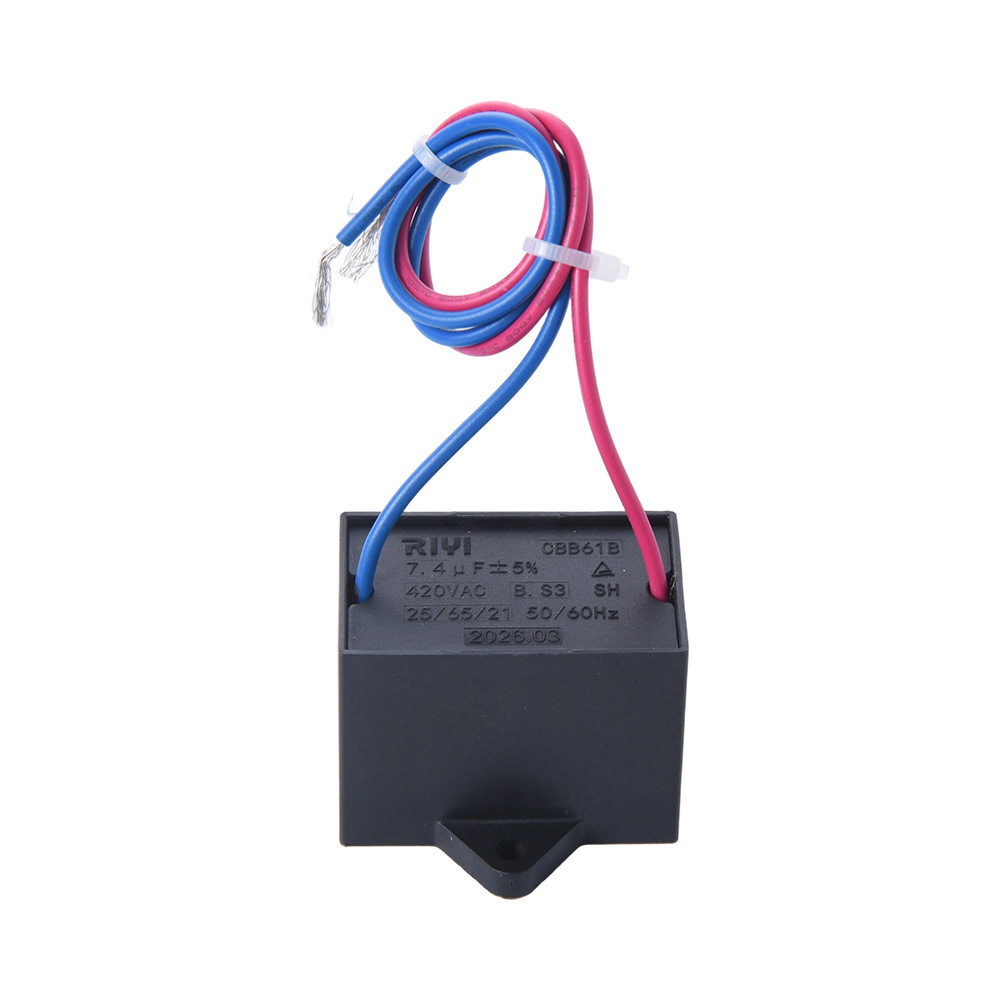
As China ac cbb61 wire lead motor capacitor suppliers and ac cbb61 wire lead motor capacitor factory, CIXI RIYI CAPACITOR FACTORY is a professional enterprise specializing in the production of AC motor capacitors, compensation capacitors for lighting fixtures, filters, and other products. The company is located on the south bank of Hangzhou Bay Bridge, where traffic is very convenient.
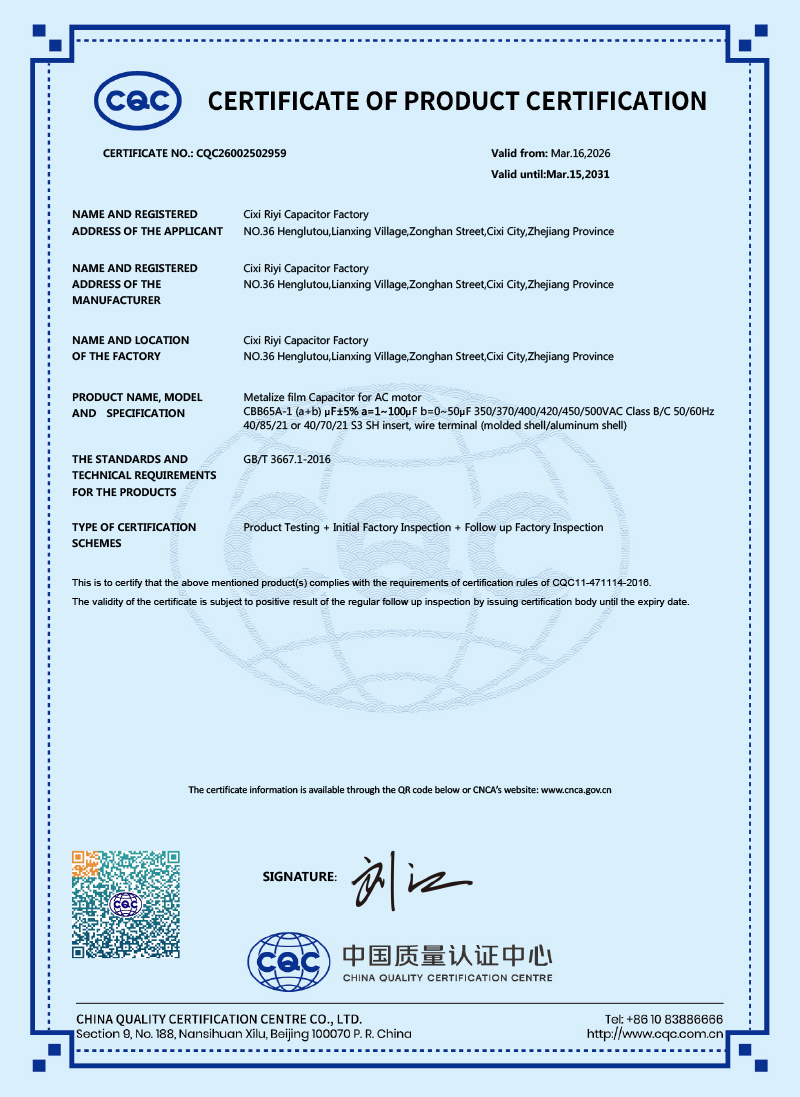
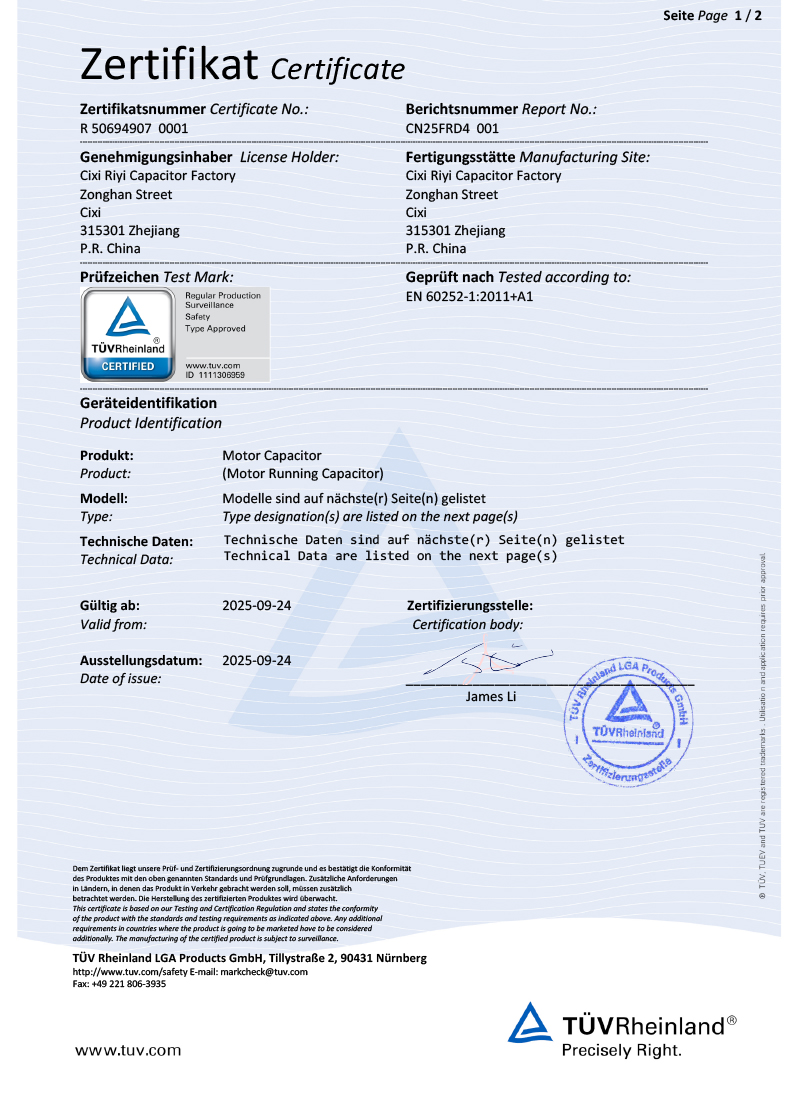
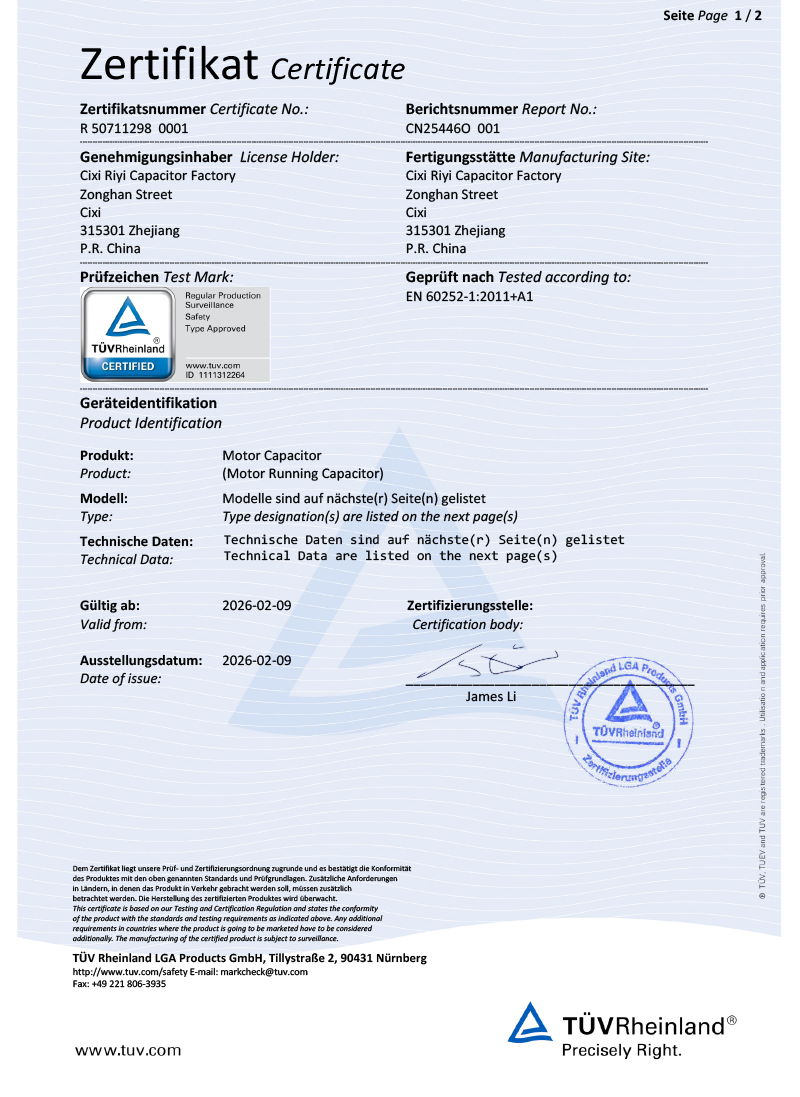
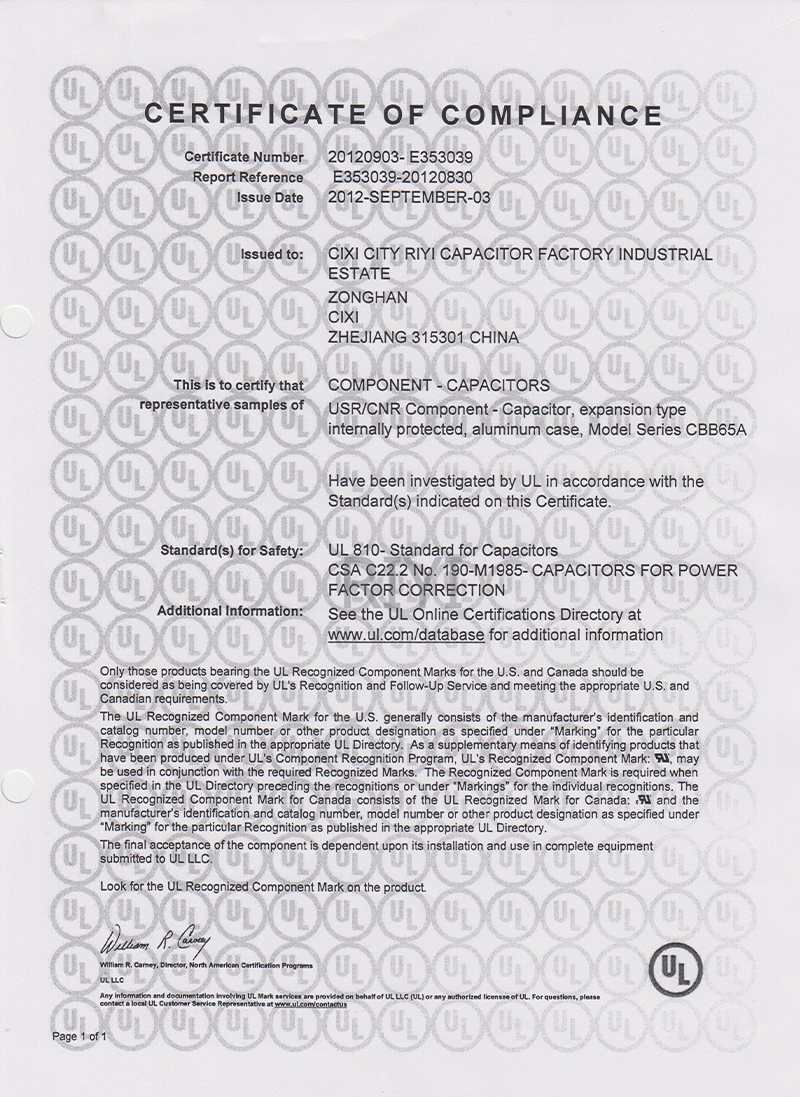
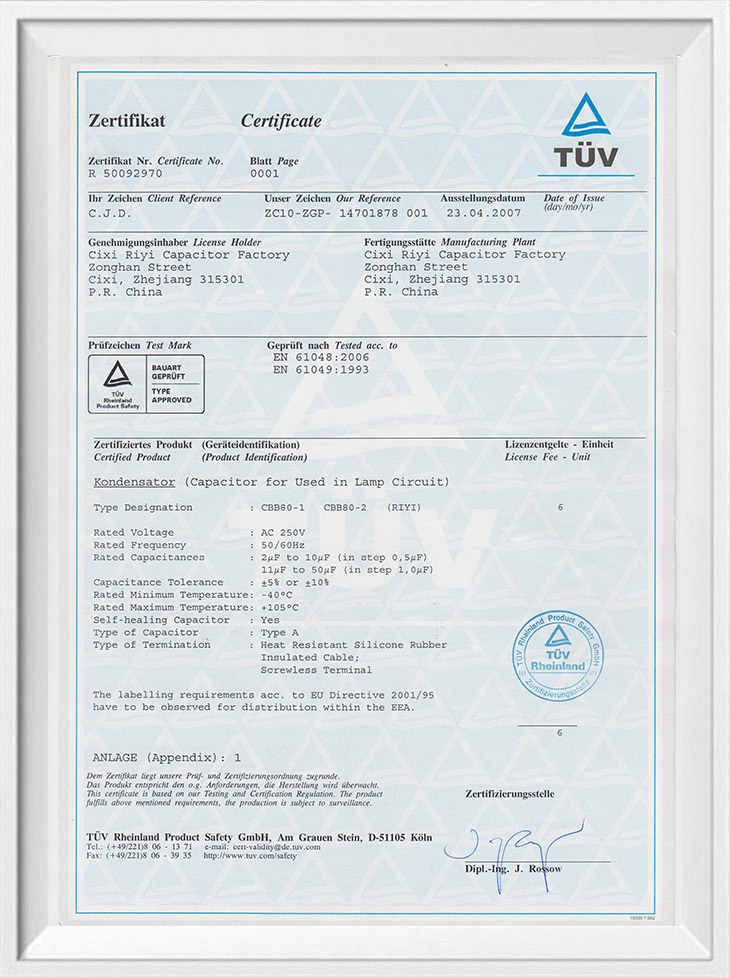
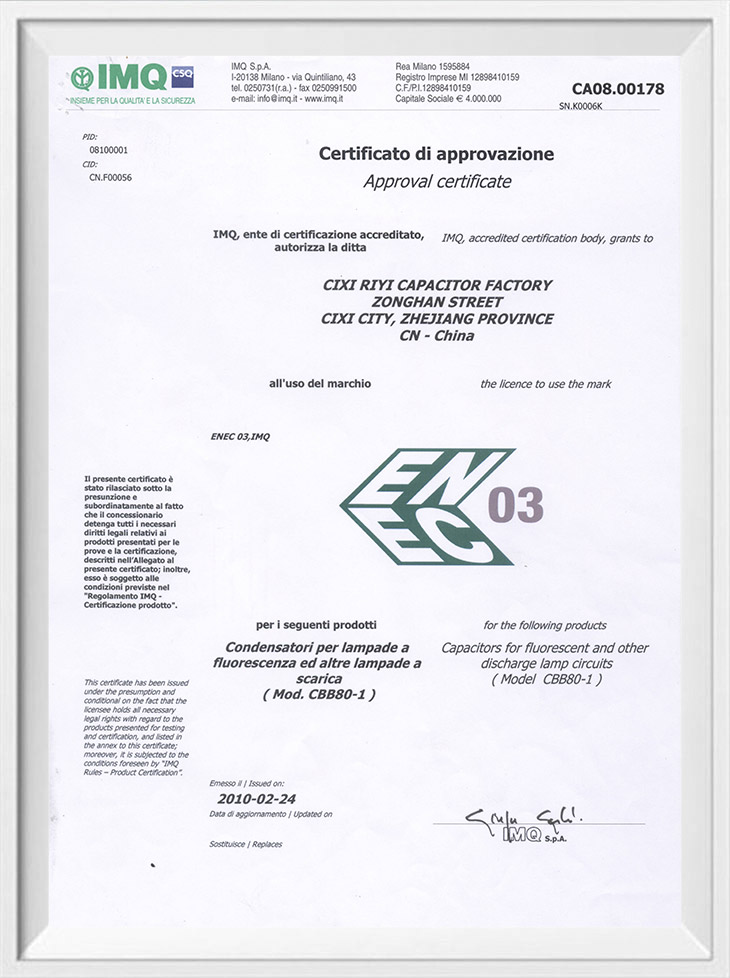
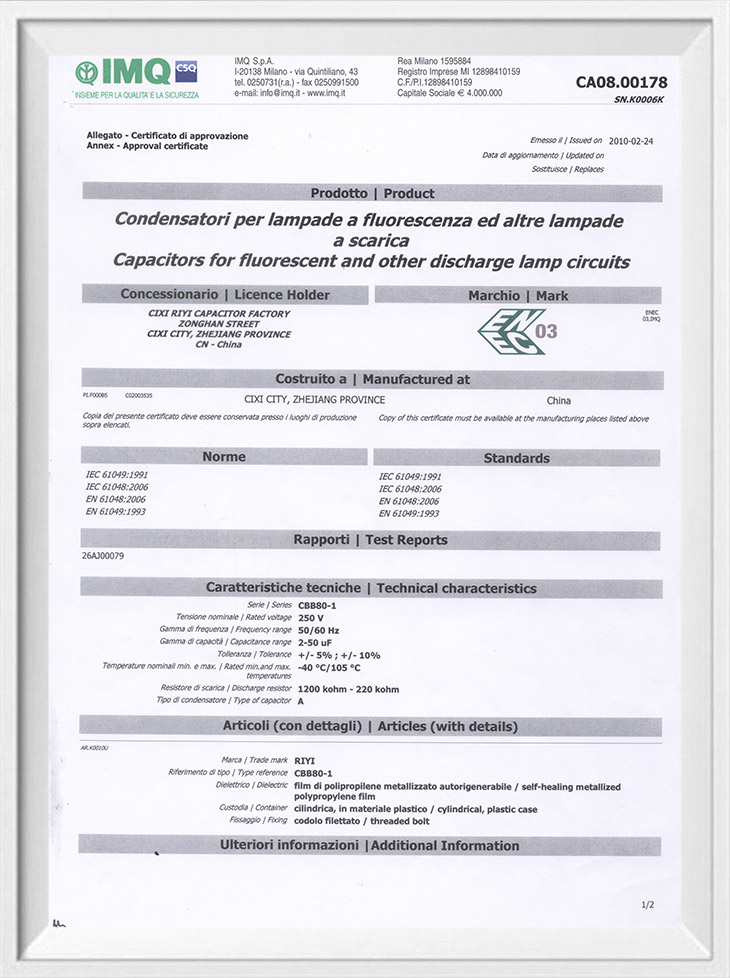
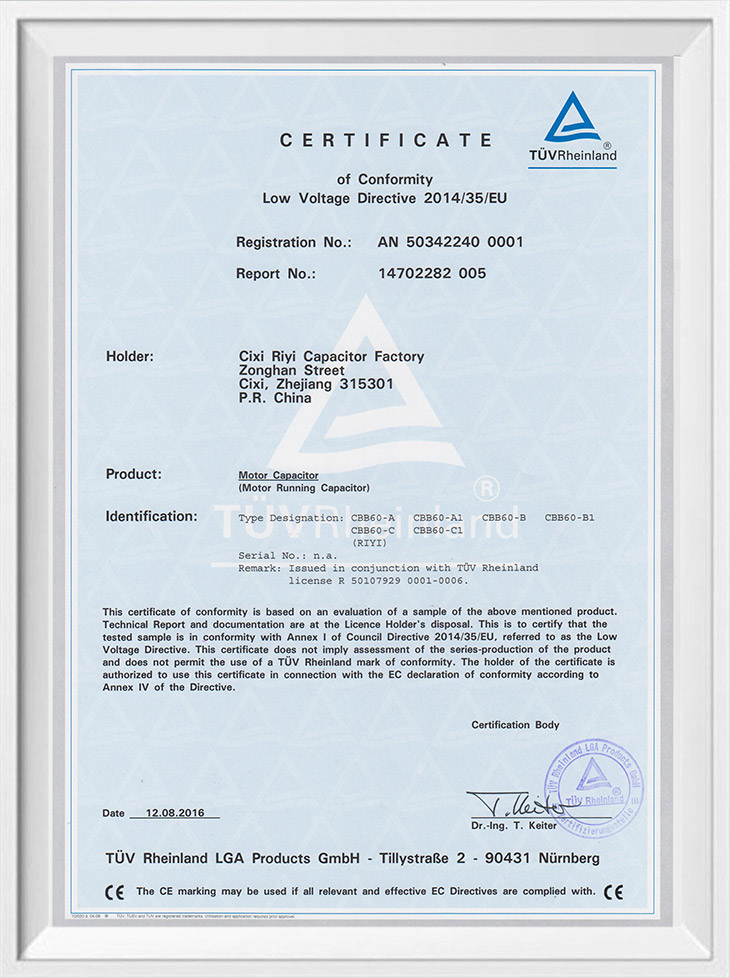
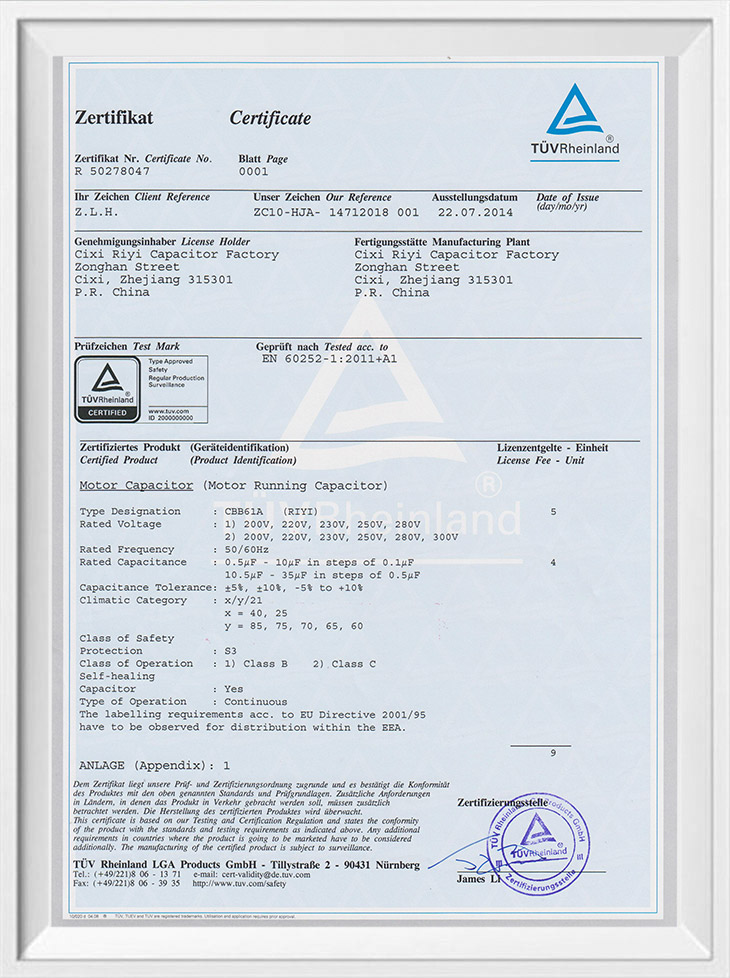
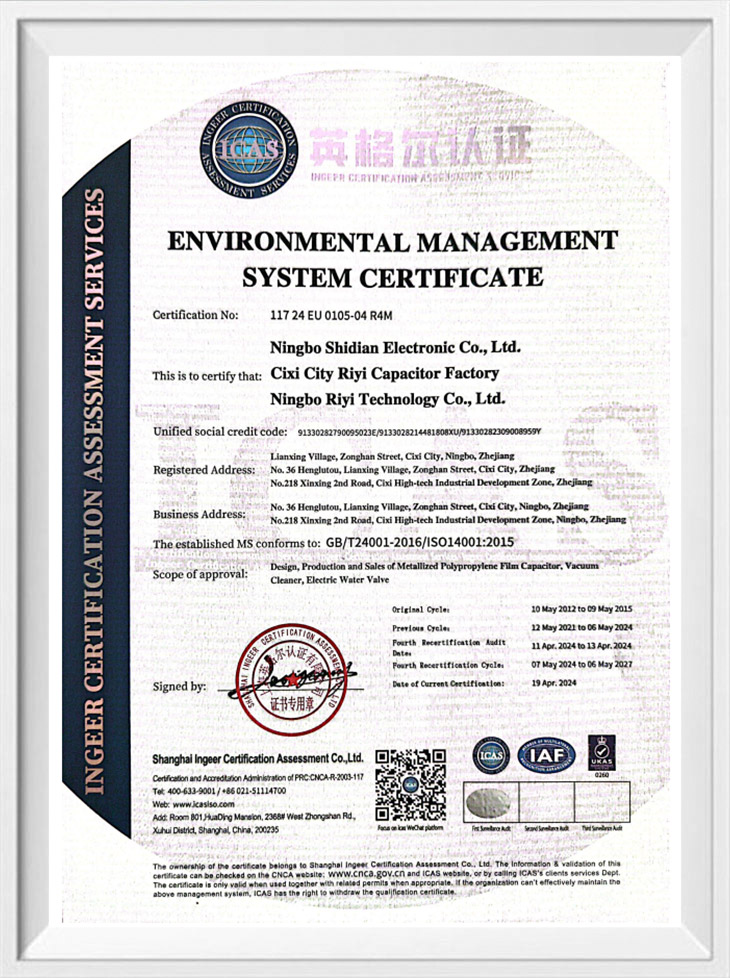
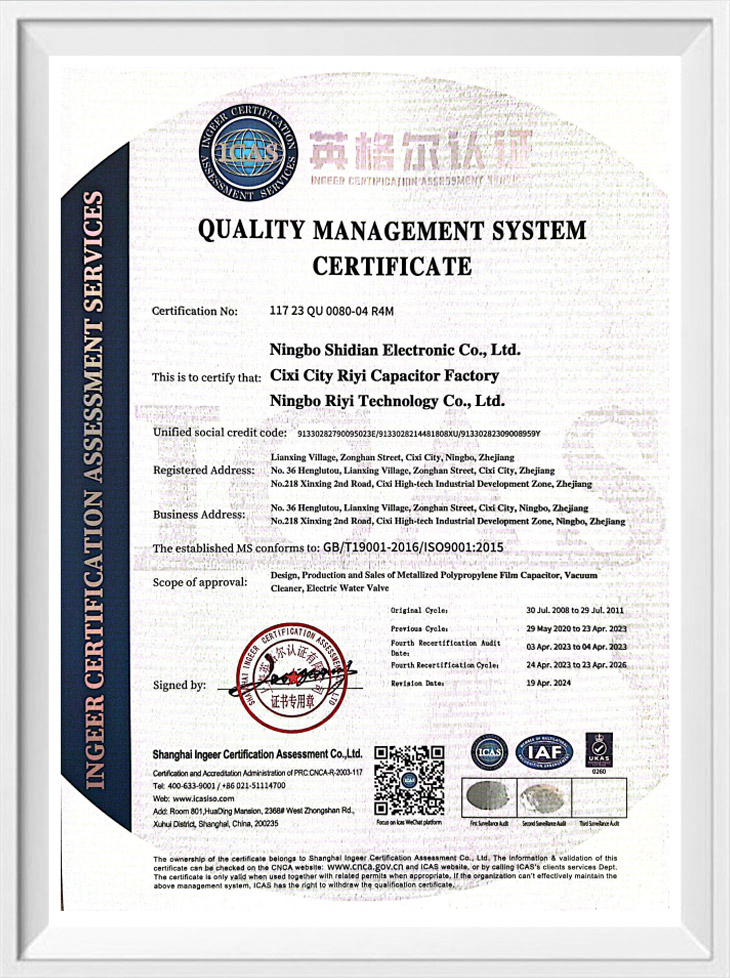
The company has 25,000 square meters of industrial plants and production for the workshop. Has strong technical force, advanced equipment, exquisite workmanship, and perfect detection means. It is market-oriented and based on the principle of meeting the customer's needs, while researching and producing a series of products. It had passed the ISO9001 quality management system and the ISO14001environmental management system certification, and all kinds of products have obtained certificates such as CQC, TUV, VDE, IMQ, UL, CE, etc.
Since its inception, the company has worked hard, strives for excellence, and with utmost dedication, it serves the electronics industry, power industry, household electrical appliance industry, and provides support services for high-tech enterprises. And as a result, we won the trust of our customers and became a well-known enterprise at home and abroad.
RIYI looks forward to working with your cooperation and creating a better tomorrow!

AC Cbb61 Wire Lead Motor Capacitor Suppliers
Lead is the wire-lead group inside our CBB61 Square Motor Capacitor range, the CBB61 fan capacitor line from Cixi Riyi. Every model listed here is an explosion-proof S3 lead capacitor.
Models Listed:
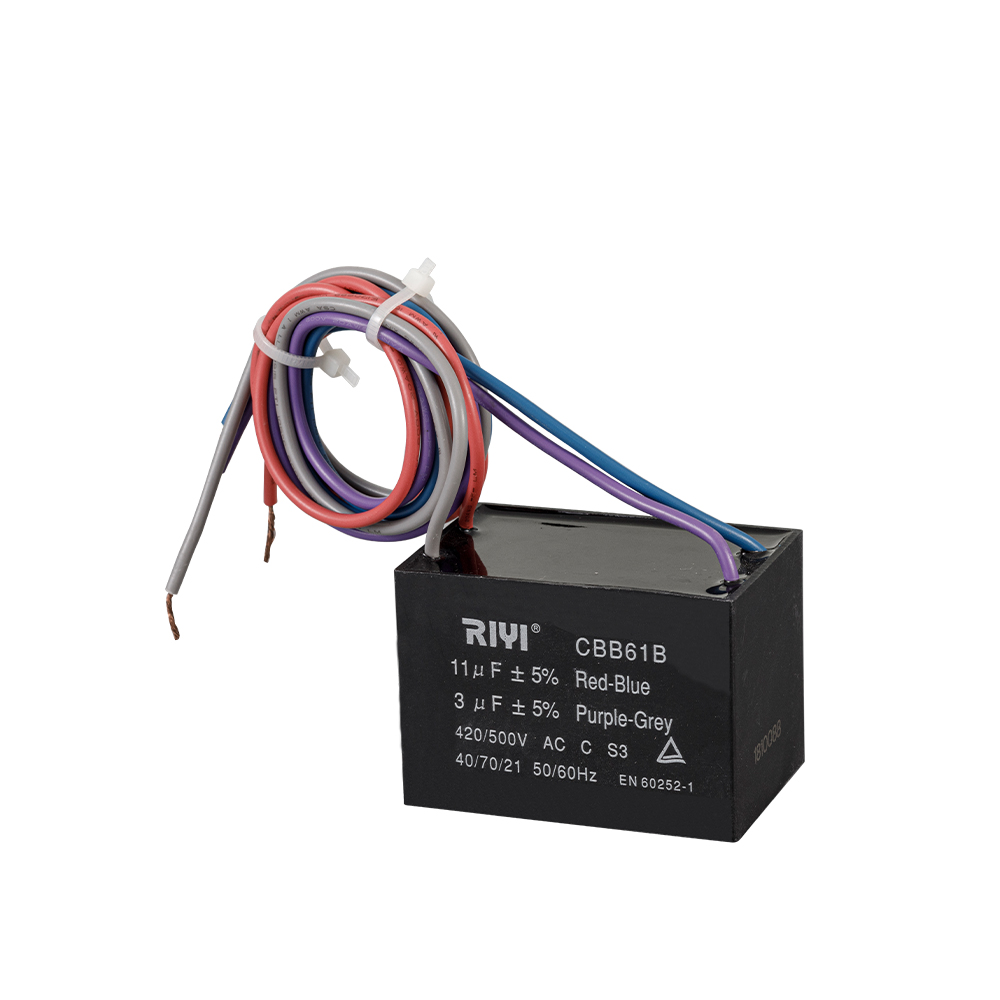
• CBB61 11+3uF 420&500V S3: a dual-capacitance model built as a metallized polypropylene film capacitor.
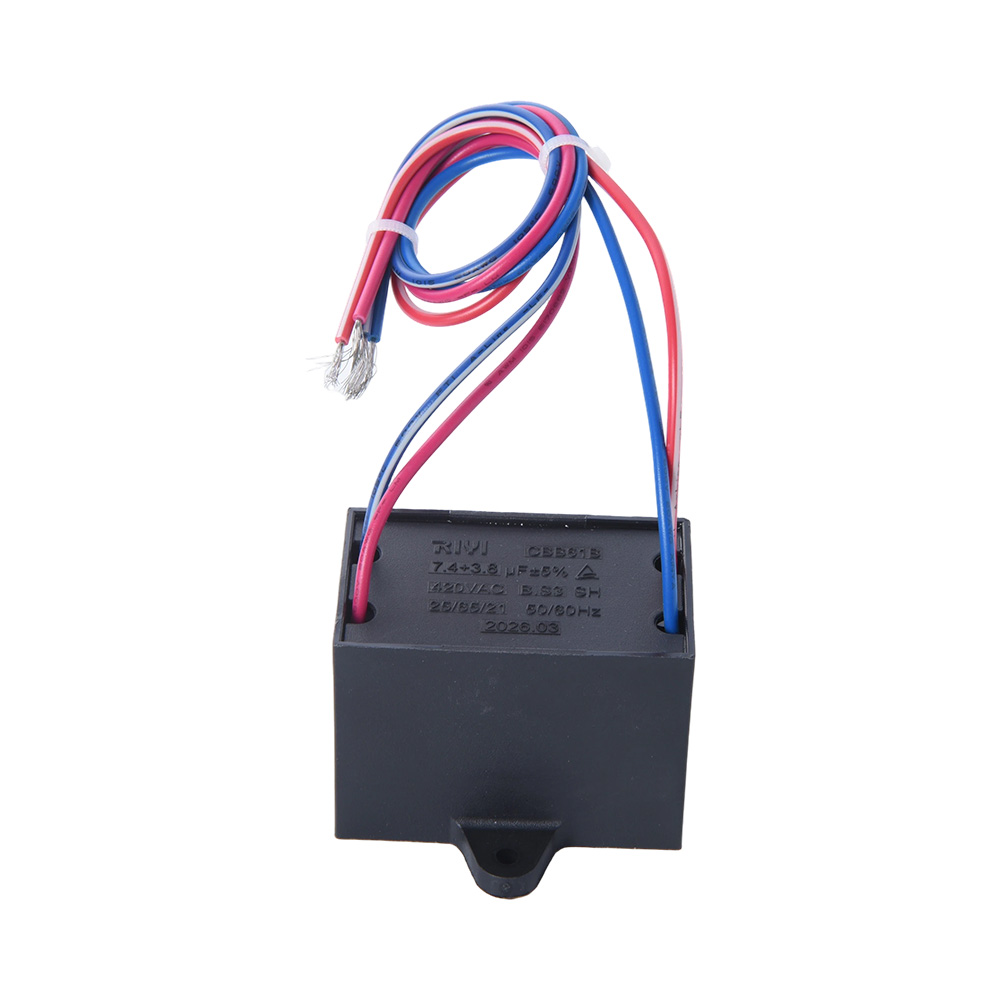
• CBB61 7.4+3.6uF 420V S3: a dual model with a 420V rating.
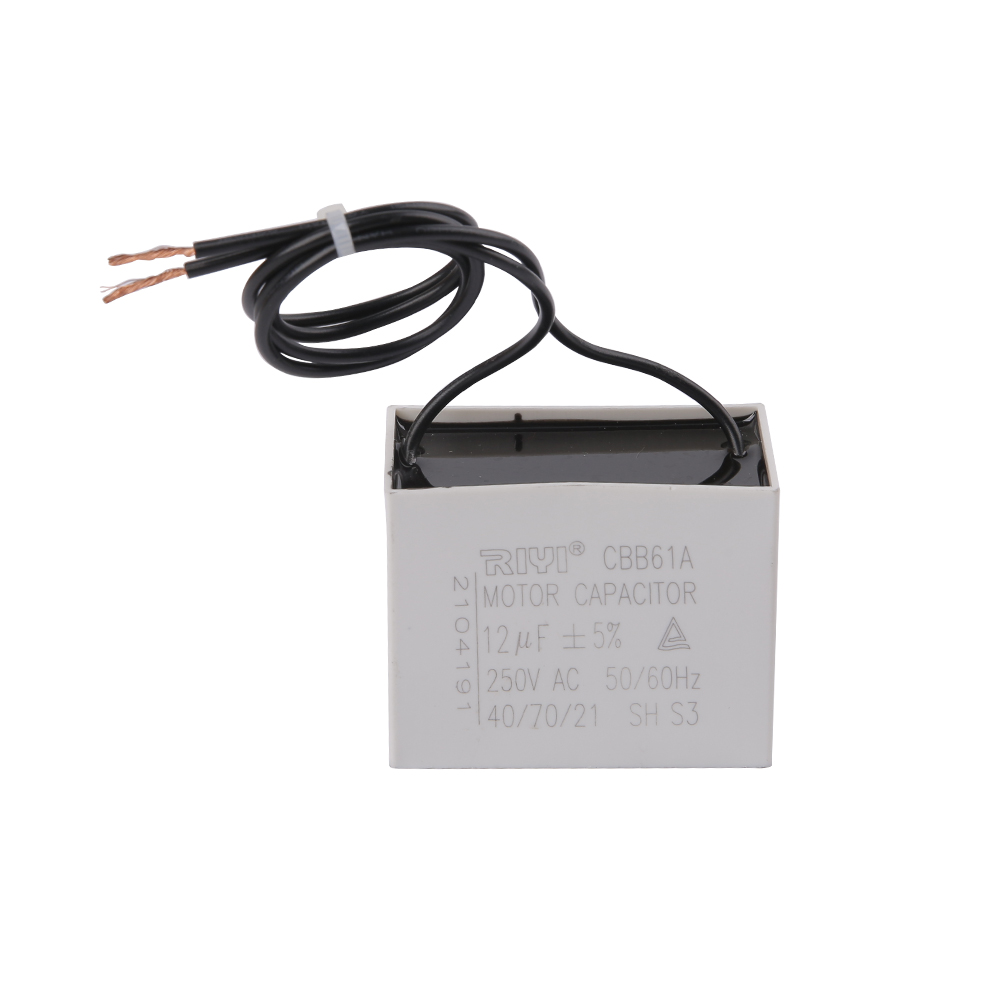
• CBB61 12uF 250V S3: the lowest voltage rating in this group.
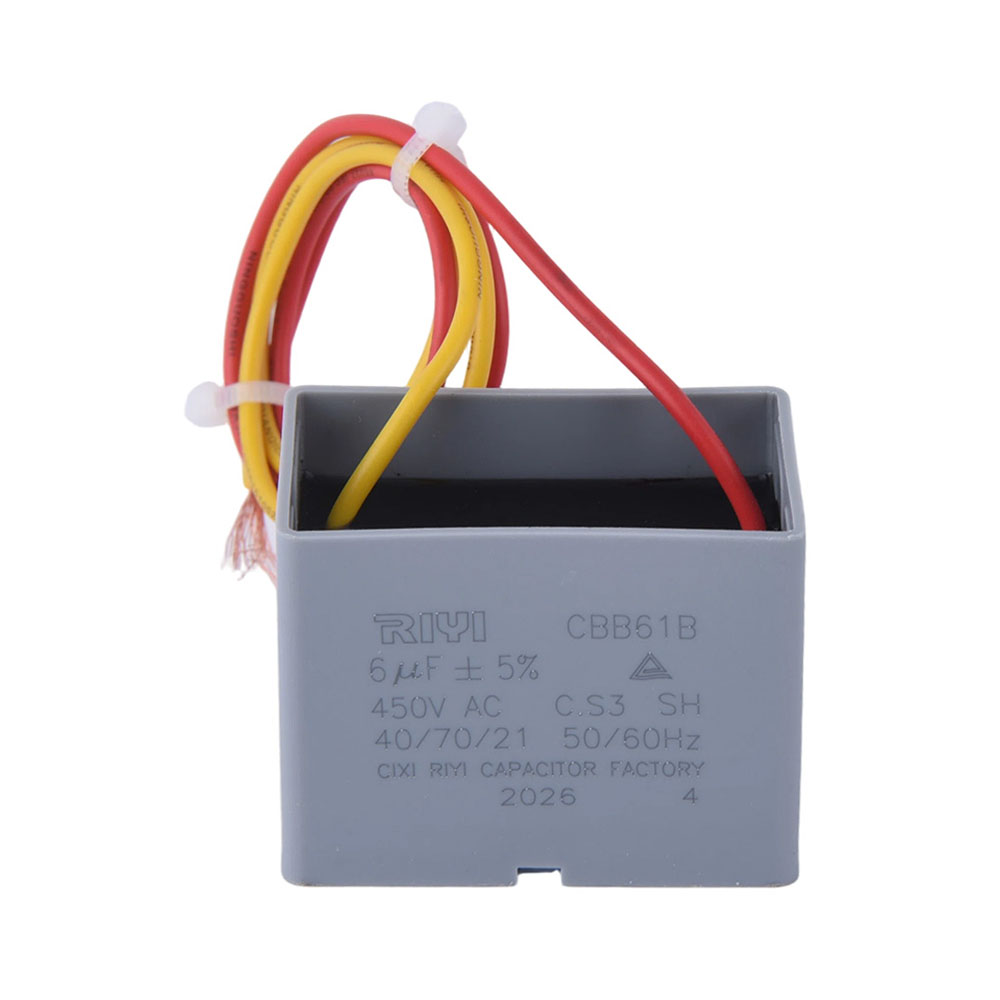
• CBB61 6uF 450V S3 and CBB61 7.4uF 420V S3: single-capacitance models.
Key Features:
• Explosion-proof S3 construction on all five models.
• Wire leads for direct connection into the motor wiring.
• Square-style CBB61 body.
Typical Applications:
• Fan motors that specify a lead-type capacitor.
• Other AC motor applications that need explosion-proof protection.
Browse Also: CBB61 Insert for terminal-type models. Custom values are developed from your drawings or samples.
CIXI RIYI CAPACITOR FACTORY
CERTIFICATE OF HONOR
- <
- <
- <
- <
- <
- <
- <
- <
- <
- <
- <
MESSAGE FEEDBACK
Industry knowledge
AC Cbb61 Wire Lead Motor Capacitor Suppliers — Cixi Riyi Capacitor Factory
Cixi Riyi Capacitor Factory builds the lead group of the CBB61 square motor capacitor range: metallized polypropylene film capacitors with a sealed square body, wire leads for direct motor wiring, and S3 explosion-proof construction on every model. The line is aimed at fan, blower, range hood, air-conditioning and small single-phase motor builds where the nameplate calls for a leaded run or dual run capacitor.
Our works cover 25,000 m² of plant in Cixi, Zhejiang, on the south bank of Hangzhou Bay Bridge. We operate ISO9001 and ISO14001 management systems, and the products carry CQC, TUV, VDE, IMQ, UL and CE certificates. See the full range on our AC Sourcing Cbb60, Cbb61, Cbb65, Cbb80 Capacitor Direct Here page.
Lead-Type Capacitors in the CBB61 Range
11+3 µF 420&500 V S3 — dual-section package with a 500 V section for higher-voltage fan and blower motors.
Both sections run in one sealed case, so the motor keeps a start/run pair on a single footprint.
7.4+3.6 µF 420 V S3 — square-body explosion-proof dual run capacitor with wire leads for motors needing two capacitance values.
Common where the main winding and auxiliary winding have clearly different ratings.
12 µF 250 V S3 — the lowest voltage rating in this lead group, a fully sealed epoxy-resin part for low-voltage AC motor circuits.
Suited to capacitor-run duty where the winding design fixes the working voltage.
6 µF 450 V S3 and 7.4 µF 420 V S3 — single-section run capacitors, including a non-standard 7.4 µF/420 V value for existing nameplates.
Useful when a production line must keep an older rating rather than redesign the motor.
All five listed models share the same construction logic: a square CBB61 body, an explosion-proof S3 case, and flying leads that terminate directly in the motor junction box. Models with different values are developed from customer drawings or samples, which is where most sourcing work starts. Our AC Cbb61 Wire Lead Motor Capacitor Suppliers line is the lead-type branch of the CBB61 family; terminal-type versions sit in the AC Cbb61 Insert Type Square Capacitor Suppliers group.
How Capacitance and Voltage Read on the Nameplate
CAPACITANCE (µF)
Sets the phase shift between main and auxiliary winding current. A value below the motor design reduces starting torque; a value above it raises winding current and case temperature.
RATED VOLTAGE (V AC)
Must cover the highest steady voltage the capacitor sees, not the nominal supply. A 450 V part on a 250 V circuit adds margin; the reverse does not.
DUAL VALUES (A+B)
Two windings in one case. Section order, tolerance and lead identification must match the motor schematic, because a swapped section changes the running current.
S3 EXPLOSION-PROOF CASE
A sealed enclosure that contains internal breakdown instead of venting it. It also protects the film element against moisture and dust in appliance and outdoor-fan duty.
Capacitance-Repeatability Bench Profile
Winding, metallizing and epoxy sealing determine how tightly a delivered batch sits around its nominal value. The chart shows the relative spread we hold between nominal, minimum and maximum limits inside a typical run capacitor tolerance window — a narrower band means less motor-to-motor variation on the line.
Capacitance distribution relative to nominal (illustrative bench profile)
Nominal value
Upper tolerance limit
Lower tolerance limit
Routine production release band
Model Comparison
| Model | Capacitance | Rated Voltage | Class | Termination | Typical Fit |
|---|---|---|---|---|---|
| CBB61 dual run | 11+3 µF | 420 & 500 V AC | S3 | Wire leads | Two-speed and high-voltage fan motors |
| CBB61 dual run | 7.4+3.6 µF | 420 V AC | S3 | Wire leads | Asymmetric winding fan and blower motors |
| CBB61 run | 12 µF | 250 V AC | S3 | Wire leads | Low-voltage AC motor circuits |
| CBB61 run | 6 µF | 450 V AC | S3 | Wire leads | Fan and blower motors |
| CBB61 run | 7.4 µF | 420 V AC | S3 | Wire leads | Non-standard 7.4 µF / 420 V nameplates |
| CBB61 custom | Per drawing | Per drawing | S3 | Lead length and terminal to order | OEM fan, hood and small motor programmes |
Rated Duty Across the CBB61 Lead Group
Voltage headroom and case class set where each part can be applied. The column chart compares the rated working voltage of the five listed models against the 450 V envelope that covers most fan and hood motors.
250 V
12 µF
420 V
7.4+3.6 µF
420 V
7.4 µF
450 V
6 µF
500 V
11+3 µF
Bar height follows rated AC working voltage for each listed model.
Build Quality Checkpoints
Film and winding
Metallized polypropylene film, precision slitting and automatic winding. We run 11 automatic slitting machines and 15 imported automatic winding machines, with daily output around 60,000 pieces.
Sealing
Vacuum epoxy or resin fill closes the square body against moisture ingress, which is the main driver of capacitance drift in humid fan and pump duty. The S3 explosion-proof case contains internal failure rather than releasing it.
Lead termination
Lead gauge, insulation colour and stripped length are set to the motor harness. Colour-coded leads identify dual sections so the main and auxiliary windings cannot be crossed on the assembly line.
Routine testing
Capacitance, dissipation factor, insulation resistance and withstand voltage checks on finished units, plus seal and appearance inspection before packing. A technical team of 21 specialists and 3 engineers supports sample builds and change control.
Selection Balance for Fan and Motor Designs
Four variables usually decide which lead capacitor a motor takes. The radar profile shows the emphasis we place on each when reviewing a drawing, from 1 (minor) to 5 (dominant).
Relative weighting used when reviewing a motor drawing for lead-type CBB61 selection.
Installation and Line Integration
- Wiring: leads solder or crimp into the motor junction box. Keep the lead route clear of fan blades, pulleys and hot surfaces, and secure with a clip or tie so vibration cannot fatigue the joint.
- Mounting: the square body seats in a bracket, clamp or case recess. The case is not a structural load path — support the capacitor so lead tension is not carried by the termination.
- Discharge before service: a capacitor holds charge after the supply is removed. Discharge across a suitably rated resistor and confirm near-zero DC voltage on a multimeter before touching the leads.
- Automation: consistent body dimensions, uniform lead take-off and stable capacitance let the part run on automated harness and test stations without re-teach.
- Ambient limits: keep the case clear of airflow-blocked zones. Compressor and blower compartments run hotter than open air, and heat is the main life-shortening factor for film capacitors.
Information We Use to Configure Your Solution
Certificate and Acceptance Context
We hold ISO9001 quality management and ISO14001 environmental management system certification, and product certificates including CQC, TUV, VDE, IMQ, UL and CE. Where a project needs documented evidence, we align the certificate set and test records with the model and marking being supplied.
Where motor programmes sit outside the standard CBB61 lead list, we develop the part from your drawing or sample rather than force a catalogue value onto the application. Related families in our factory include the CBB60 AC Motor Run And Start Capacitor Manufacturers range for larger motor-run duty and the AC CBB65 Explosion-Proof Capacitor Manufacturers range for compressor and air-conditioning circuits.
<h2 style="color:#00518d;font-size:22px;border-bottom:2px solid #e3e9f0;padding-bottom:8px;margin:30px 0 16px;margin:30px 0 14px;padding-bottom:9px;border-bottom:2px
CONTACT US
MESSAGE US RIGHT NOW!
QR Code
Quick Links
Our Product
Contact us
- Tel: +86-13600614158
- E-mail: mina@cxriyi.com
- Address: Zonghan Street,Cixi City, Zhejiang Province, China.
Copyright © CIXI RIYI CAPACITOR FACTORY
All Rights Reserved.
 China AC Cbb61 Wire Lead Motor Capacitor Factory
Custom AC Cbb61 Wire Lead Motor Capacitor Suppliers
China AC Cbb61 Wire Lead Motor Capacitor Factory
Custom AC Cbb61 Wire Lead Motor Capacitor Suppliers