 en
en
 English
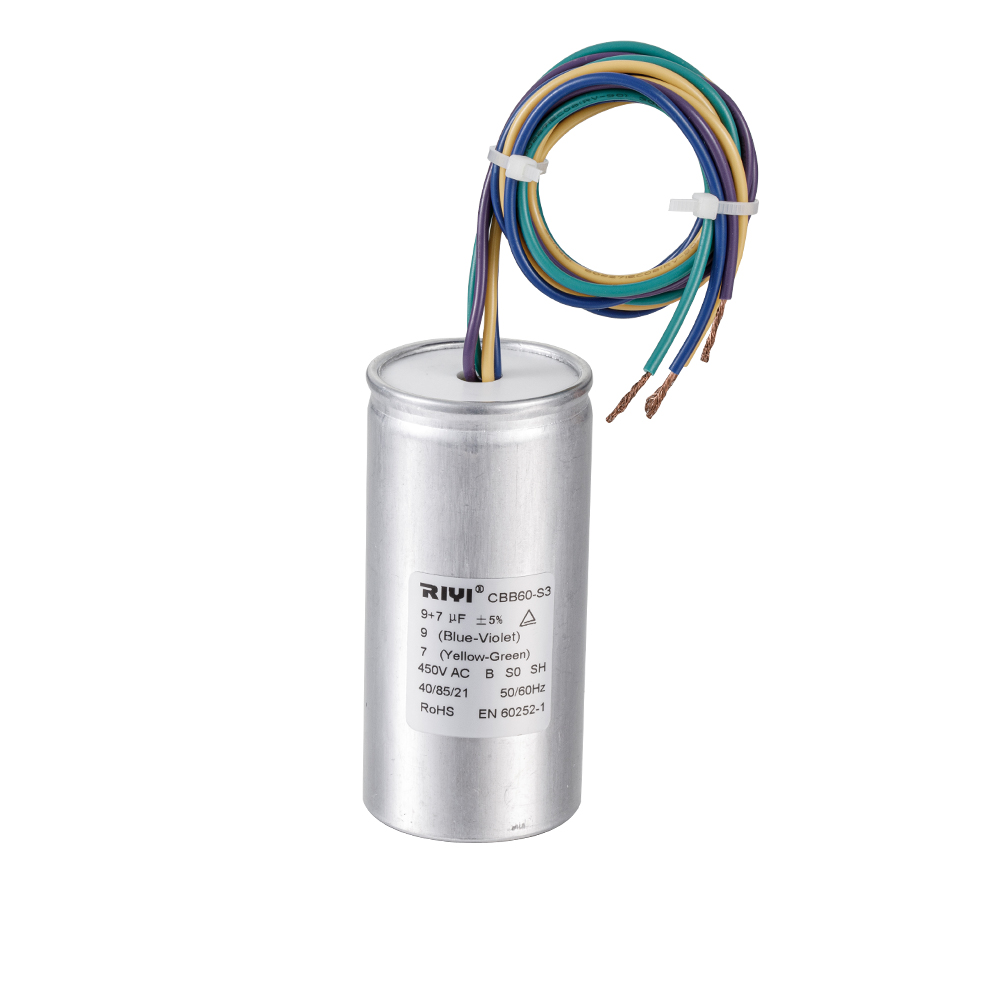
As China ac double lead aluminum case cbb60 capacitor manufacturers and ac double lead aluminum case cbb60 capacitor factory, CIXI RIYI CAPACITOR FACTORY is a professional enterprise specializing in the production of AC motor capacitors, compensation capacitors for lighting fixtures, filters, and other products. The company is located on the south bank of Hangzhou Bay Bridge, where traffic is very convenient.
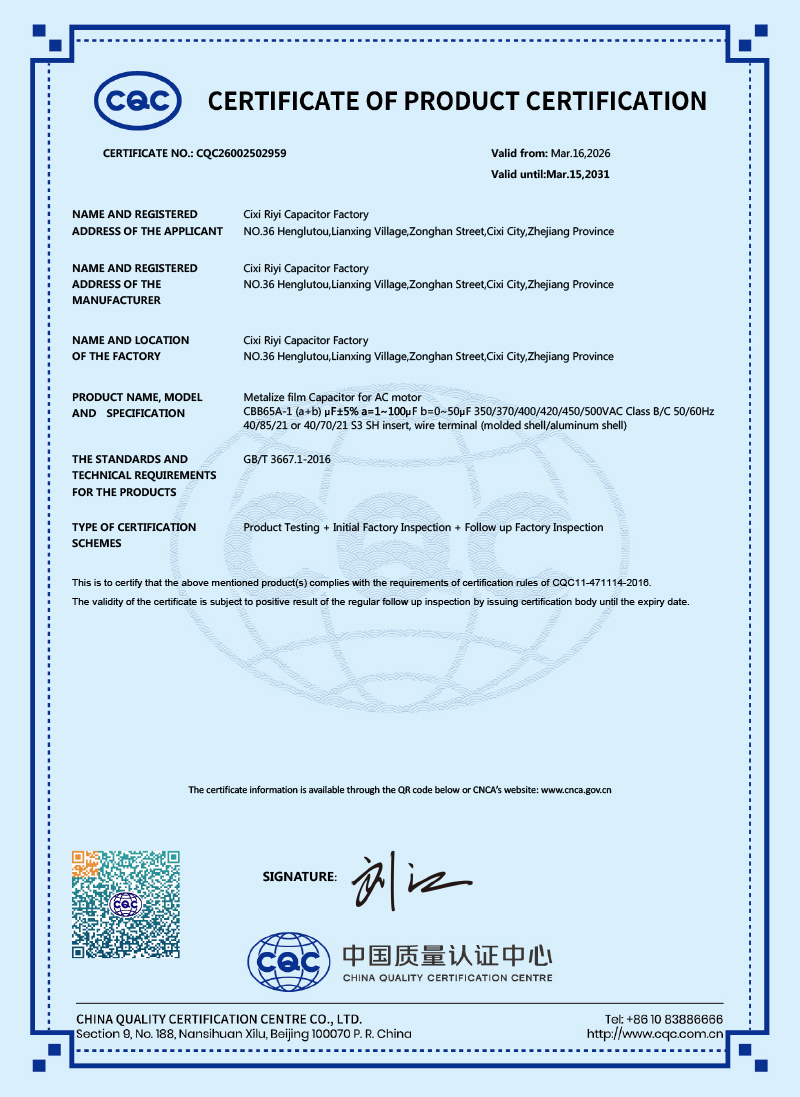
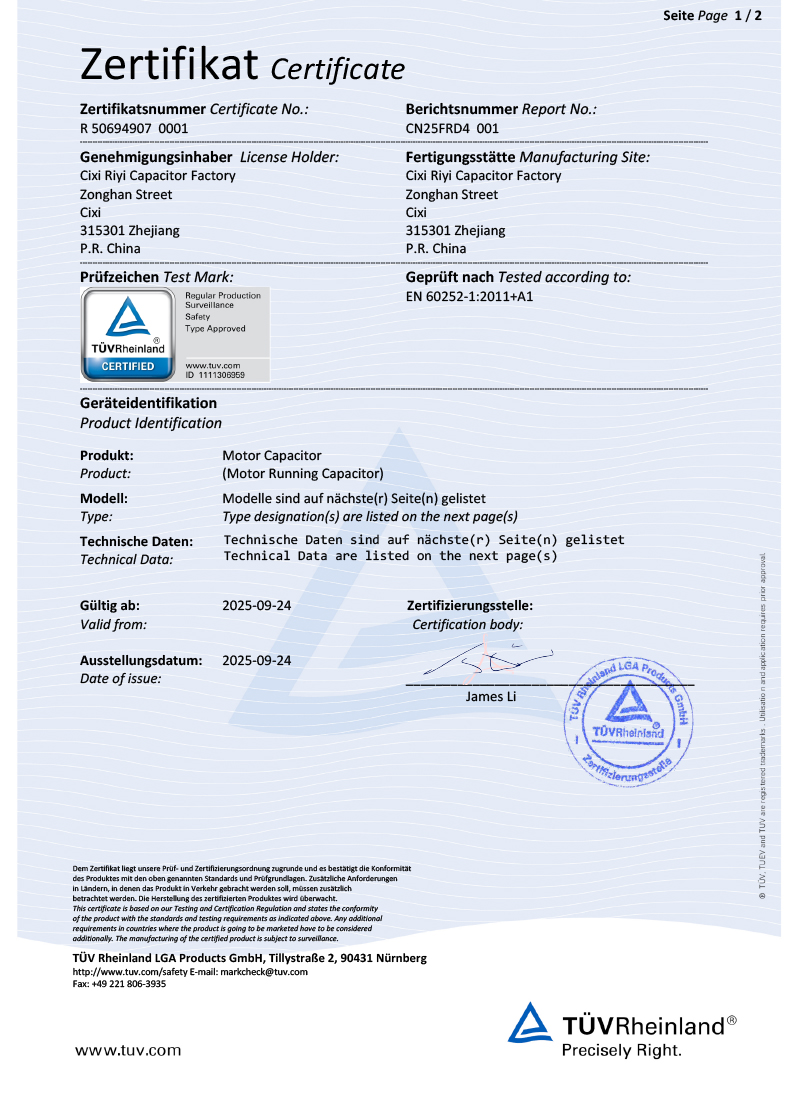
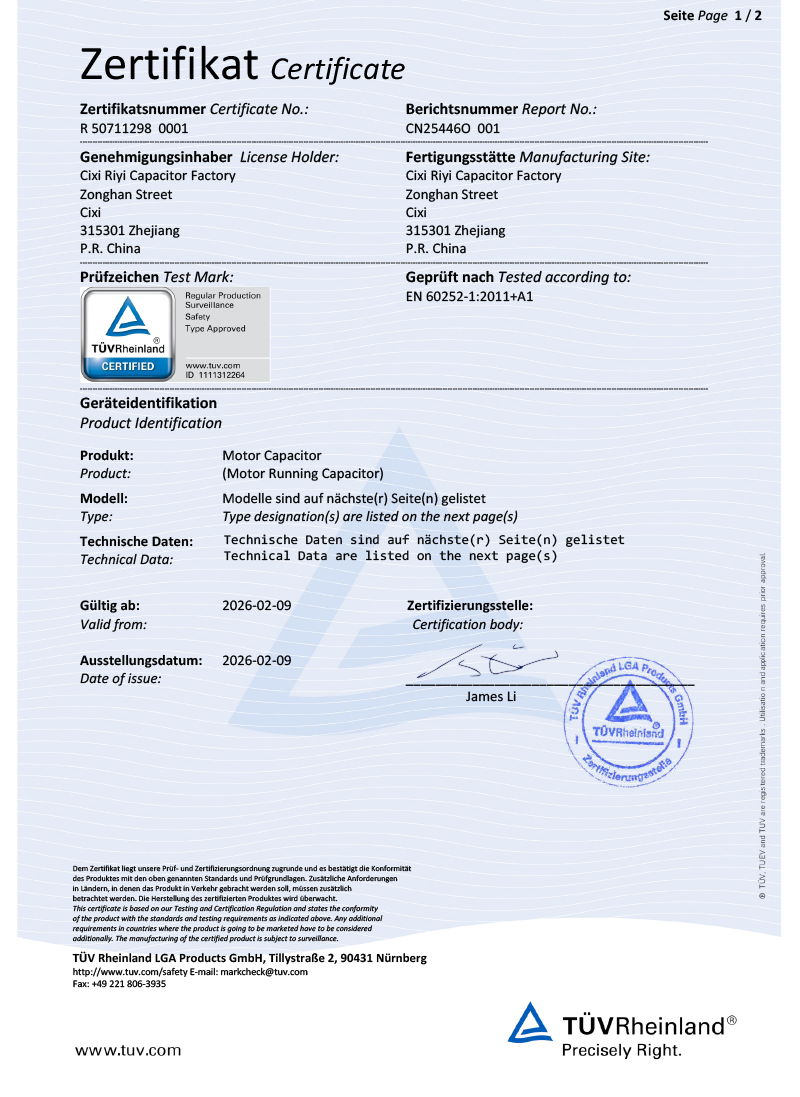
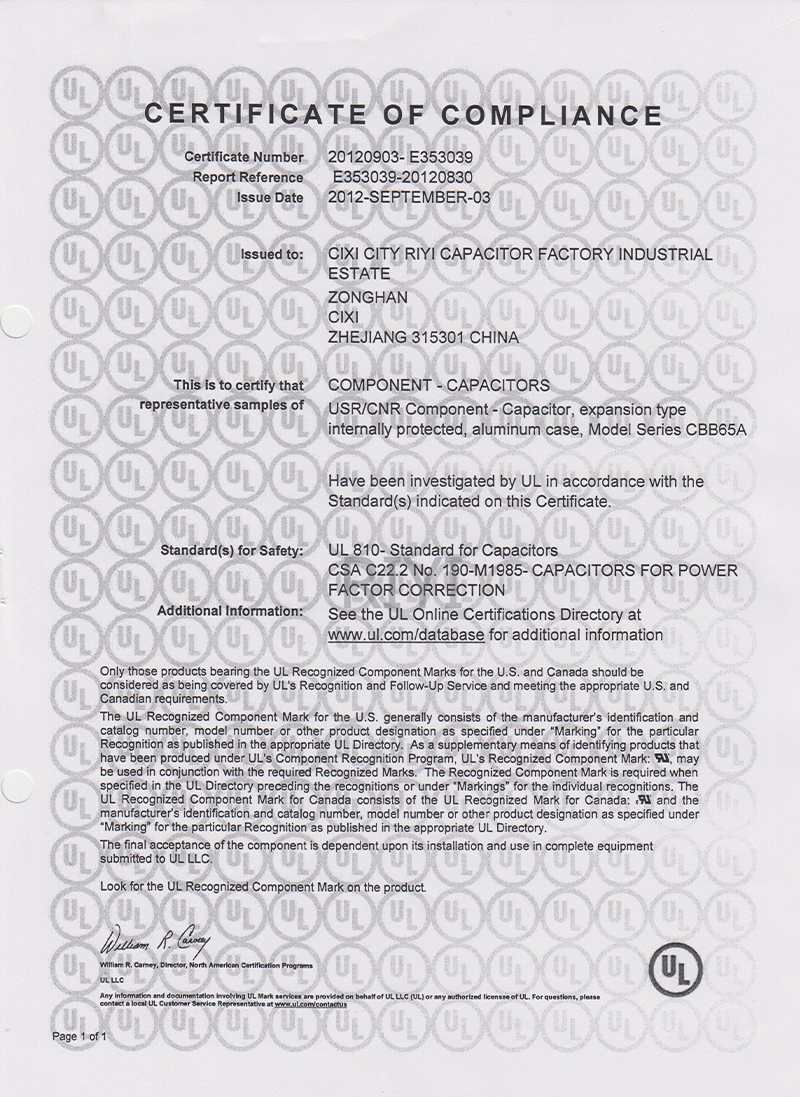
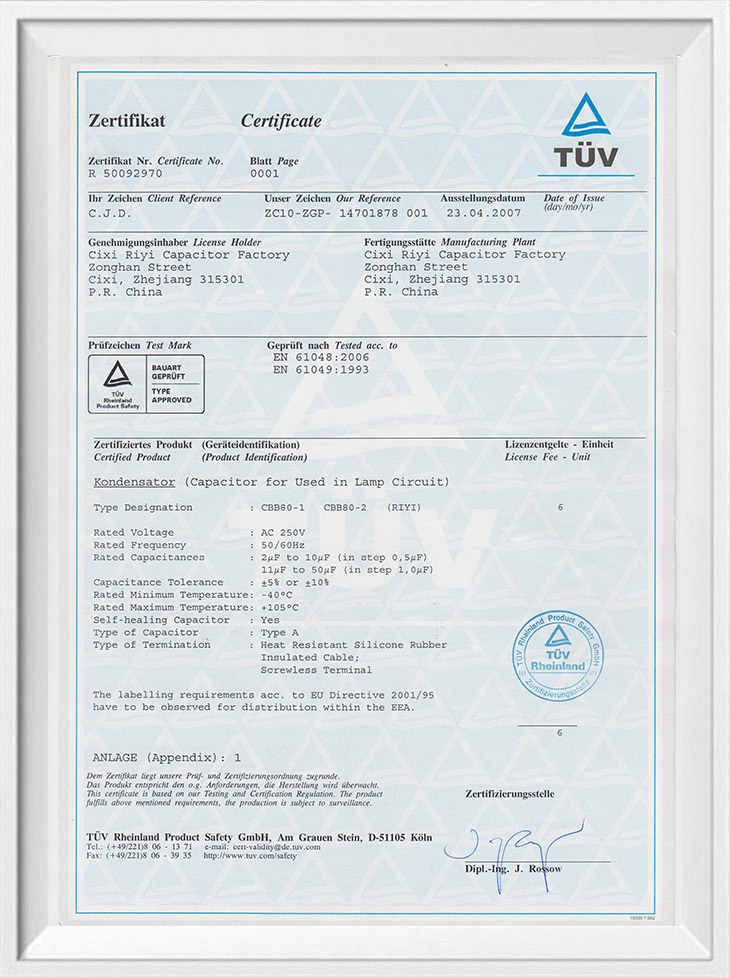
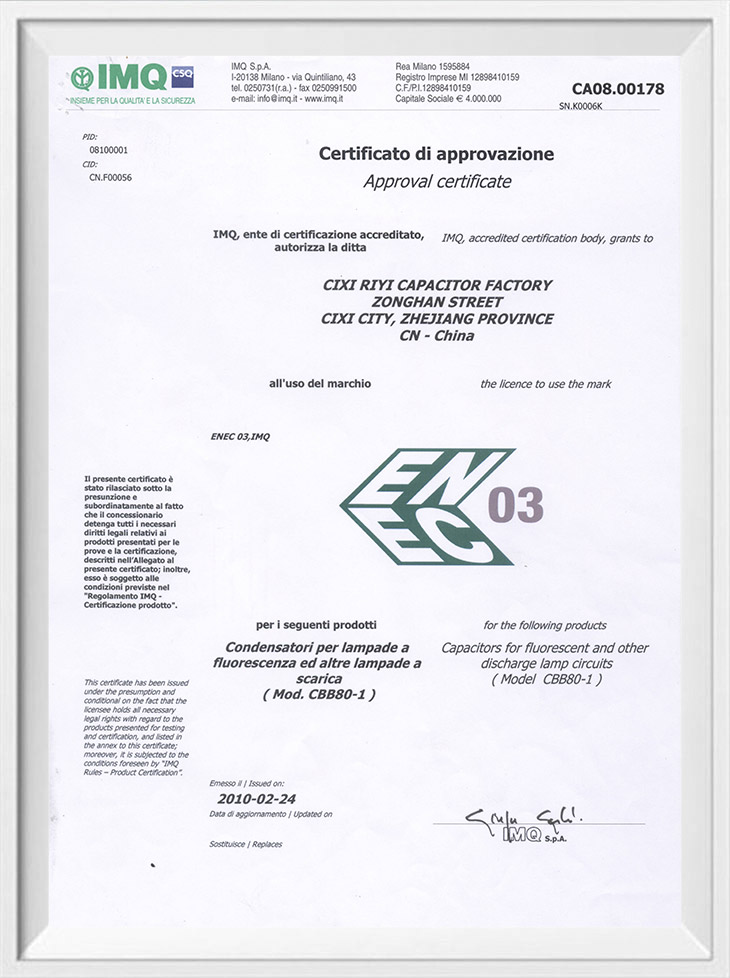
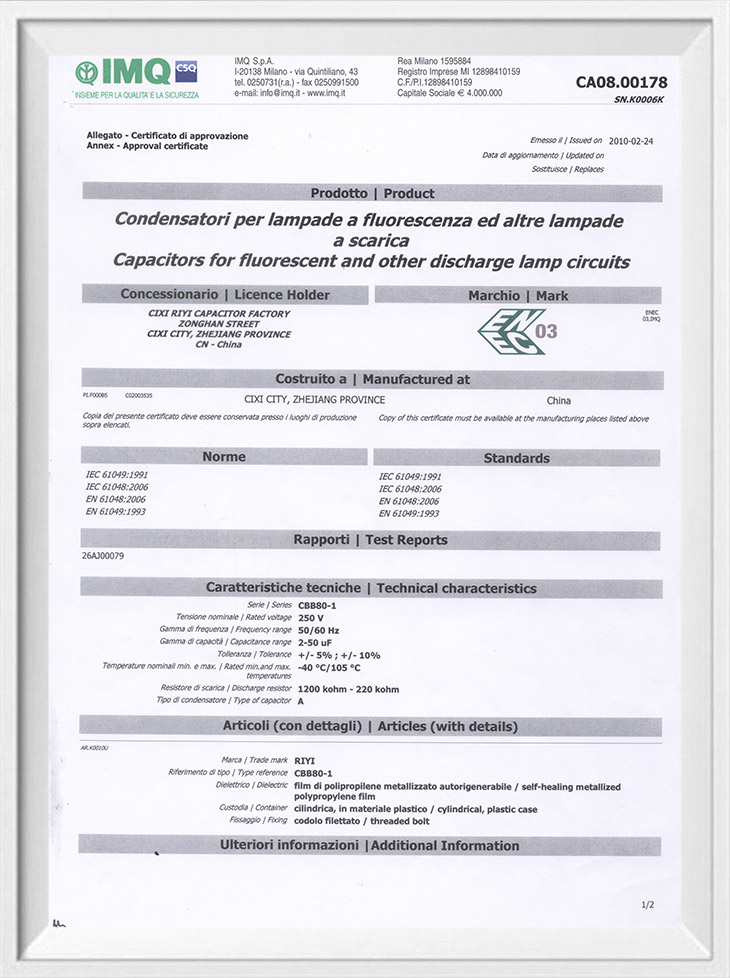
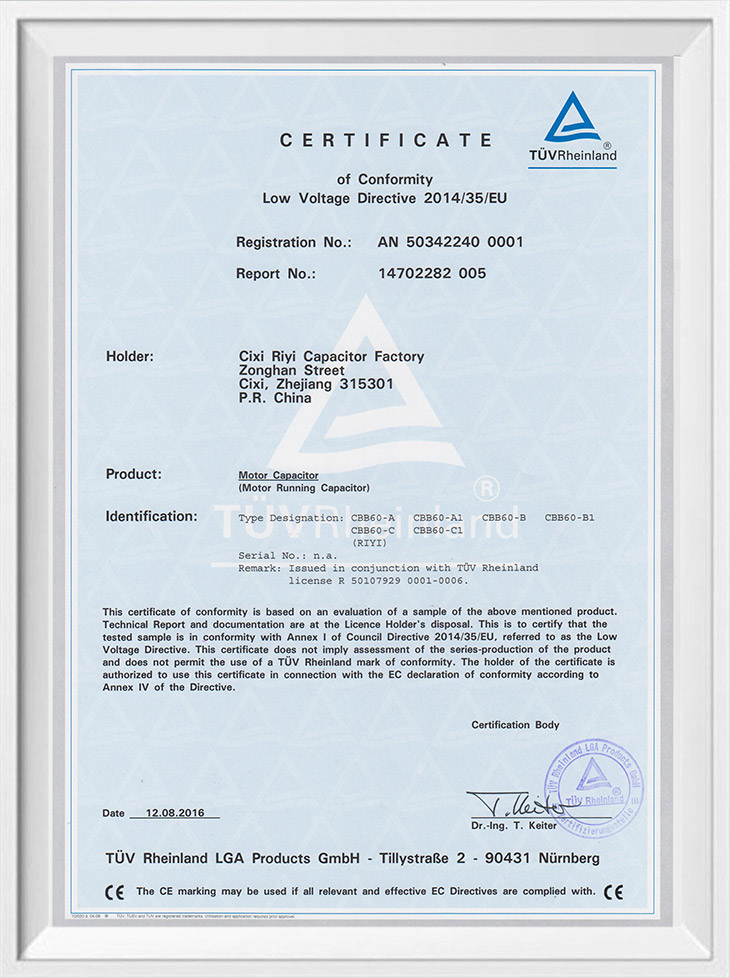
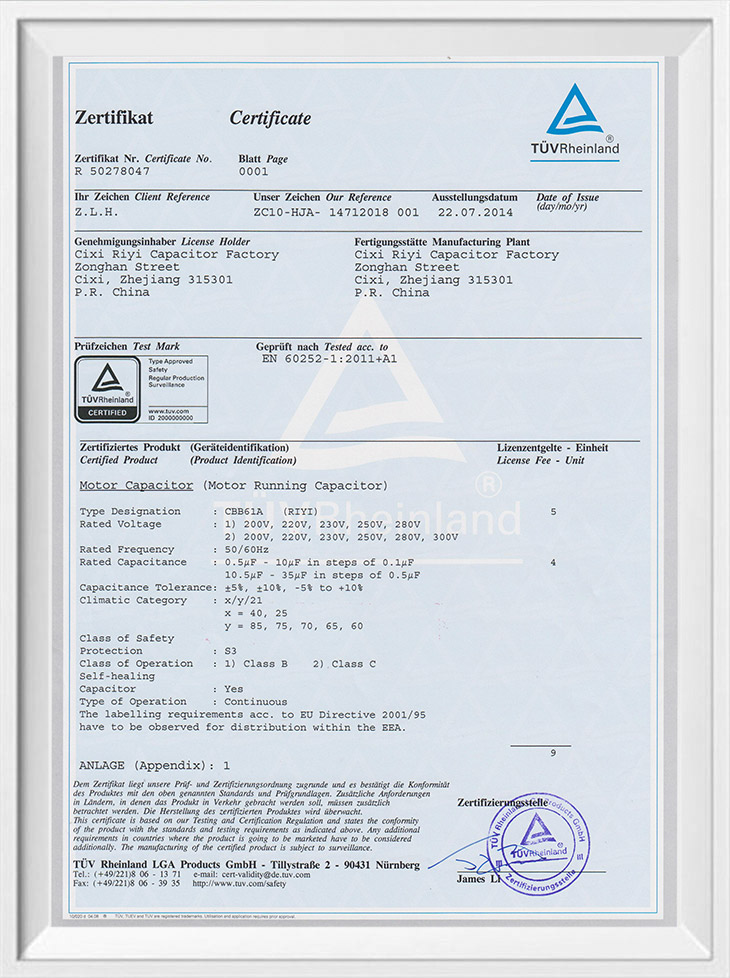
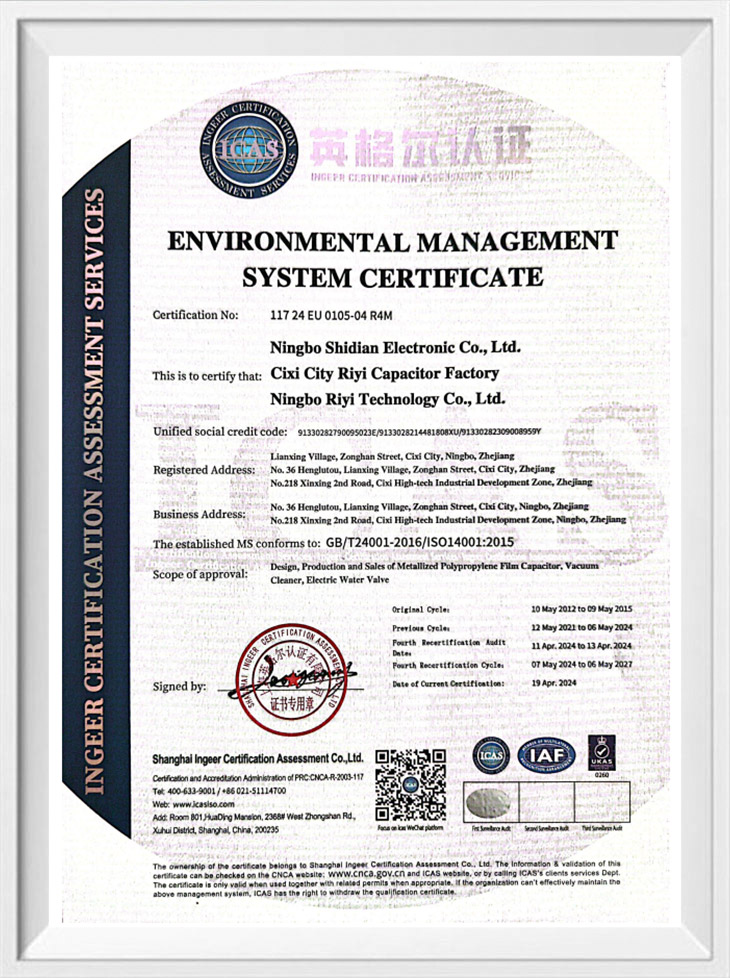
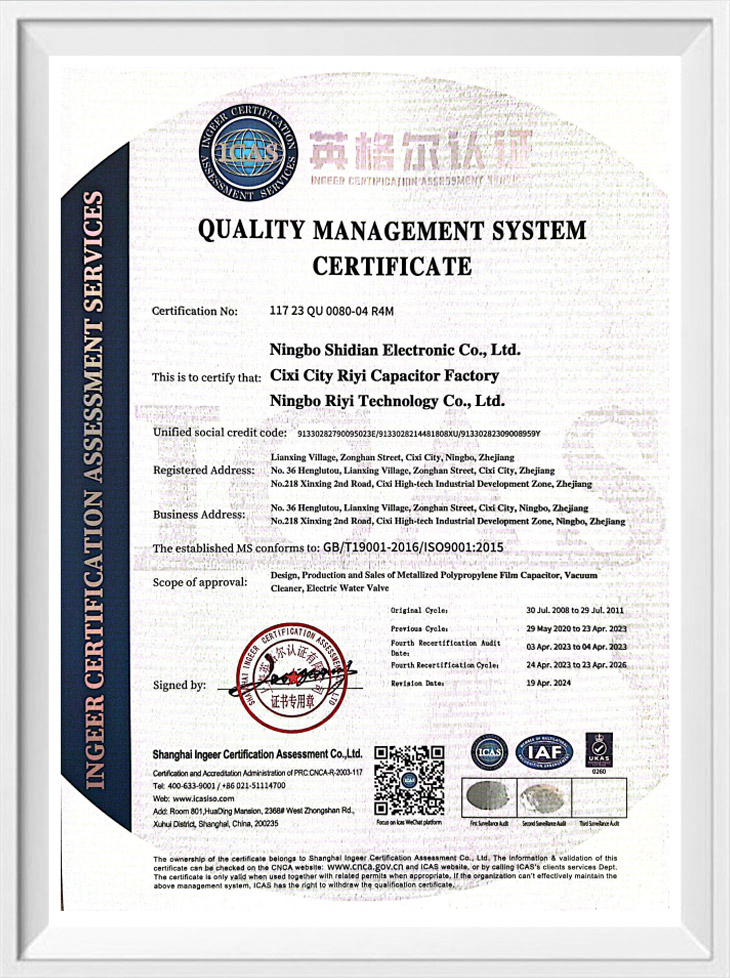
The company has 25,000 square meters of industrial plants and production for the workshop. Has strong technical force, advanced equipment, exquisite workmanship, and perfect detection means. It is market-oriented and based on the principle of meeting the customer's needs, while researching and producing a series of products. It had passed the ISO9001 quality management system and the ISO14001environmental management system certification, and all kinds of products have obtained certificates such as CQC, TUV, VDE, IMQ, UL, CE, etc.
Since its inception, the company has worked hard, strives for excellence, and with utmost dedication, it serves the electronics industry, power industry, household electrical appliance industry, and provides support services for high-tech enterprises. And as a result, we won the trust of our customers and became a well-known enterprise at home and abroad.
RIYI looks forward to working with your cooperation and creating a better tomorrow!

AC Double Lead Aluminum Case Cbb60 Capacitor Manufacturers
Double Lead is the wire-lead group inside our CBB60 Aluminum Case Capacitor category, part of the wider CBB60 AC Motor Capacitor range.
Currently Listed:
• CBB60 450V B S0 Combination Lead Capacitor: a combination lead model that acts as an energy storage and boosting component when AC motors start and run.
Key Features Carried Over from CBB60:
• Low loss and high insulation resistance.
• Good self-healing and stable performance.
• Impact current resistance and strong overload capability.
• Epoxy resin fully sealed structure.
Typical Applications:
• Washing machines, dryers and air conditioners.
• Range hoods, water pumps and fans.
Need More Lead Options? Browse Plastic Case Capacitor, where many CBB60 models are supplied with leads. If you need a different lead style, Cixi Riyi develops products from your drawings or samples.
CIXI RIYI CAPACITOR FACTORY
CERTIFICATE OF HONOR
- <
- <
- <
- <
- <
- <
- <
- <
- <
- <
- <
MESSAGE FEEDBACK
Industry knowledge
Double Lead Aluminum Case CBB60 Capacitors Made by Cixi Riyi
CIXI RIYI CAPACITOR FACTORY manufactures AC motor capacitors and lighting compensation capacitors in Cixi, Zhejiang, on the south bank of Hangzhou Bay. Our AC Double Lead Aluminum Case Cbb60 Capacitor Manufacturers range is the wire-lead branch of the aluminum-case CBB60 programme: metallized polypropylene film wound into a cylindrical element, sealed in an aluminum can with epoxy resin, and fitted with flexible insulated leads for harness assembly.
The model currently listed in this group is the CBB60 450V B S0 Combination Lead Capacitor, a combination-lead part that holds and releases charge in the auxiliary winding circuit so a single-phase motor develops running torque. The same build is produced in single-section and dual-section versions for washing machines, dryers, air conditioners, range hoods, water pumps and fans.
25,000 m²Plant and production workshops
150+ staff21 technical personnel, 3 engineers
60,000/dayPlant output across capacitor lines
ISO + productISO9001, ISO14001; CQC, TUV, VDE, IMQ, UL, CE
Application Fit and Capacitance Windows
A double lead aluminum CBB60 belongs where the appliance harness is soldered or crimped rather than plugged onto a terminal, and where the capacitor sits close to a motor inside a humid or vibrating housing. The aluminum can and epoxy fill suit that environment; the wider CBB60 AC Motor Run And Start Capacitor Manufacturers range shows the same platform with insert terminals for the AC Aluminum Case Cbb60 Capacitor Suppliers variant.
Common single-phase capacitance windows (µF)
Circulation and exhaust fans
2–5
Water pumps
6–12
Washers, dryers
8–20
Compressor motors
15–35
Windows reflect general single-phase motor practice; the value on your approved drawing governs production.
What Each Specification Field Controls
| Field | Effect on the motor circuit |
|---|---|
| Capacitance (µF) | Sets the phase shift between main and auxiliary winding current, and therefore running torque and current draw. |
| Rated voltage (VAC) | Must carry line voltage plus switching and back-EMF peaks across the service life of the appliance. |
| Frequency | 50 Hz and 60 Hz lines demand different capacitance for the same motor, so the mains frequency is fixed at quotation. |
| Tolerance band | Defines the acceptable deviation window around nominal and is verified on the agreed test setup. |
| Lead configuration | Double lead or combination lead, lead length, strip length and colour coding decide how the part lands in the harness. |
| Case and sealing | Aluminum can with epoxy encapsulation protects the element against moisture, dust and vibration. |
| Section split | On dual-section models, the capacitance of each section and its colour marking map to the main and auxiliary windings. |
Voltage Class Ladder for Appliance Motors
250 V
400 V
450 V
500 V
250 V and 400 V classes suit small fans and general appliance motors; 450 V and 500 V classes are specified for air-conditioning, washer and heavier compressor duties where supply tolerance is wider. Confirm the class against the motor nameplate before drawing release.
Behaviour in Service: Self-Healing and Thermal Drift
Shape only: metallized film capacitors show a gradual capacitance change across the operating temperature band, and the exact curve is validated on the approved sample.
- Self-healing metallized film clears local breakdowns and keeps the part in circuit instead of failing open.
- Low loss and high insulation resistance limit heating inside the can during continuous running duty.
- Impact current resistance and overload capability support motors that start under load, such as pumps and compressors.
- Epoxy resin fill immobilises the element, which reduces movement of the winding under vibration in a washer or dryer chassis.
Configuration Options We Build Into This Range
Leads, capacitance, case and marking are combined to match your assembly method. Where a molded shell is preferred over an aluminum can, leaded models are also produced in the AC Cbb60 Plastic Case Capacitor Suppliers range.
Double lead and combination leadLead length and strip lengthLead colour coding for dual sectionsSingle or dual section valuesCapacitance and tolerance on drawingCase diameter and height clearancePrinting and label languageBulk carton or tray packing
Production and Acceptance Sequence
- Film slitting and winding on 11 automatic slitting machines and 15 automatic imported winding machines.
- Element assembly, can insertion and epoxy encapsulation, with the sealing checked before the part moves to test.
- Electrical acceptance covering capacitance, dissipation factor and insulation behaviour, evaluated against the agreed drawing values.
- Marking, lead inspection and packing, with samples retained for traceability against the production batch.
- ISO9001 quality management and ISO14001 environmental management systems govern the workshop; product approvals held across the range include CQC, TUV, VDE, IMQ, UL and CE, and the relevant certificate set is issued with the shipment.
Information We Use to Configure Your Solution
We develop and produce from customer drawings or samples. For a double lead aluminum CBB60, these inputs let us fix the build and issue a usable quotation.
- Capacitance and tolerance per section, plus the mains frequency at the point of use.
- Rated voltage class and the motor nameplate data it must match.
- Lead type, length, strip length, colour coding and whether a combination lead is required.
- Case diameter and height available in the appliance housing, and the mounting method.
- Marking content, label language and any certificate the destination market requires.
- Packing format, carton quantity and shipping port or delivery terms.
- Annual volume, call-off pattern and whether a first-article sample must be approved before mass production.
Frequently Asked Questions
Is Cixi Riyi a direct manufacturer of double lead aluminum CBB60 capacitors?
Yes. CIXI RIYI CAPACITOR FACTORY is a direct capacitor factory in Cixi, Zhejiang, with 25,000 m² of plant, more than 150 employees including 21 technical personnel and 3 engineers, and a plant output of 60,000 units per day across the capacitor lines.
What is the difference between the double lead and combination lead versions?
Both terminate in flexible insulated leads. A combination lead part groups the required lead set for a specific motor circuit, as in the CBB60 450V B S0 model listed here, while a standard double lead part brings out one lead per section. We follow the lead arrangement on your drawing or sample.
Can you produce a CBB60 to our own capacitance and lead specification?
Yes. We develop and produce products from drawings or samples provided by customers, covering capacitance, voltage, section split, lead length and marking. A sample approval step before mass production keeps the delivered part aligned with the drawing.
Which applications are these capacitors used in?
Our product range serves washing machines, dryers, air conditioners, range hoods, water pumps, fans and other single-phase motors, as well as lighting compensation. The aluminum-case double lead build is chosen where the part sits inside a damp or vibrating appliance housing.
How is the capacitor checked before shipment?
Parts pass through the production and test sequence described above, with electrical acceptance against the values agreed on the drawing. Approved samples are retained so a delivered batch can be traced back to its build record, and the certificate set for your market is issued with the shipping documents.

CONTACT US
MESSAGE US RIGHT NOW!
QR Code
Quick Links
Our Product
Contact us
- Tel: +86-13600614158
- E-mail: mina@cxriyi.com
- Address: Zonghan Street,Cixi City, Zhejiang Province, China.
