 en
en
 English
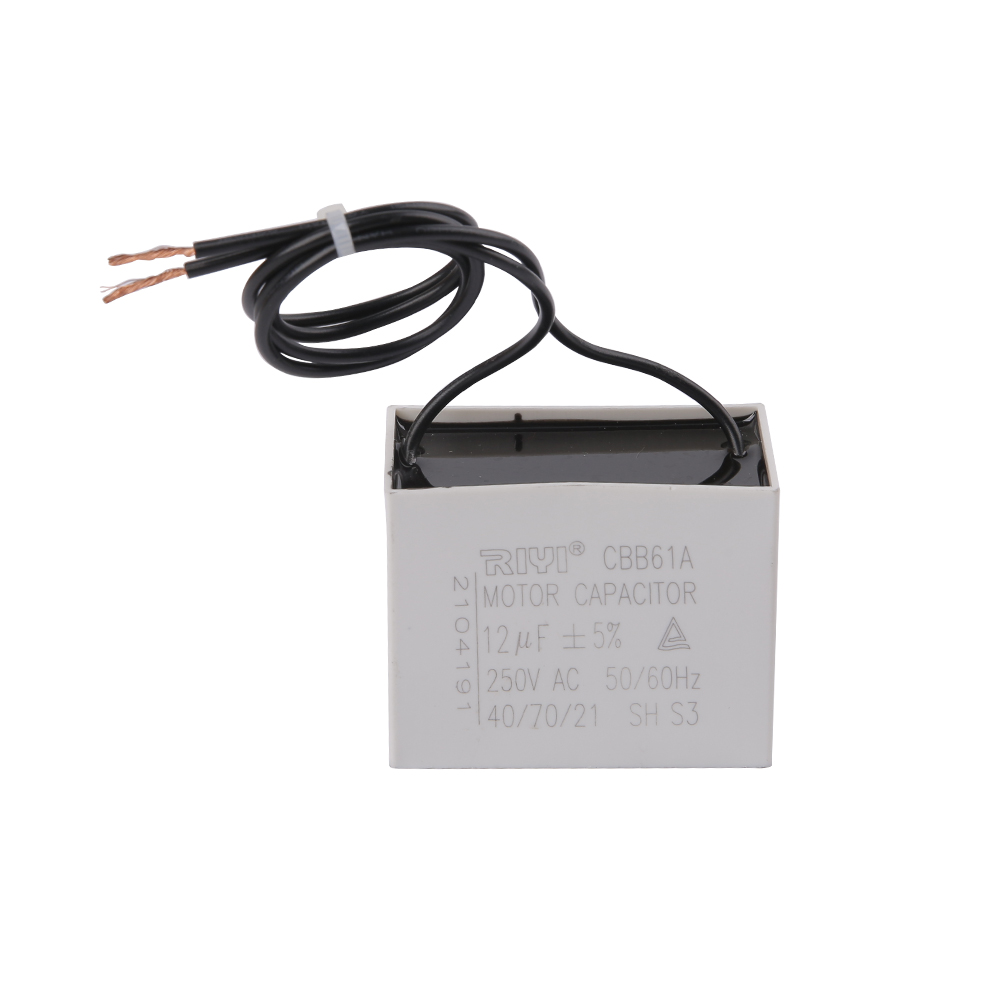
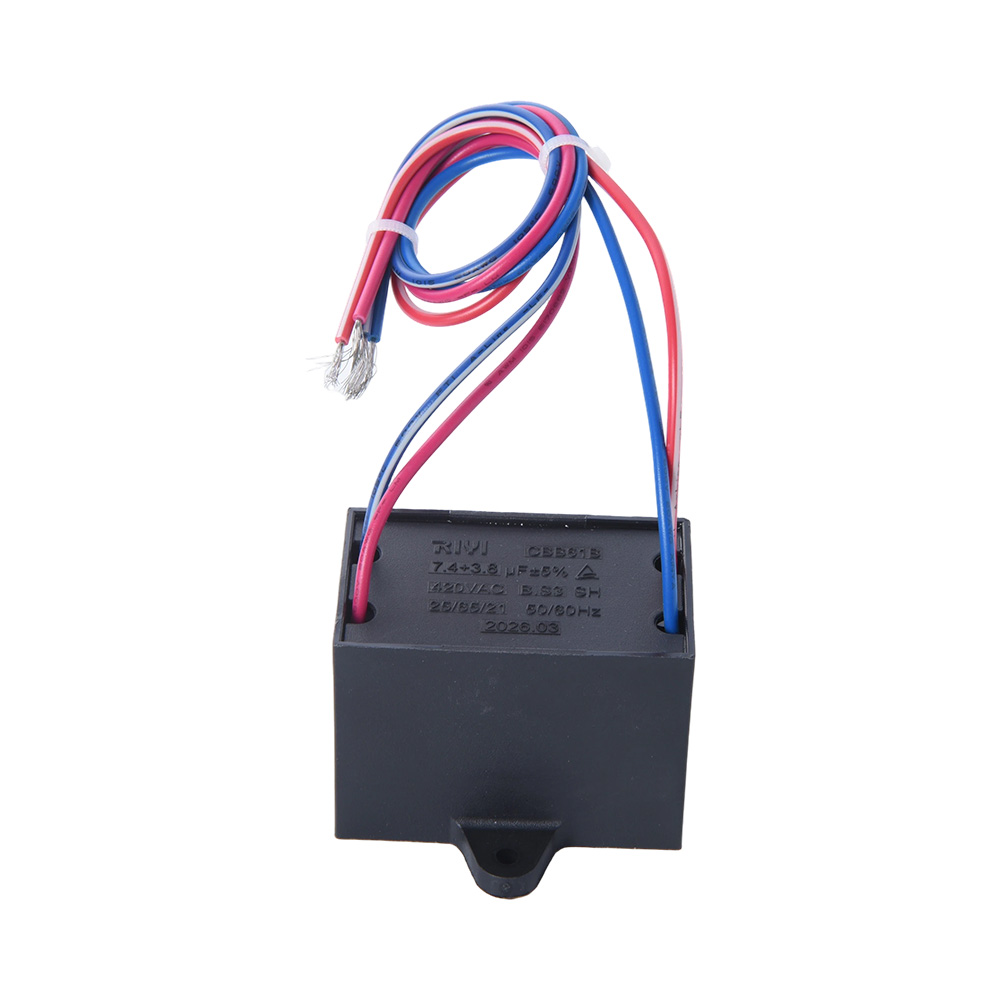
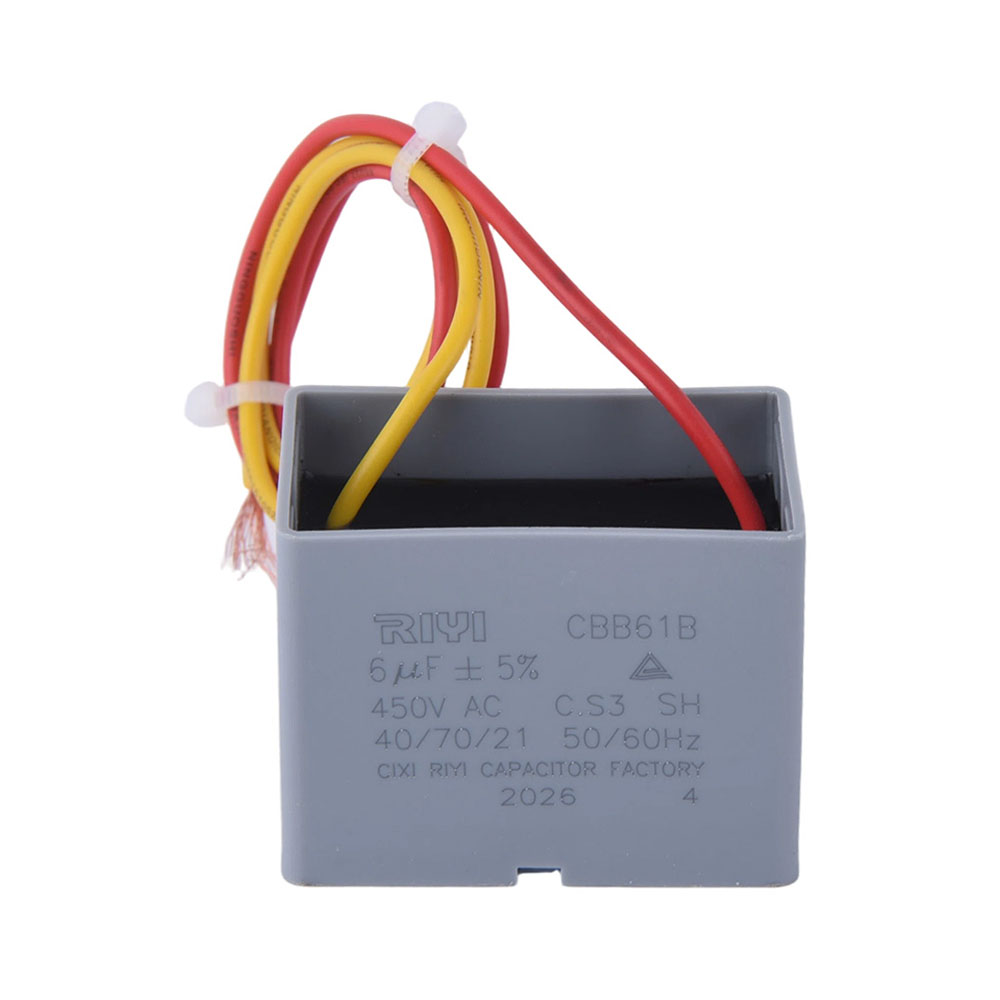
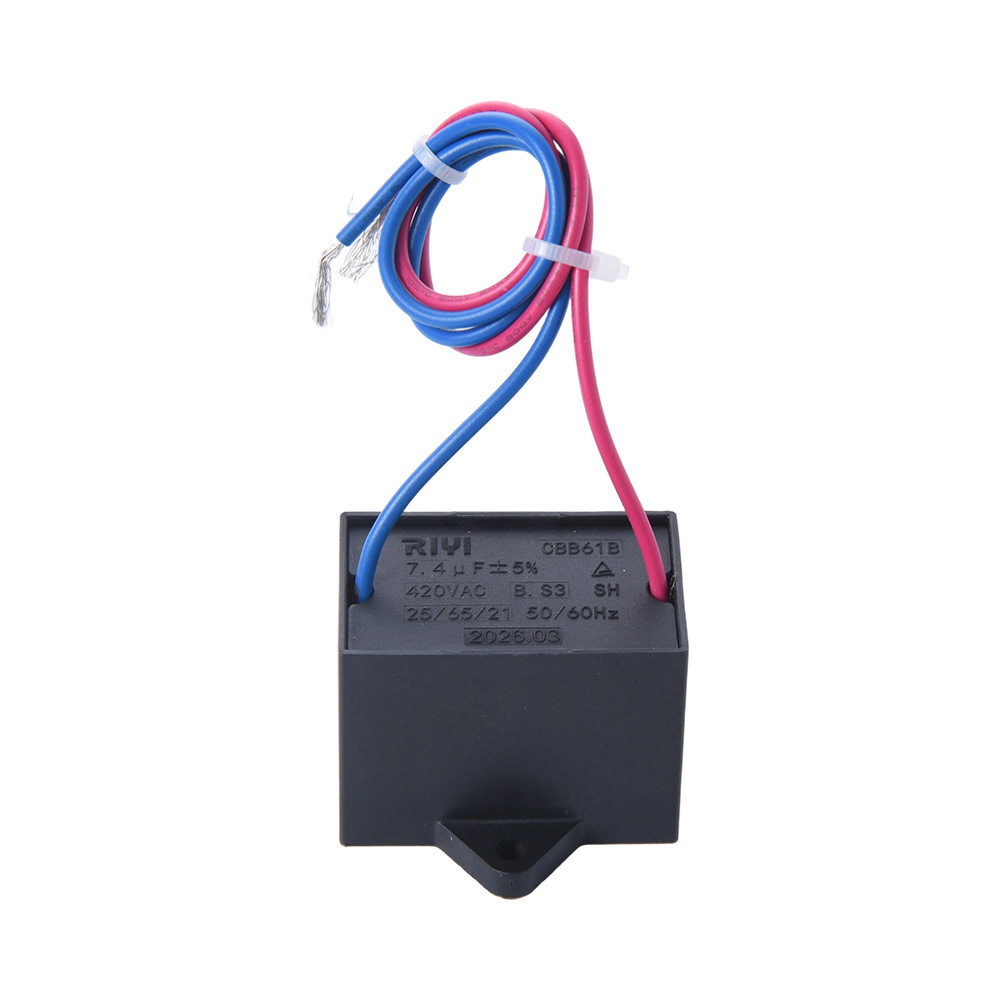
As China cbb61 capacitor manufacturer and cbb61 fan capacitor factory, CIXI RIYI CAPACITOR FACTORY is a professional enterprise specializing in the production of AC motor capacitors, compensation capacitors for lighting fixtures, filters, and other products. The company is located on the south bank of Hangzhou Bay Bridge, where traffic is very convenient.
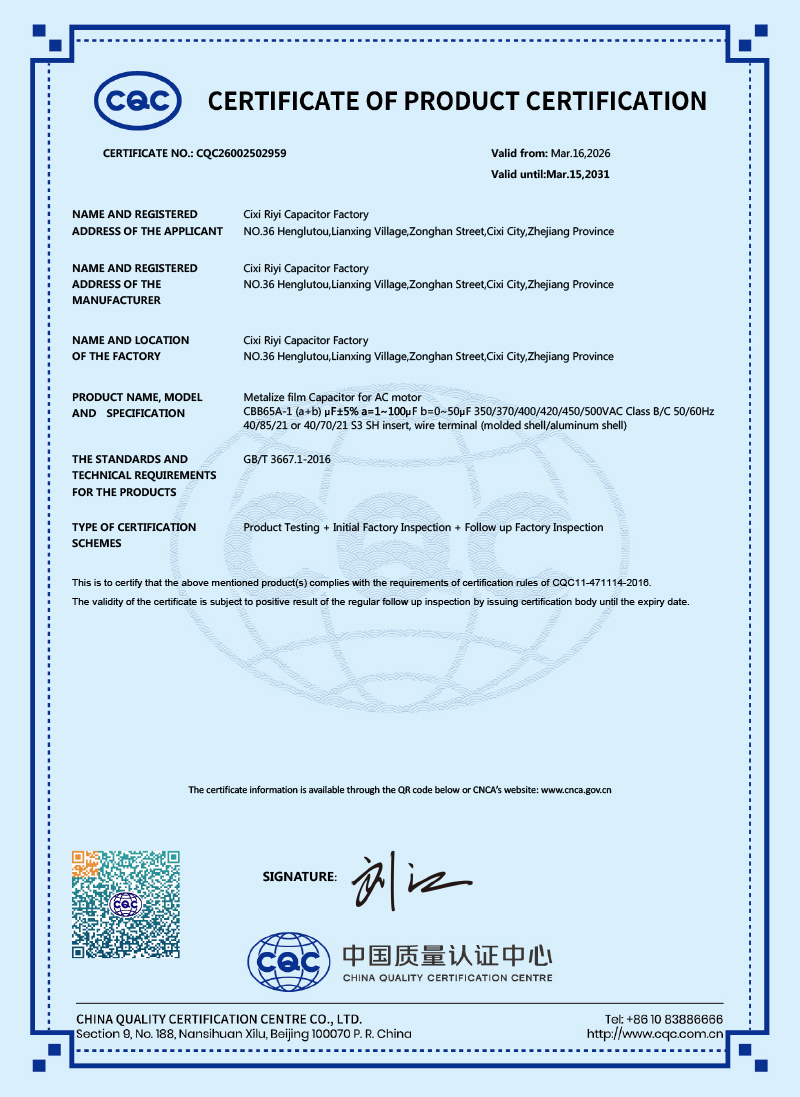
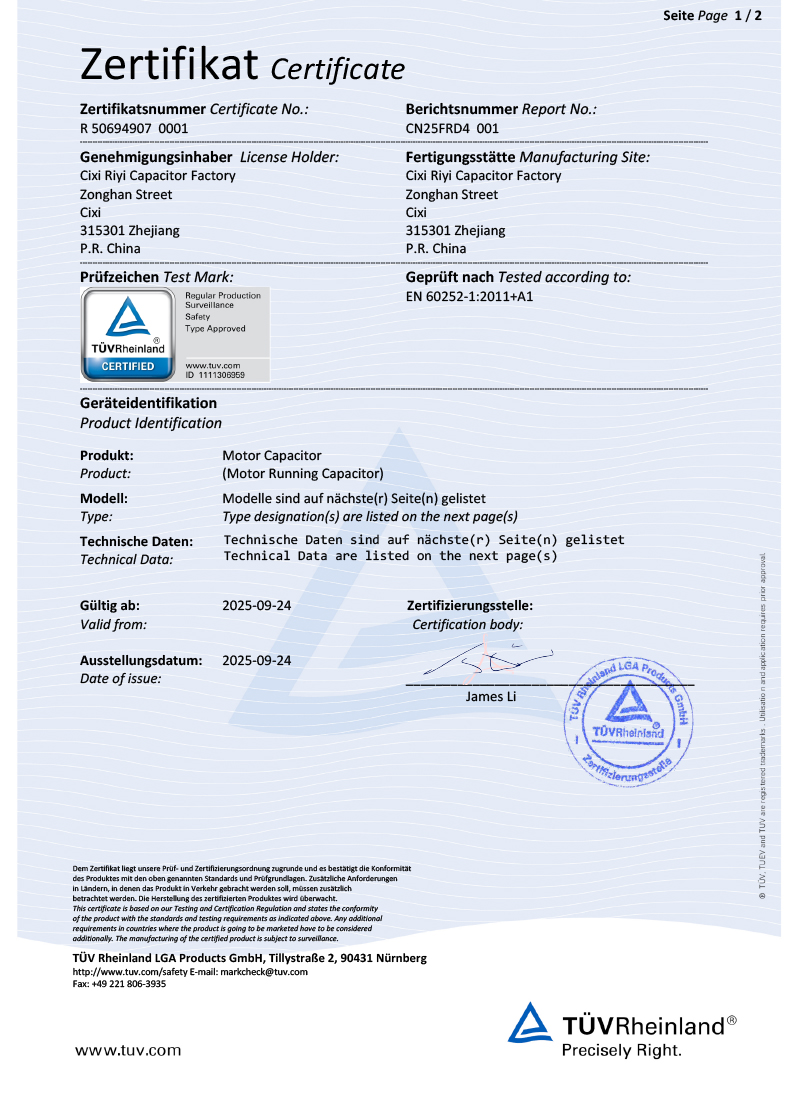
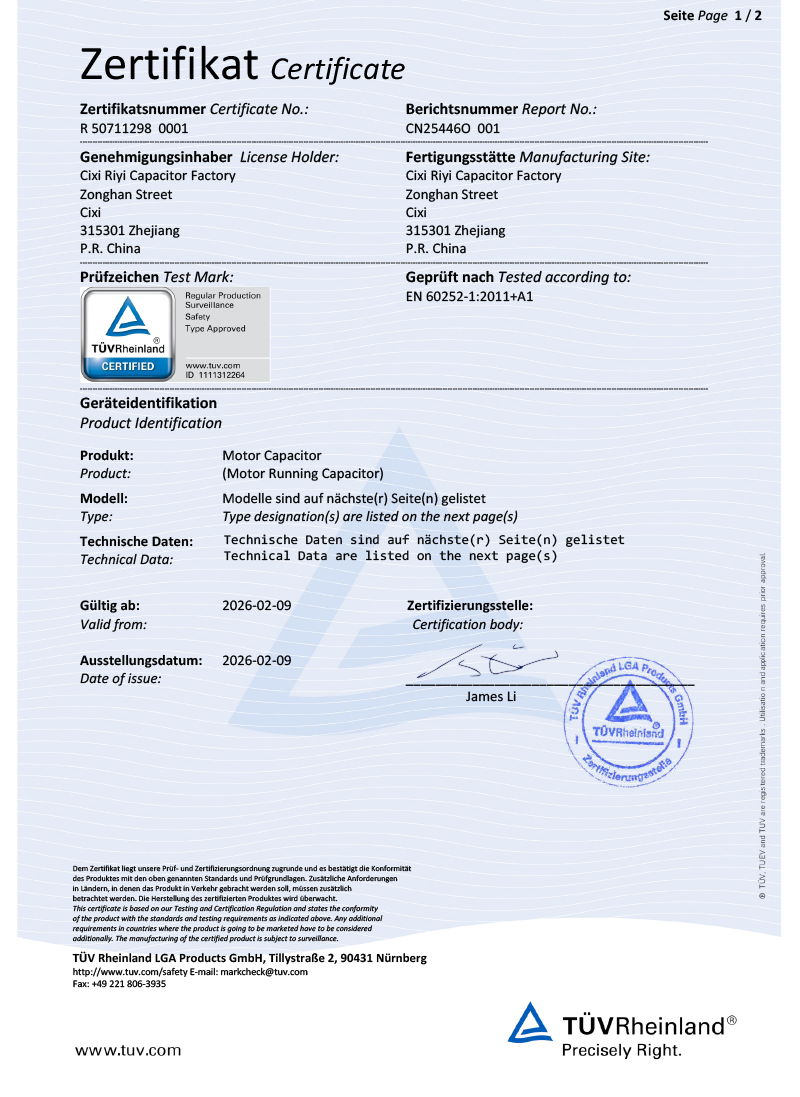
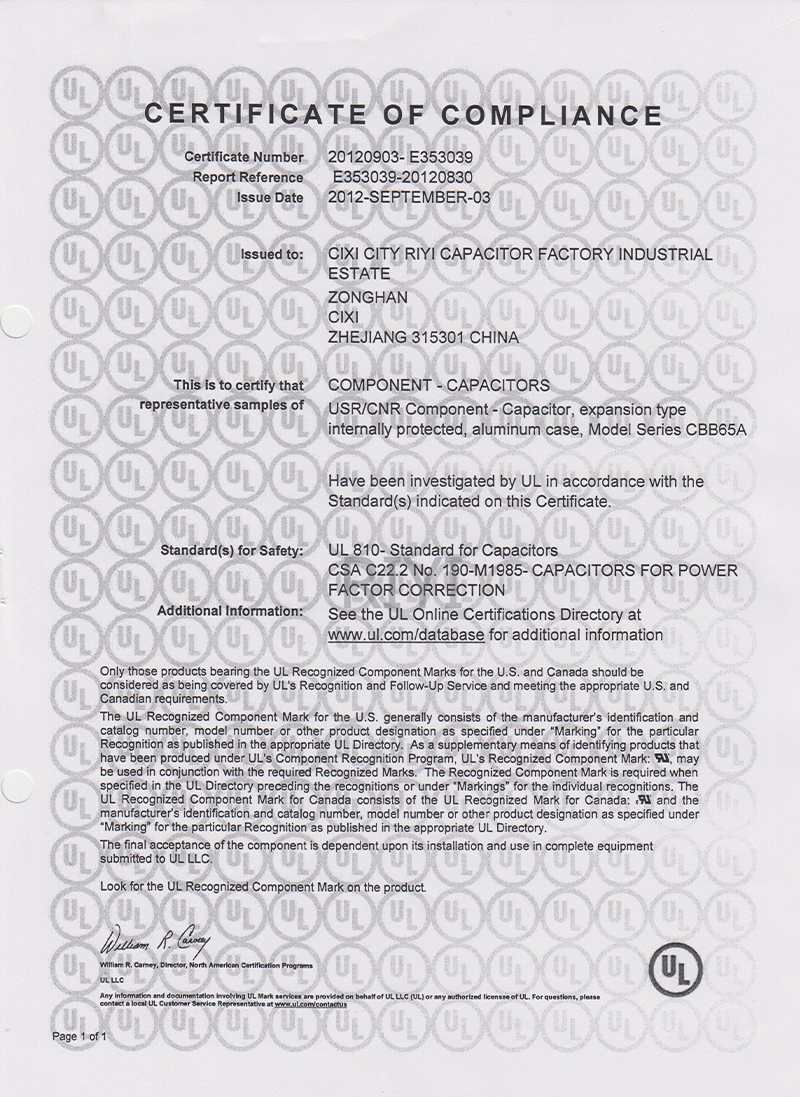
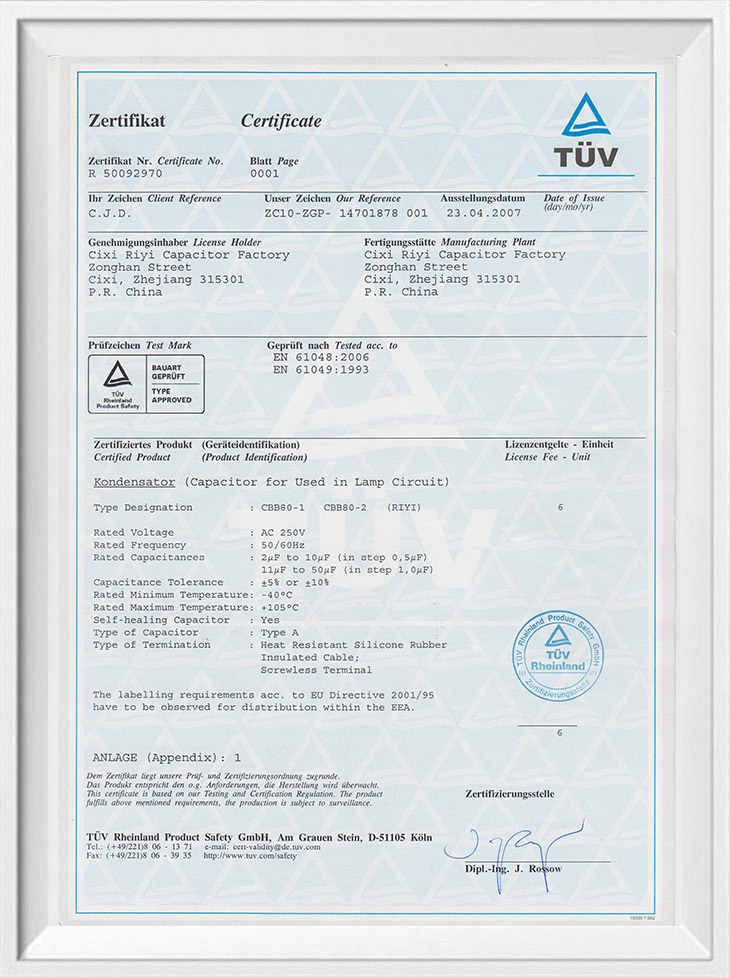
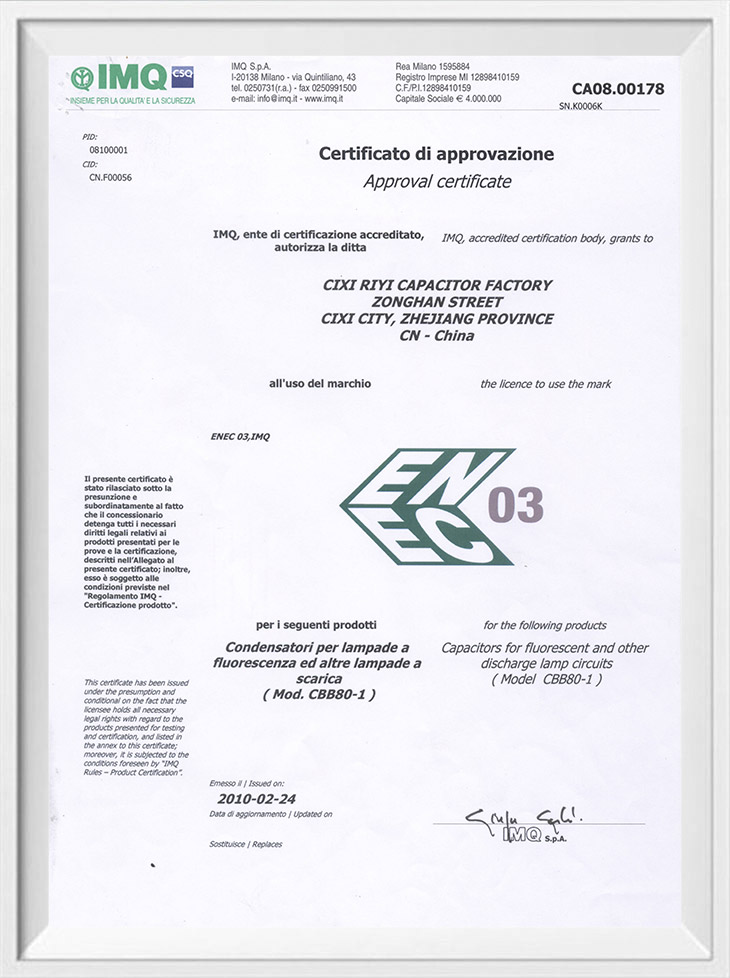
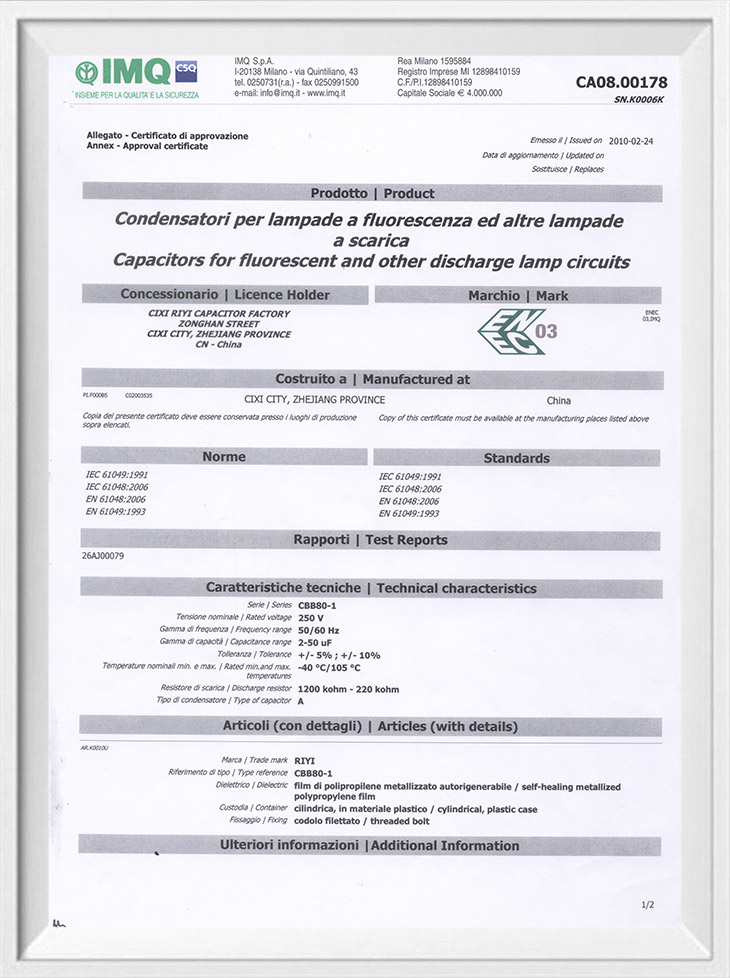
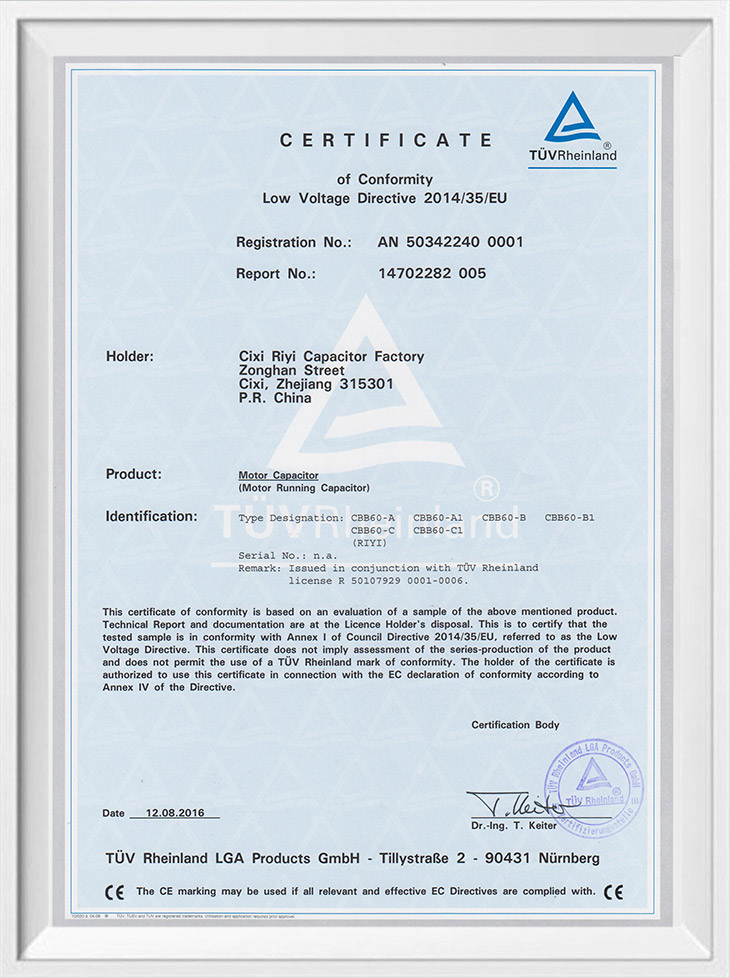
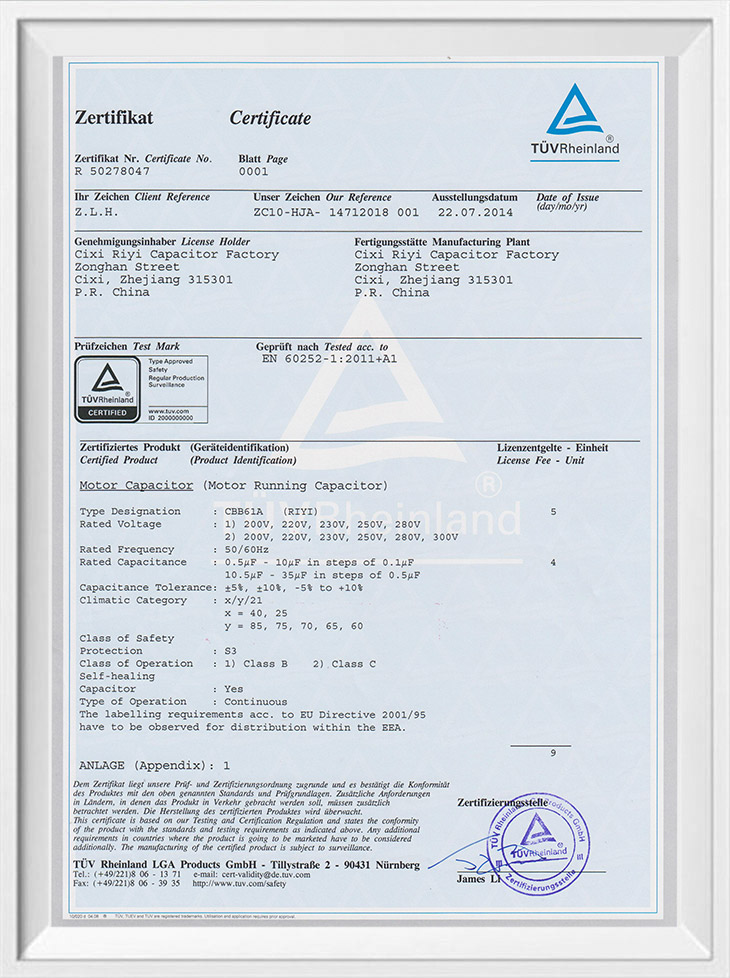
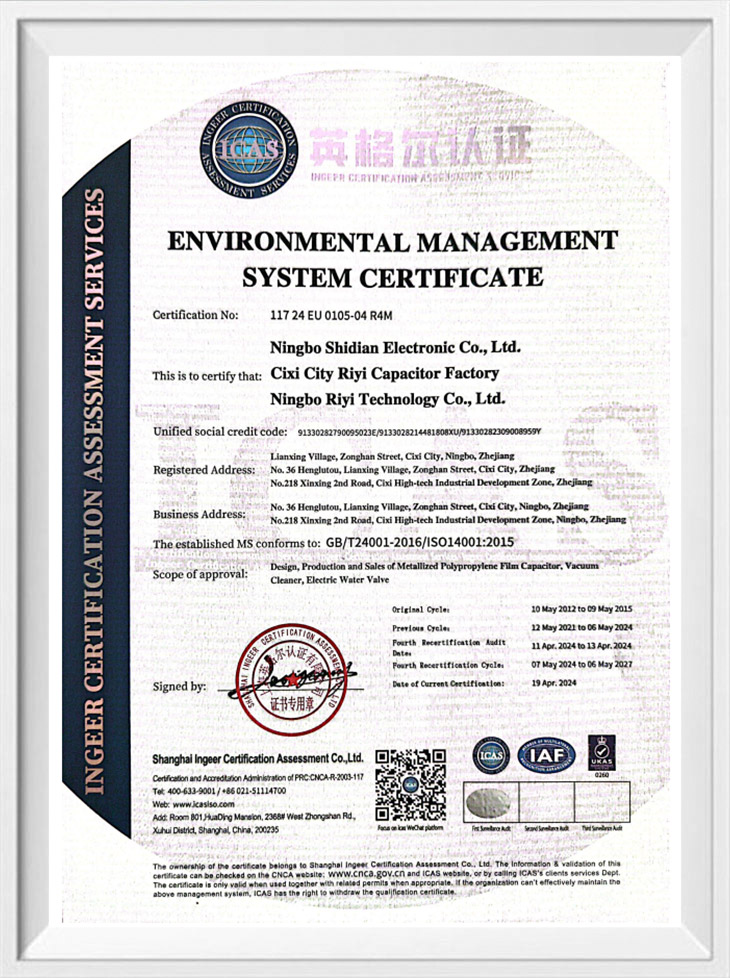
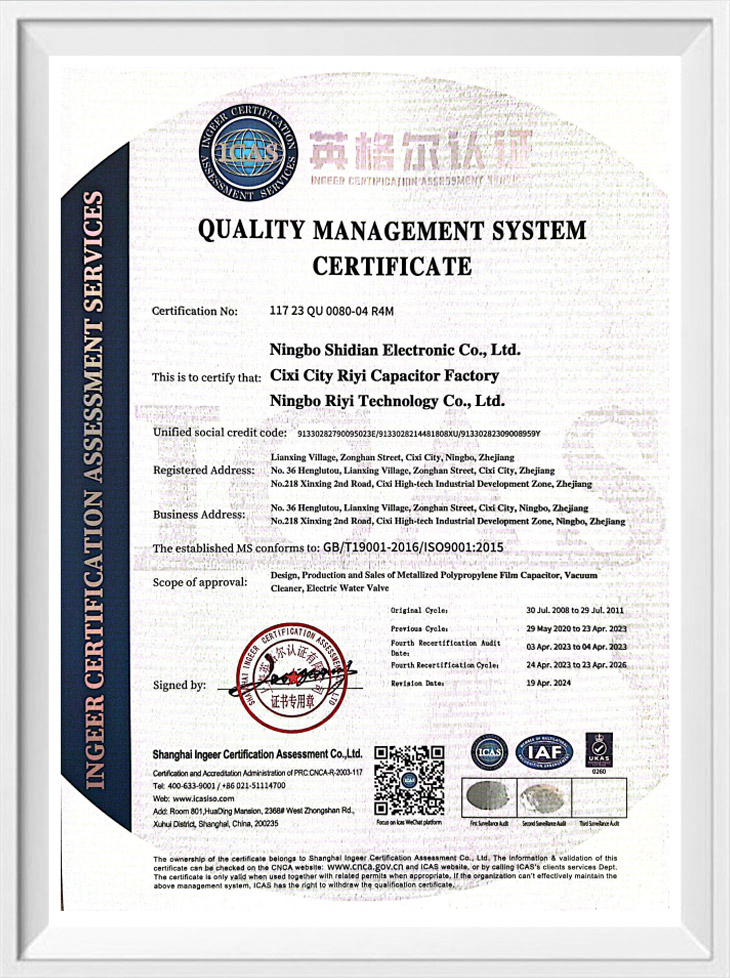
The company has 25,000 square meters of industrial plants and production for the workshop. Has strong technical force, advanced equipment, exquisite workmanship, and perfect detection means. It is market-oriented and based on the principle of meeting the customer's needs, while researching and producing a series of products. It had passed the ISO9001 quality management system and the ISO14001environmental management system certification, and all kinds of products have obtained certificates such as CQC, TUV, VDE, IMQ, UL, CE, etc.
Since its inception, the company has worked hard, strives for excellence, and with utmost dedication, it serves the electronics industry, power industry, household electrical appliance industry, and provides support services for high-tech enterprises. And as a result, we won the trust of our customers and became a well-known enterprise at home and abroad.
RIYI looks forward to working with your cooperation and creating a better tomorrow!

AC Cbb61 Square Motor Fan Capacitor Manufacturer
The CBB61 Square Motor Capacitor range covers film capacitors designed for AC motors, offered in two connection styles.
Product Types:
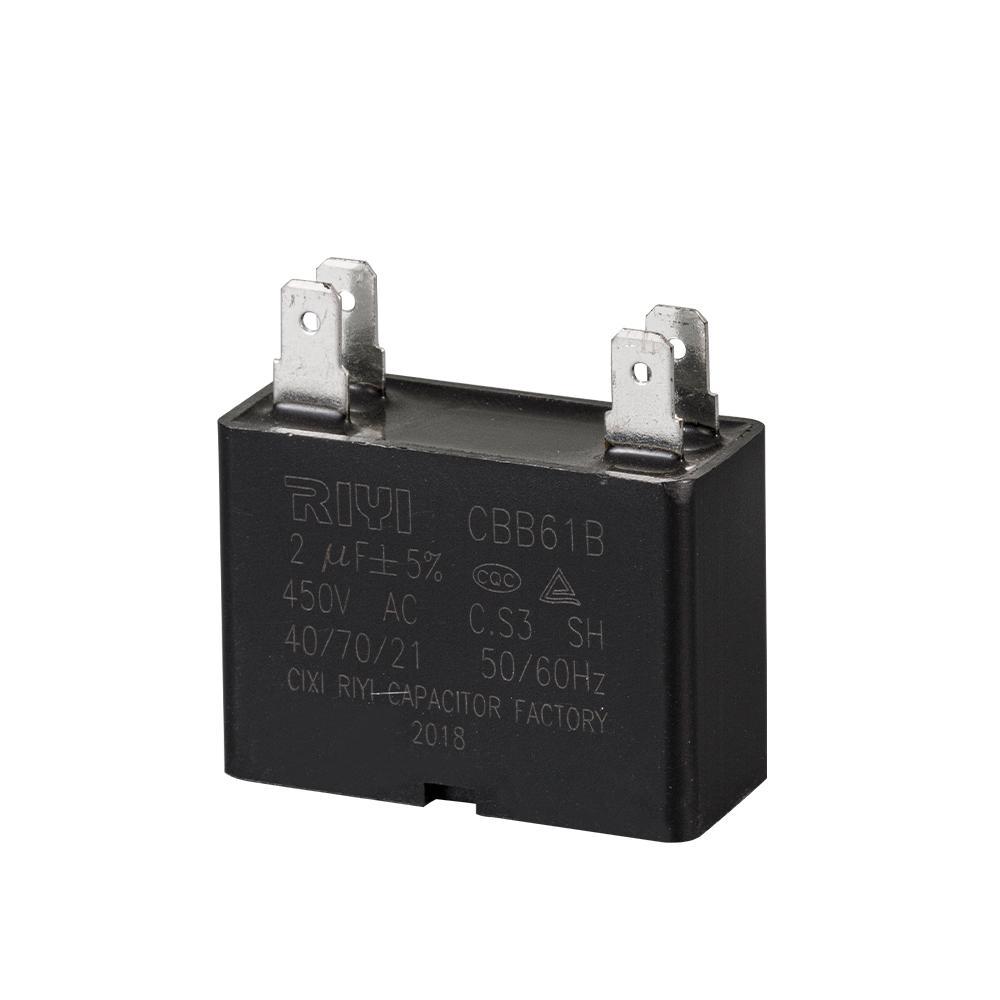
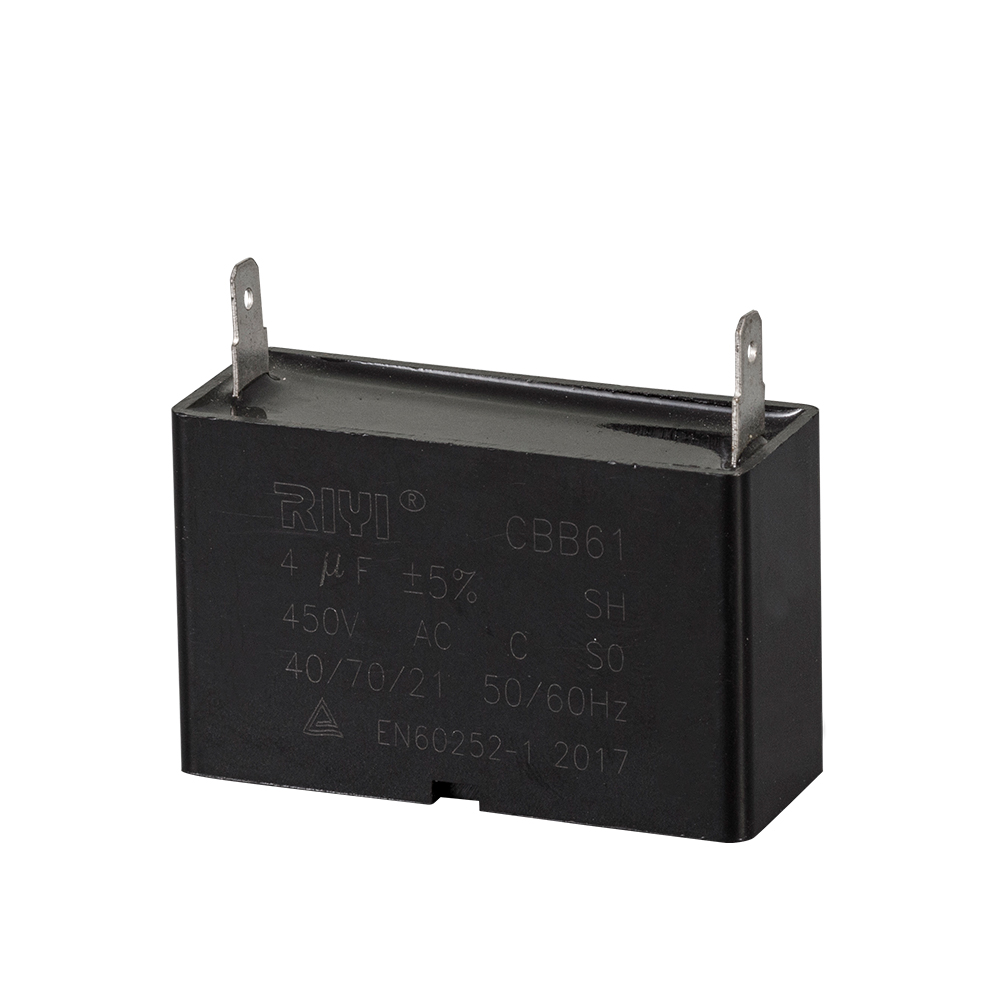
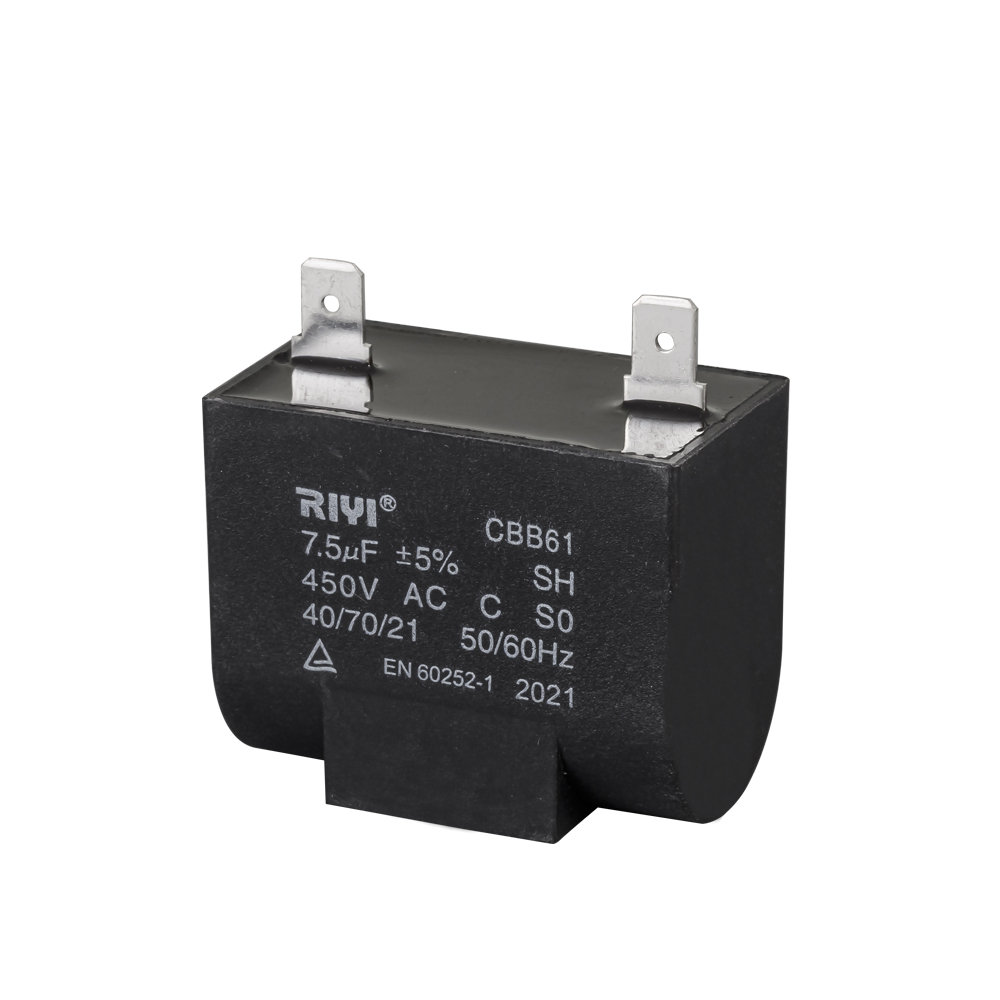
• Insert: CBB61 models with 1+1 and 2+2 terminals, such as 2uF 450V S3, 4uF 450V S0 and 7.5uF 450V S0.
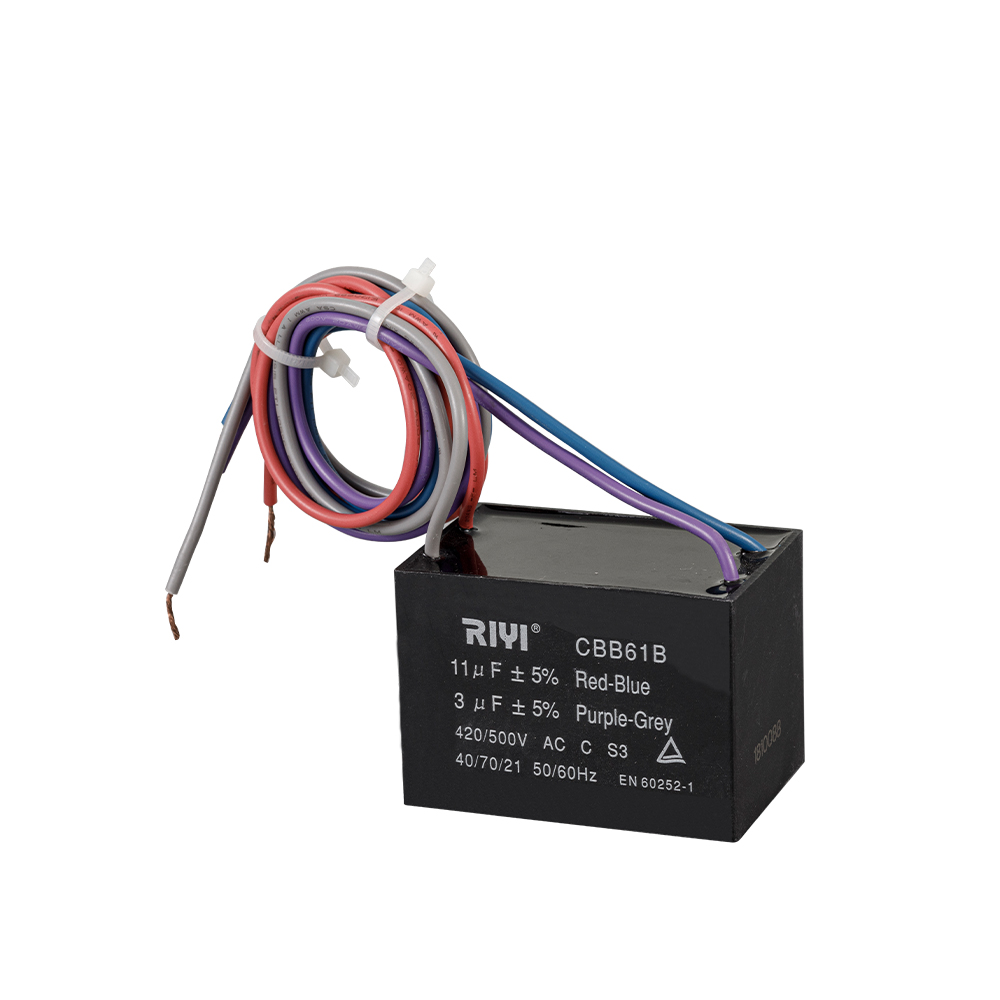
• Lead: explosion-proof S3 lead models such as 11+3uF 420&500V, 12uF 250V, 7.4+3.6uF 420V, 6uF 450V and 7.4uF 420V.
Key Features:
• Square-style body in the CBB61 series.
• Film capacitors designed for AC motors; the 11+3uF model is described as a metallized polypropylene film type.
• S3 safety class on the lead models, which are explosion-proof.
• Single and dual capacitance options.
Typical Applications:
• Fan motors, as the CBB61 series is our fan capacitor line.
• Other motor uses across our range, including washing machines, dryers, air conditioners, range hoods and water pumps.
Buying from Cixi Riyi:
• We wholesale CBB61 fan capacitors.
• Custom products are developed from your drawings or samples.
• Products have been exported to dozens of countries, including the United States, Indonesia, the Philippines, Turkey and Egypt.
CIXI RIYI CAPACITOR FACTORY
CERTIFICATE OF HONOR
- <
- <
- <
- <
- <
- <
- <
- <
- <
- <
- <
MESSAGE FEEDBACK
Industry knowledge
CBB61 Square Motor Capacitors, Built at Our Own Factory
Cixi Riyi Capacitor Factory produces the CBB61 square motor capacitor range: metallized film capacitors for single-phase AC motors, supplied as fan capacitors with either insert-type terminals or wire leads. Values run from 2 µF 450 V insert models through 6 µF, 7.4 µF and 12 µF lead models up to the dual-section 11+3 µF 420&500 V S3 and 7.4+3.6 µF 420 V S3 parts.
The working point is fixed at order — capacitance, voltage rating, safety class and connection style must match the motor winding, the wiring method and the enclosure the capacitor sits in. We also develop custom capacitors from your drawings or samples when a nameplate calls for a value that is not standard.
One Range, Two Connection Styles
As an AC Cbb61 Square Motor Fan Capacitor Manufacturer, we split the line by how the capacitor meets the motor harness, not by application. Both groups share the square-body CBB61 construction.
Insert Terminal Group
Terminal connection instead of flying leads. Listed values are 2 µF 450 V S3 with a 2+2 terminal set, plus 4 µF 450 V S0 and 7.5 µF 450 V S0 with 1+1 terminals.
- Fits motors with terminal posts or quick-connect tabs
- Suits compact fan and ventilation assemblies
- See AC Cbb61 Insert Type Square Capacitor
Wire Lead Group
Every listed model carries S3-class explosion-proof construction with sealed, leaded bodies, including single and dual-capacitance versions.
- Direct splice into motor wiring looms
- Used where the assembly is potted or vibration-exposed
- See AC Cbb61 Wire Lead Motor Capacitor
CBB61 Model Range and Application Fit
| Model | Connection | Class | Typical fit |
|---|---|---|---|
| CBB61 2 µF 450 V | Insert, 2+2 terminal | S3 | Small fan and blower motors |
| CBB61 4 µF 450 V | Insert, 1+1 terminal | S0 | AC motors needing a defined phase shift |
| CBB61 7.5 µF 450 V | Insert, 1+1 terminal | S0 | Fan and ventilation motors |
| CBB61 6 µF 450 V | Wire lead | S3 | Fan and blower motors |
| CBB61 7.4 µF 420 V | Wire lead | S3 | Motors with non-standard 7.4 µF / 420 V nameplates |
| CBB61 7.4+3.6 µF 420 V | Wire lead, dual section | S3 | Dual run circuits, fan and auxiliary winding |
| CBB61 11+3 µF 420&500 V | Wire lead, dual section | S3 | Metallized polypropylene dual-value motor circuits |
| CBB61 12 µF 250 V | Wire lead | S3 | Lower-voltage motor circuits |
Single-capacitance and dual-capacitance versions share the same square housing family, so a change from one value to another rarely changes the mounting footprint.
Reading the Ratings: Capacitance and Voltage
The first number is capacitance in microfarads and the second is the AC voltage rating. A dual value such as 11+3 µF means two sections in one body — a larger section for the main winding duty and a smaller one for the auxiliary circuit.
2 µF
4 µF
6 µF
7.5 µF
12 µF
Relative scale of the listed single-section values; bar length shows capacitance only, not performance ranking.
- Capacitance sets motor torque and speed behaviour; the nameplate value governs the order.
- Voltage rating must sit above the running voltage of the winding, with headroom for mains variation.
- Safety class separates S0 insert models from S3 explosion-proof lead models in this range.
- Connection decides whether the harness terminates on tabs or splices onto leads.
Where These Fan Capacitors Are Used
Fans & blowers
Range hoods
Air conditioning
Washers & dryers
Water pumps
Our capacitor range serves the electronics, power and household appliance industries. CBB61 parts are the fan capacitor line: they hold a phase shift between main and auxiliary current so the motor develops a rotating field and keeps running smoothly. When a customer needs a plastic-case or aluminium-case part instead of the square CBB61 body, our CBB60 AC motor run and start capacitor range covers those housings.
Configuration Options We Build
- Capacitance value and dual-section split
- AC voltage rating to match the winding
- S0 or S3 explosion-proof class
- Insert terminal or wire lead termination
- Lead arrangement developed from your drawing or sample
Custom Development
We develop and produce capacitors from drawings or samples you provide. That route suits non-standard nameplates, unusual terminal positions on a fan motor, or a dual-value combination that does not appear in our listed models.
Send the motor nameplate data, the drawing or a physical sample, and your marking and packaging requirements; we translate that into a buildable specification.
Manufacturing Base and Quality Control
25,000 m²plant and workshops
60,000pieces daily output
11 + 15slitting and winding machines
150+staff, 3 engineers
The factory holds ISO9001 quality management and ISO14001 environmental management system certification, and our products carry CQC, TUV, VDE, IMQ, UL and CE certificates where the relevant series applies. Cixi Riyi operates 11 automatic slitting machines and 15 imported automatic winding machines, supported by 21 technical personnel who handle value checks, sealing and outgoing inspection on CBB61 runs.
Products have been exported to dozens of countries, including the United States, Indonesia, the Philippines, Turkey and Egypt.
Information We Use to Configure Your Solution
| Item | What we need | Why it matters |
|---|---|---|
| Electrical point | Capacitance, voltage rating, single or dual section | Sets torque and running behaviour |
| Safety class | S0 or S3 requirement | Determines housing and sealing build |
| Termination | Insert terminal count or lead arrangement | Controls harness assembly on your line |
| Space envelope | Drawing or sample of the mounting position | Confirms body fit and lead exit |
| Marking | Nameplate text, value printed on the case, label format | Keeps field replacement traceable |
| Volume and packing | Annual or release quantity, carton and pallet requirement | Drives winding batches and delivery planning |
Installation, Acceptance and Serviceability
Capacitors are non-polarised, so orientation in the circuit does not decide polarity — the rated value and voltage do. Mount the square body so the terminals or lead exit are not stressed by the harness, keep the case clear of heat sources inside the motor compartment, and discharge any capacitor before handling it during service.
- Confirm the nameplate value against the motor data before fitting a replacement.
- Check terminal seating on insert models and lead crimp integrity on leaded models.
- Keep spare values in stock by capacitance and voltage rather than by appliance model.
- Return failed units with the motor details so we can check the build against the original order.
Frequently Asked Questions
Are you a direct manufacturer of CBB61 fan capacitors?
Yes. Cixi Riyi Capacitor Factory is a direct manufacturer, not a trading company. Our 25,000 m² plant runs 11 automatic slitting machines and 15 imported automatic winding machines with a daily output of 60,000 pieces, and more than 150 employees including 21 technical personnel and 3 engineers.
Which values can we order in the square CBB61 line?
The listed range covers 2 µF, 4 µF, 6 µF, 7.4 µF, 7.5 µF and 12 µF single sections at 250 V, 420 V or 450 V, plus the dual-section 11+3 µF 420&500 V and 7.4+3.6 µF 420 V models. Values outside that list are developed from your drawings or samples.
Insert terminal or wire lead — how do we choose?
Choose insert when the motor or appliance assembly terminates on fixed tabs or posts and you want a plug-on part; choose wire lead when the harness is spliced, potted or subjected to vibration, which is where our S3 explosion-proof leaded models are used.
What does the S3 class mean in your lead models?
S3 is the safety class applied across the lead group, where the capacitor body is sealed and built for explosion-proof duty. The insert group lists both S0 and S3 models, so the required class is confirmed against the appliance specification at order.
Can you match a non-standard nameplate?
Yes. The CBB61 7.4 µF 420 V S3 part exists for motors with a non-standard 7.4 µF / 420 V nameplate. Send the drawing, sample or nameplate data and we will develop the capacitor to suit, including the marking printed on the case.
What certificates apply to these capacitors?
The factory holds ISO9001 and ISO14001 certification, and our products have obtained certificates including CQC, TUV, VDE, IMQ, UL and CE. The applicable certificate depends on the model and the market, and we confirm this with the quotation.

CONTACT US
MESSAGE US RIGHT NOW!
QR Code
Quick Links
Our Product
Contact us
- Tel: +86-13600614158
- E-mail: mina@cxriyi.com
- Address: Zonghan Street,Cixi City, Zhejiang Province, China.
Copyright © CIXI RIYI CAPACITOR FACTORY
All Rights Reserved.
 China best fan capacitor factory
Custom CBB61 Square Motor Capacitor Suppliers
China best fan capacitor factory
Custom CBB61 Square Motor Capacitor Suppliers