Industry Knowledge Development
An
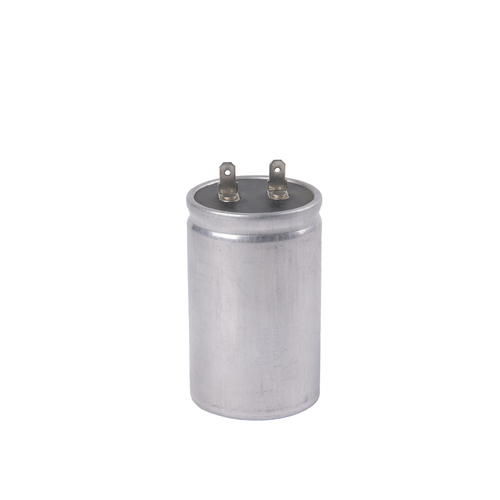
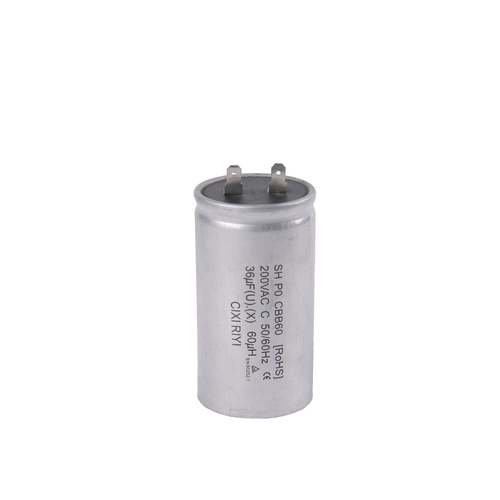
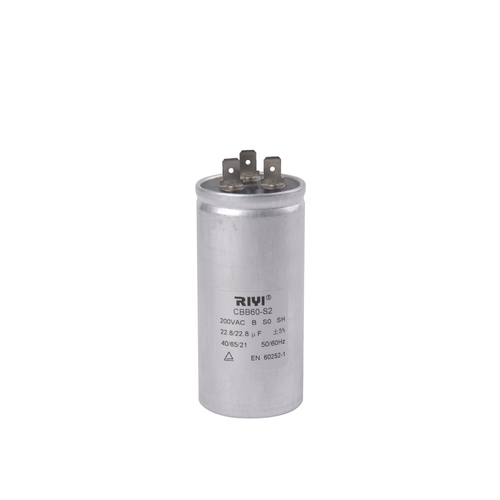
AC aluminum case CBB60 capacitor is a type of motor run capacitor commonly used in single-phase AC motors, such as air conditioners, refrigerators, and washing machines.
Here's a breakdown of the terms:
1.AC: Stands for alternating current, which is the type of electrical current commonly used in household power supplies. AC current constantly changes direction, unlike direct current (DC).
2.Aluminum case: Refers to the outer casing of the capacitor, which is typically made of aluminum. The case provides protection to the internal components and helps with heat dissipation.
3.CBB60: This is a specific type of capacitor that conforms to the CBB60 standard. It is a motor run capacitor, designed to provide a phase shift and improve the efficiency and performance of single-phase AC motors.
4.Capacitor: A capacitor is an electronic component that stores and releases electrical energy. In the case of a motor run capacitor like the CBB60, it helps regulate the voltage and current in the motor to improve its starting torque and overall operation.
The CBB60 capacitor is named after its standardized design and specifications. It typically has capacitance values ranging from a few microfarads (μF) to several tens of microfarads. The capacitor's capacitance value determines its ability to store electrical charge.
AC Aluminum Case CBB60 capacitors are commonly used in single-phase motor applications to improve power factor and provide voltage support. While these capacitors are generally reliable, there are some common problems that may occur in their work. Here are a few potential issues and their possible solutions:
1.Capacitor Failure: Capacitors can fail due to aging, overheating, voltage spikes, or manufacturing defects. Signs of a failed capacitor include bulging or leaking electrolyte, reduced capacitance, or open circuit.
Solution: In case of capacitor failure, the faulty capacitor needs to be replaced with a new one. It is important to choose a replacement capacitor with the same specifications (e.g., capacitance, voltage rating, and tolerance) as the original one.
2.Overheating: Excessive heat can cause the capacitor to degrade, leading to a shorter lifespan or even failure. Overheating may be caused by high ambient temperatures, overloading, or poor ventilation.
Solution: Ensure that the capacitor is properly rated for the application and that the ambient temperature is within the specified limits. Improve ventilation around the capacitor to dissipate heat effectively. If necessary, consider installing additional cooling measures such as fans or heat sinks.
3.Voltage Overstress: Voltage spikes or transient overvoltages can occur in the electrical system, which can exceed the rated voltage of the capacitor and cause damage.
Solution: Install surge protectors or voltage regulators to limit voltage spikes. If voltage stresses are a common occurrence, it may be necessary to select a capacitor with a higher voltage rating to withstand such conditions.
4.Poor Power Factor Correction: If the power factor correction capacitors are incorrectly sized or connected, it can lead to insufficient power factor improvement or excessive reactive power consumption.
Solution: Consult with a qualified electrician or engineer to determine the correct capacitance required for power factor correction. Ensure that the capacitors are connected properly according to the manufacturer's guidelines and that the total capacitance matches the load requirements.
5.Environmental Factors: Harsh environments, such as excessive moisture or chemical exposure, can damage the capacitor's aluminum case or lead to internal corrosion.
Solution: Protect the capacitors from extreme environmental conditions by using appropriate enclosures or protective measures. Consider using capacitors with additional environmental protection features, such as sealed or IP-rated casings, if the application demands it.

 简体中文
简体中文 English
 Español
 عربى
عربى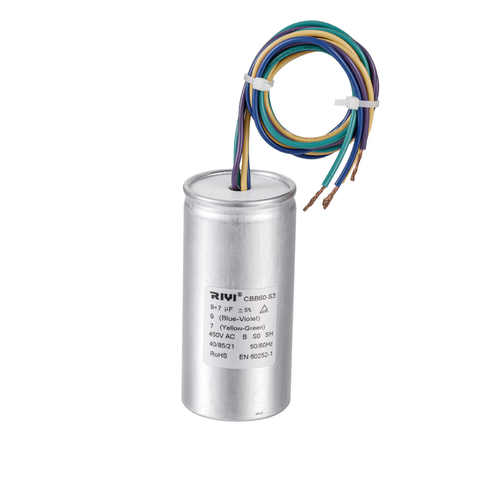



 +86-13600614158
 +86-0574-63223385
 Zonghan Street,Cixi City,Zhejiang Province,China.