 en
en
 English
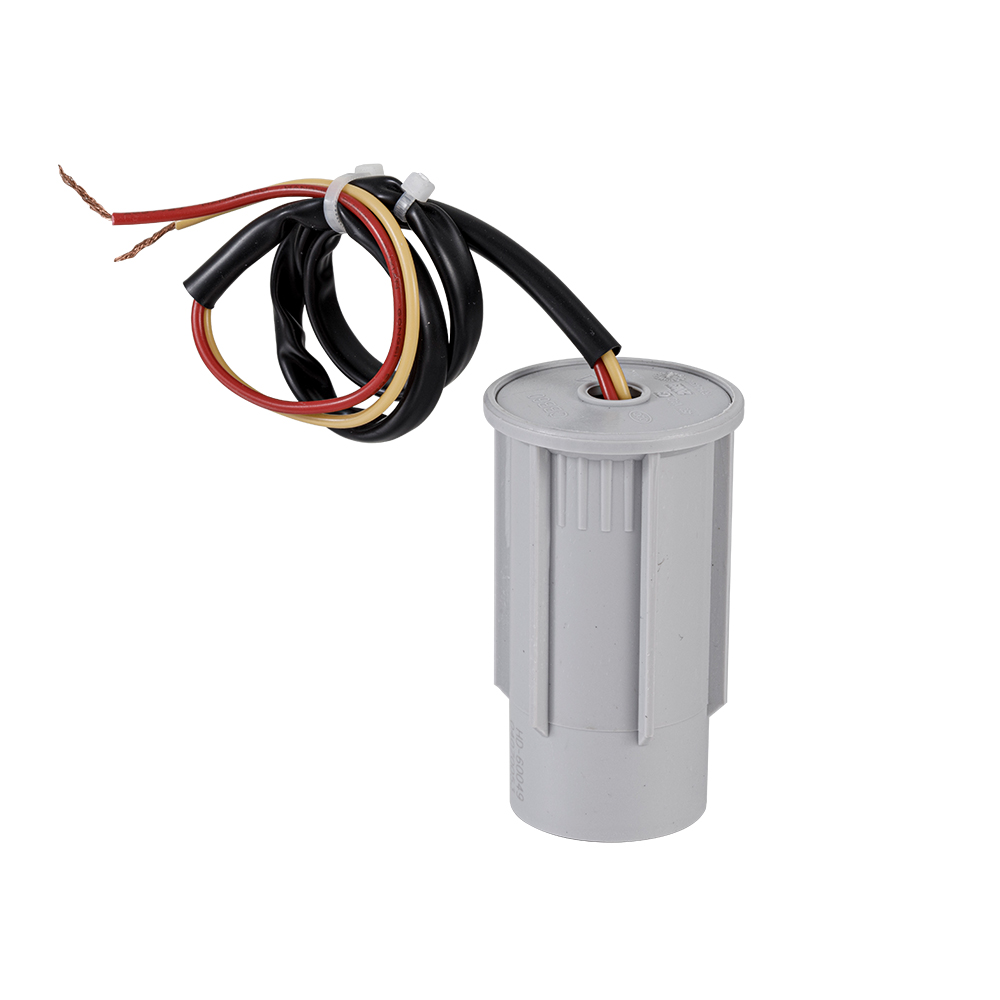
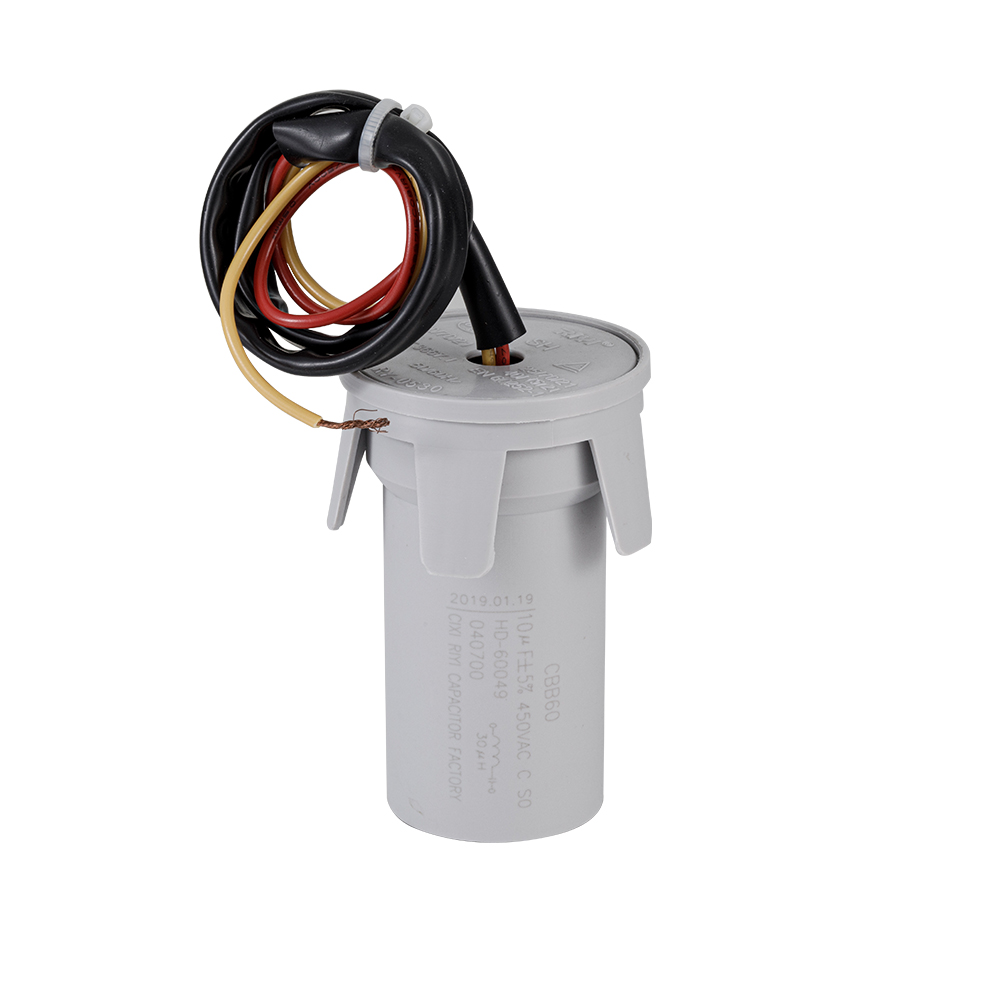
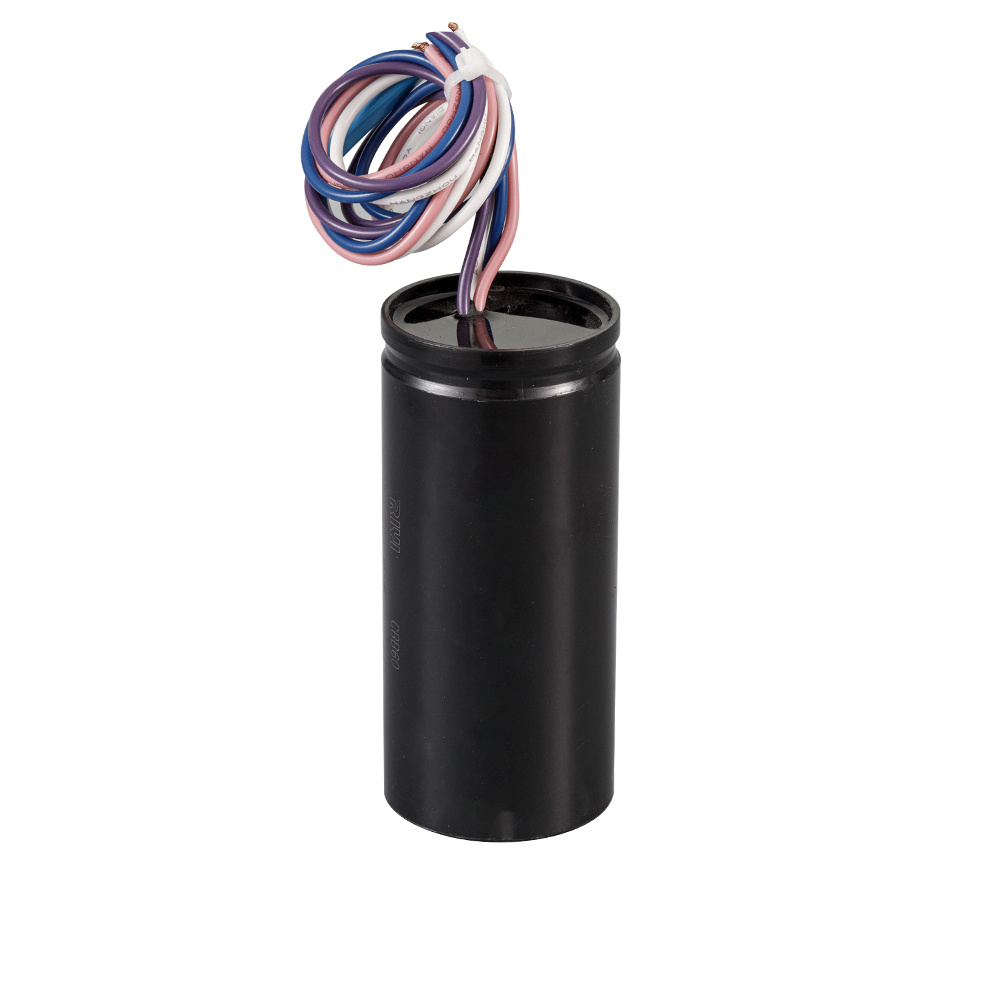
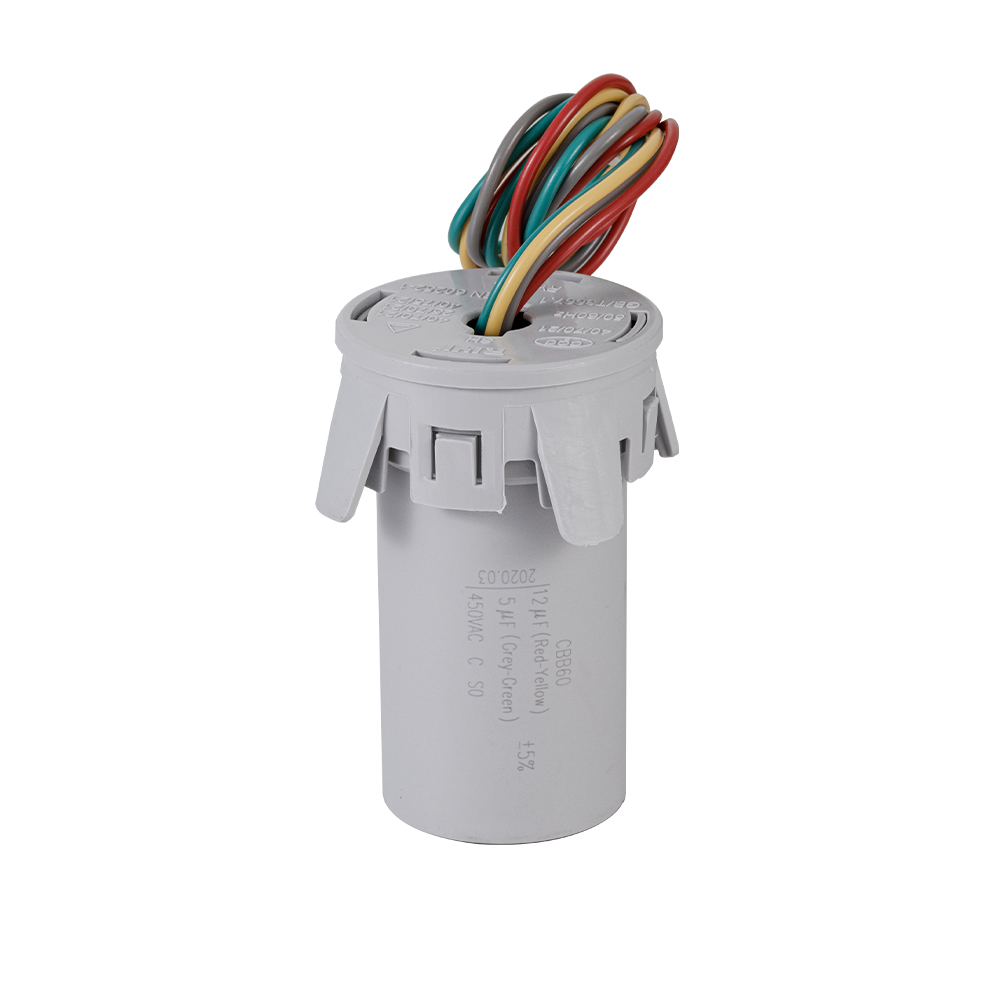
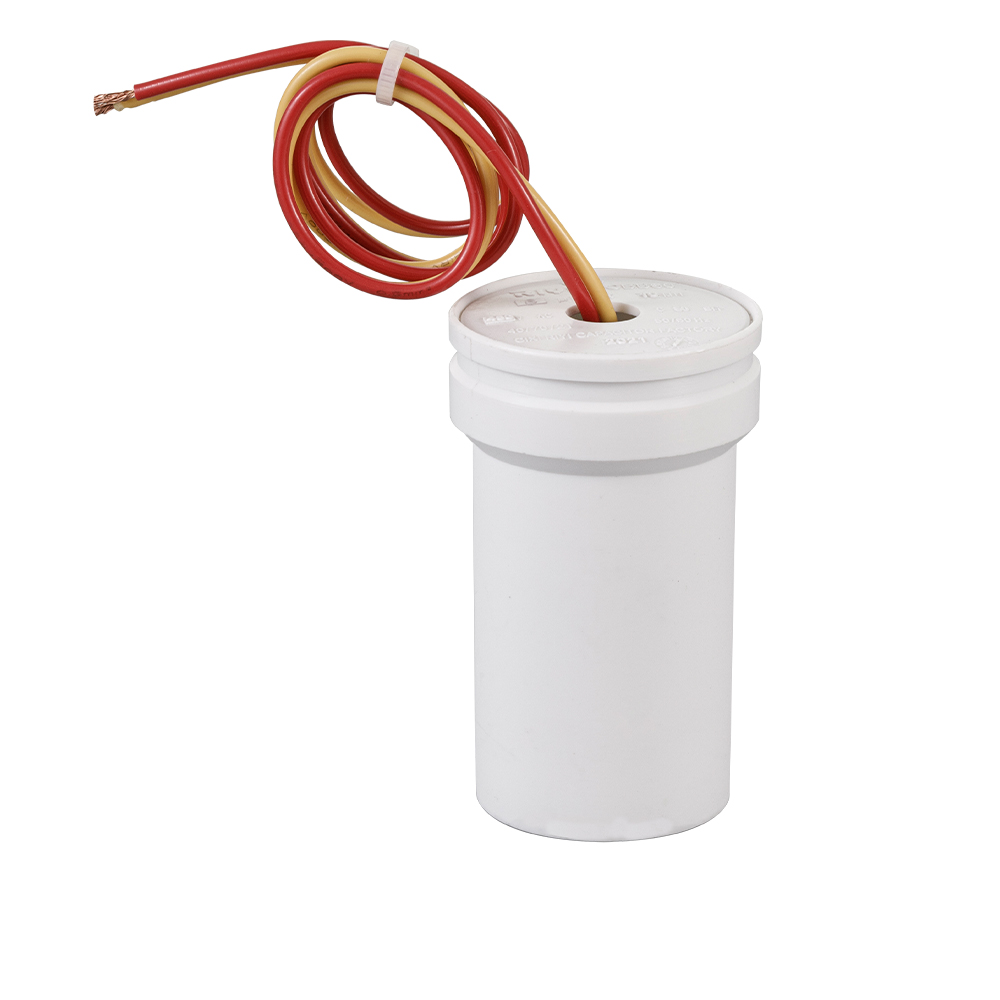
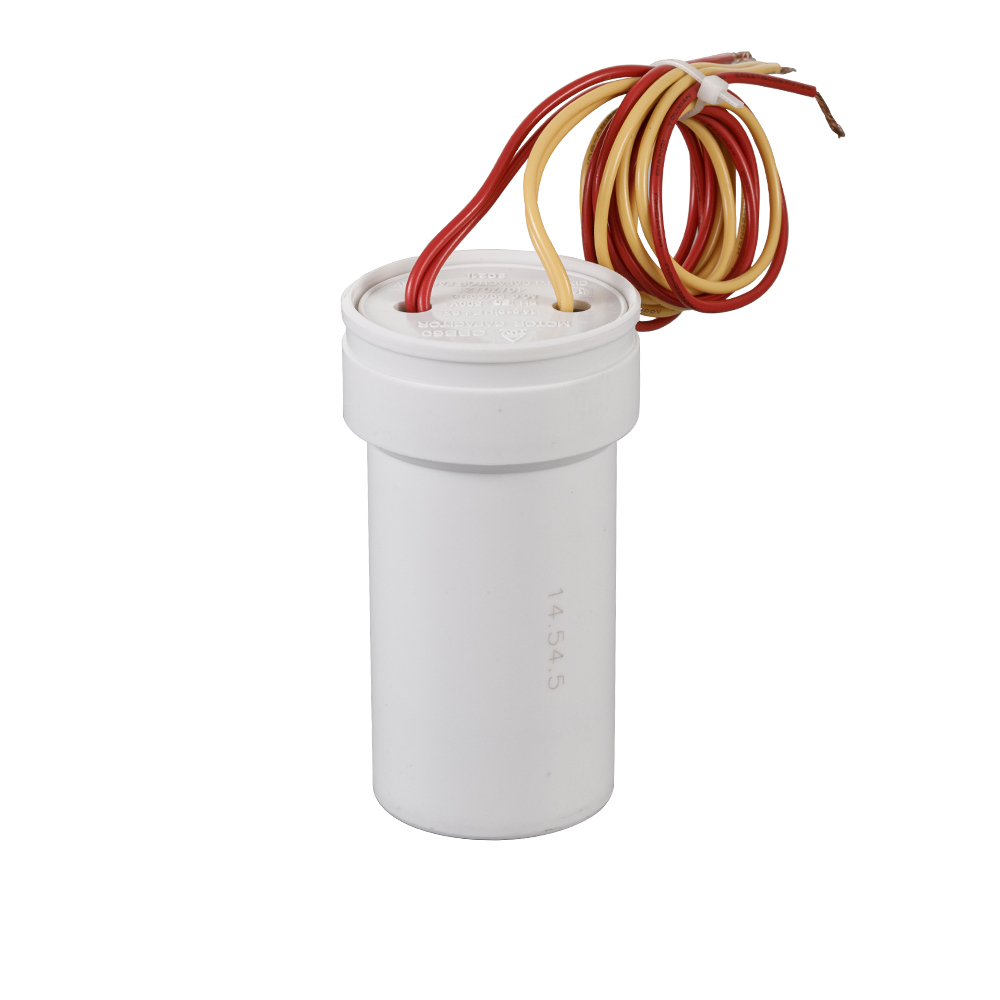
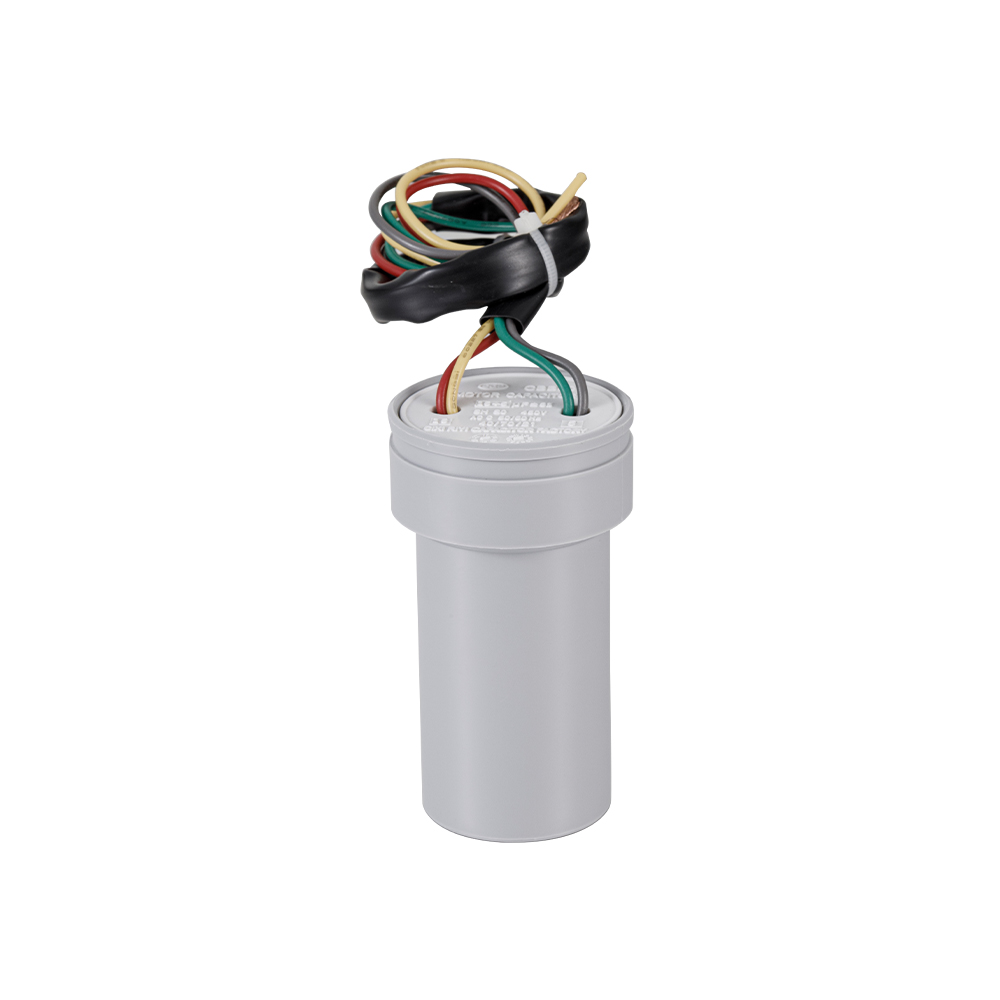
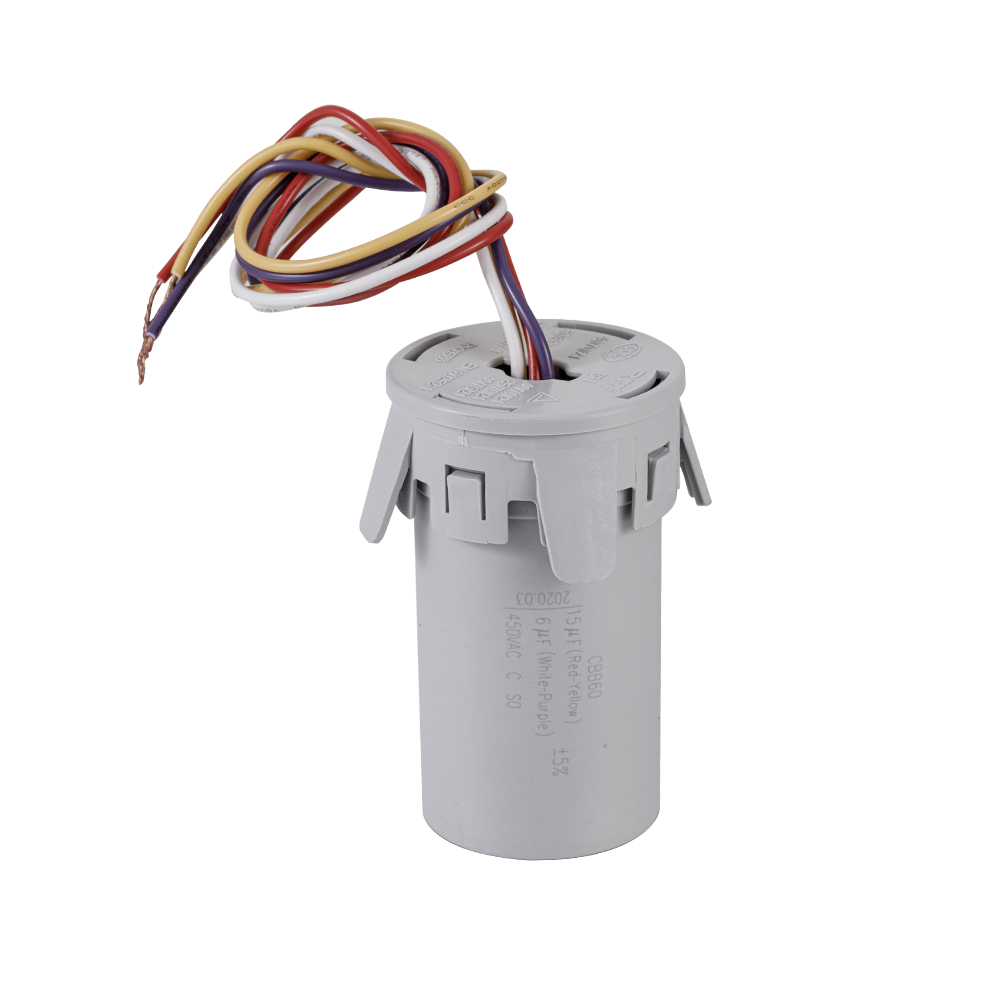
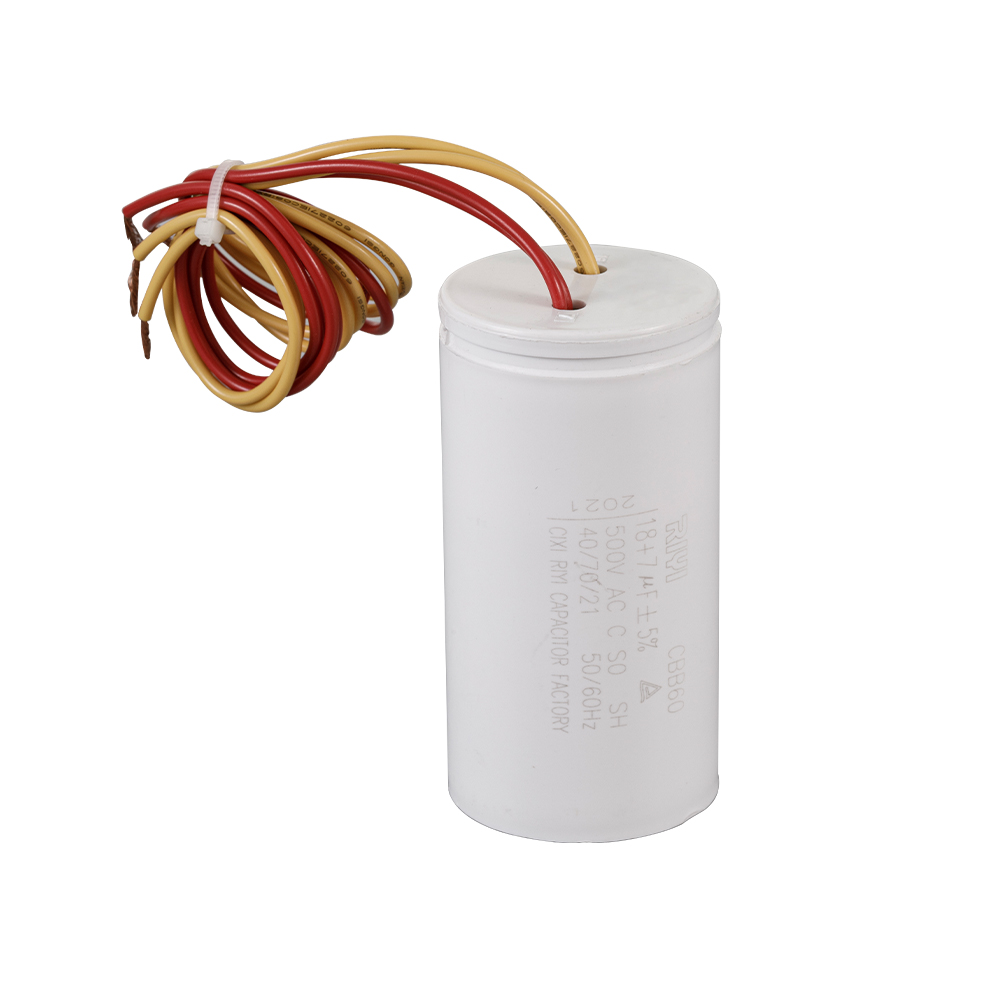
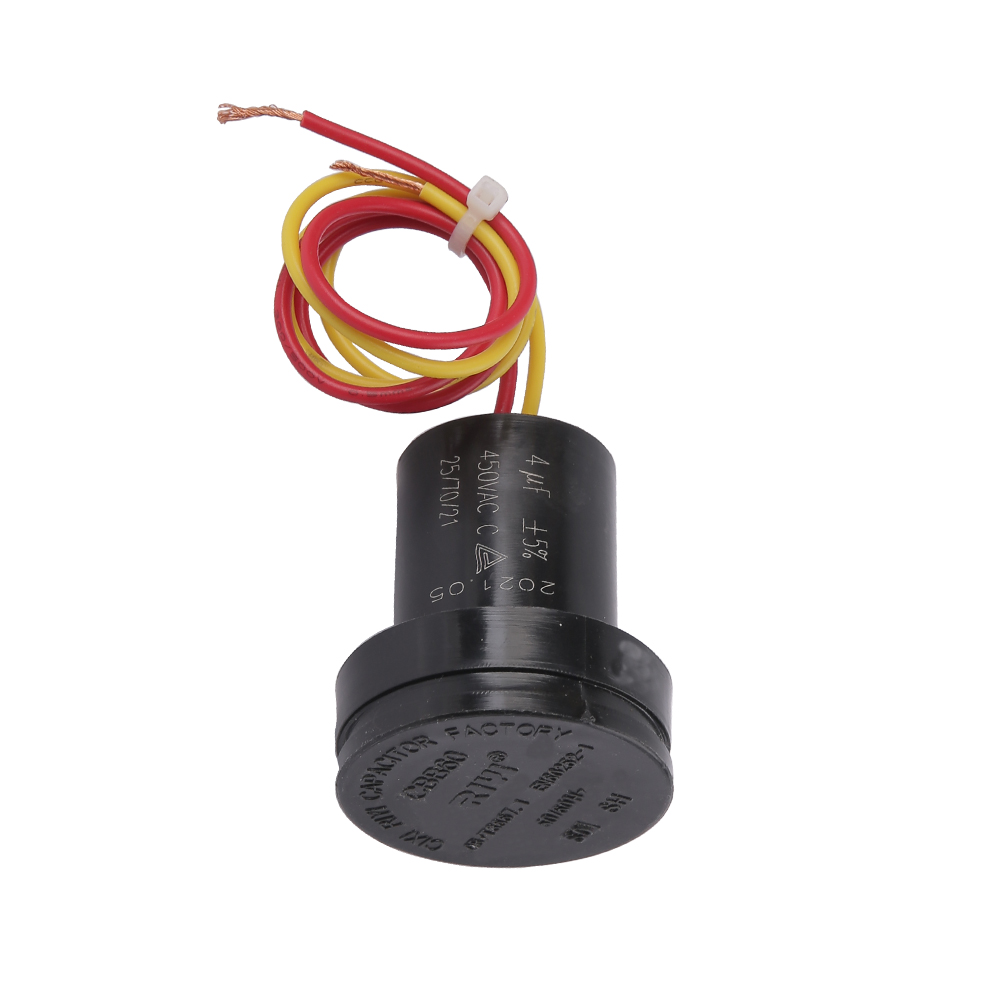
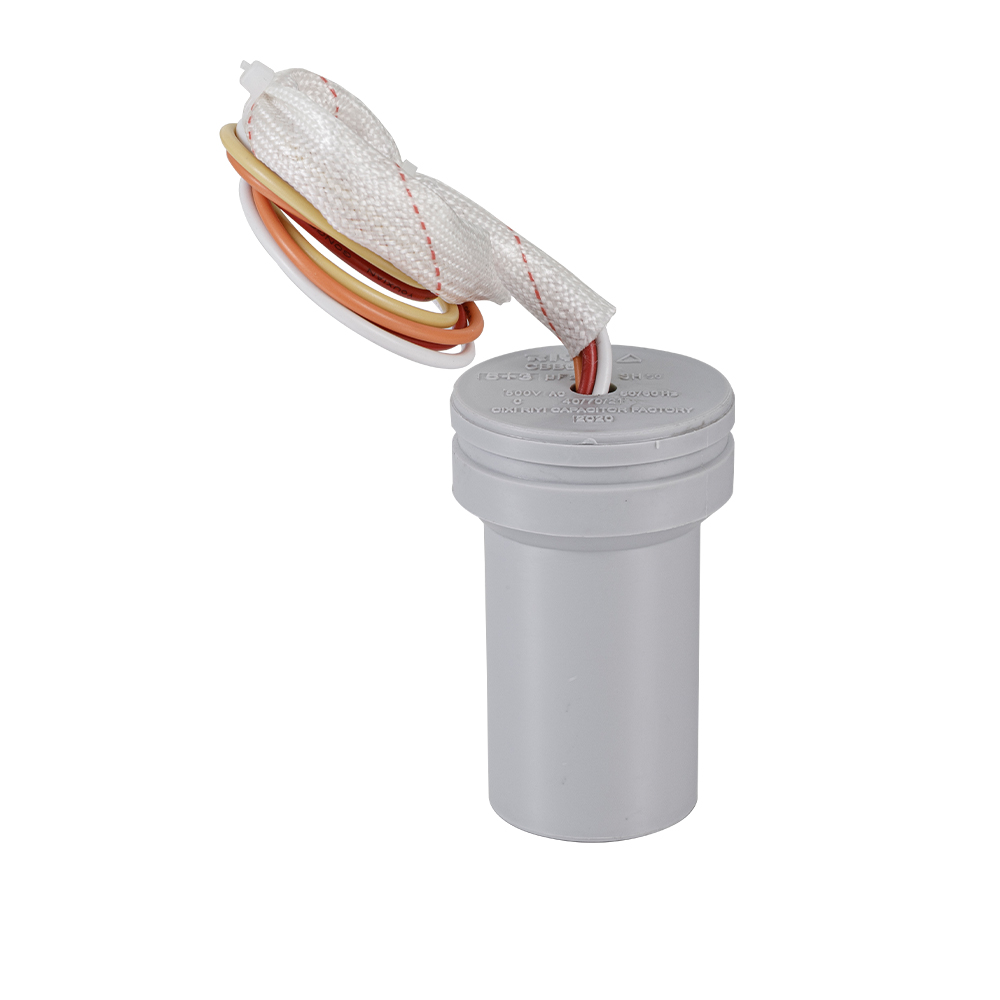
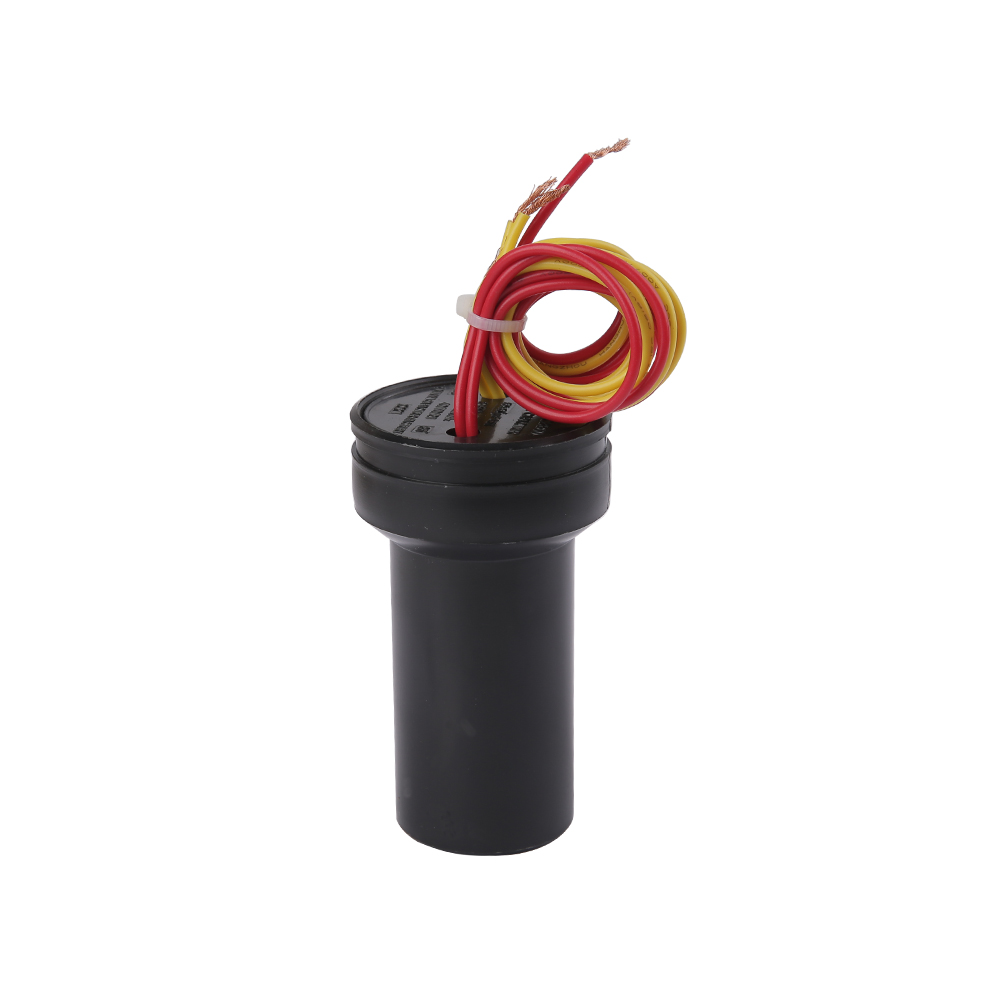
As China cbb60 ac motor washing machine motor capacitor manufacturers and washing machine capacitor factory, CIXI RIYI CAPACITOR FACTORY is a professional enterprise specializing in the production of AC motor capacitors, compensation capacitors for lighting fixtures, filters, and other products. The company is located on the south bank of Hangzhou Bay Bridge, where traffic is very convenient.
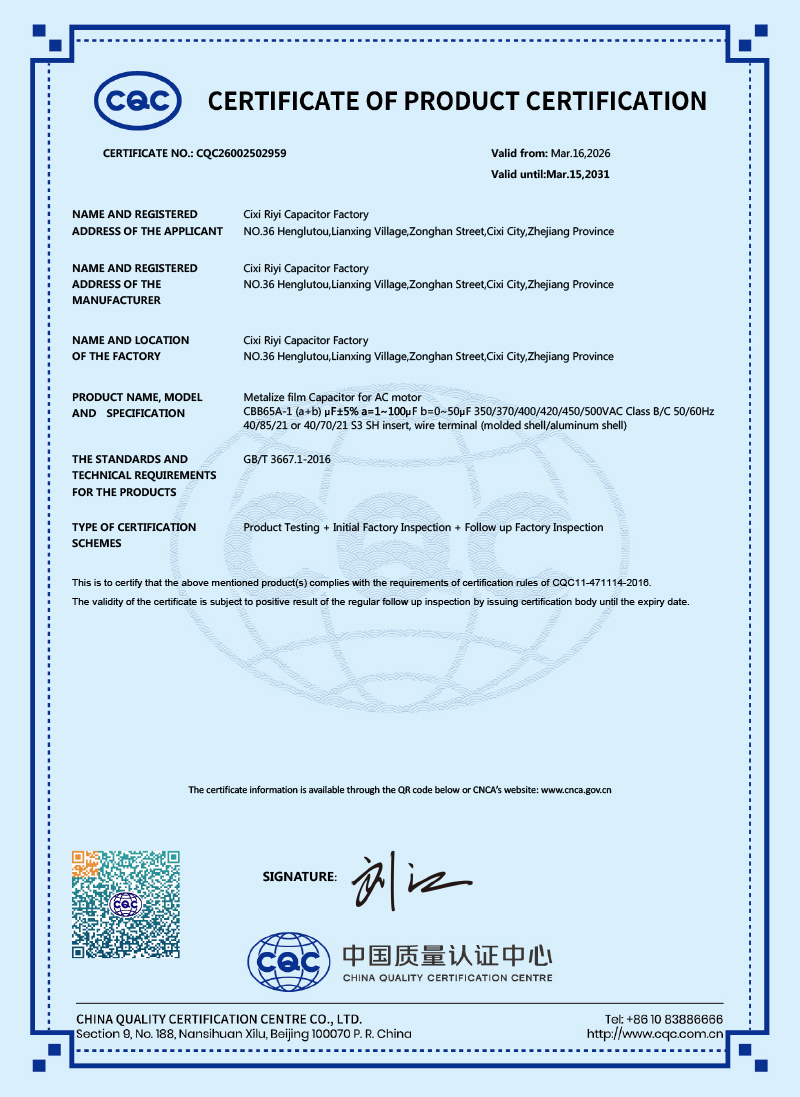
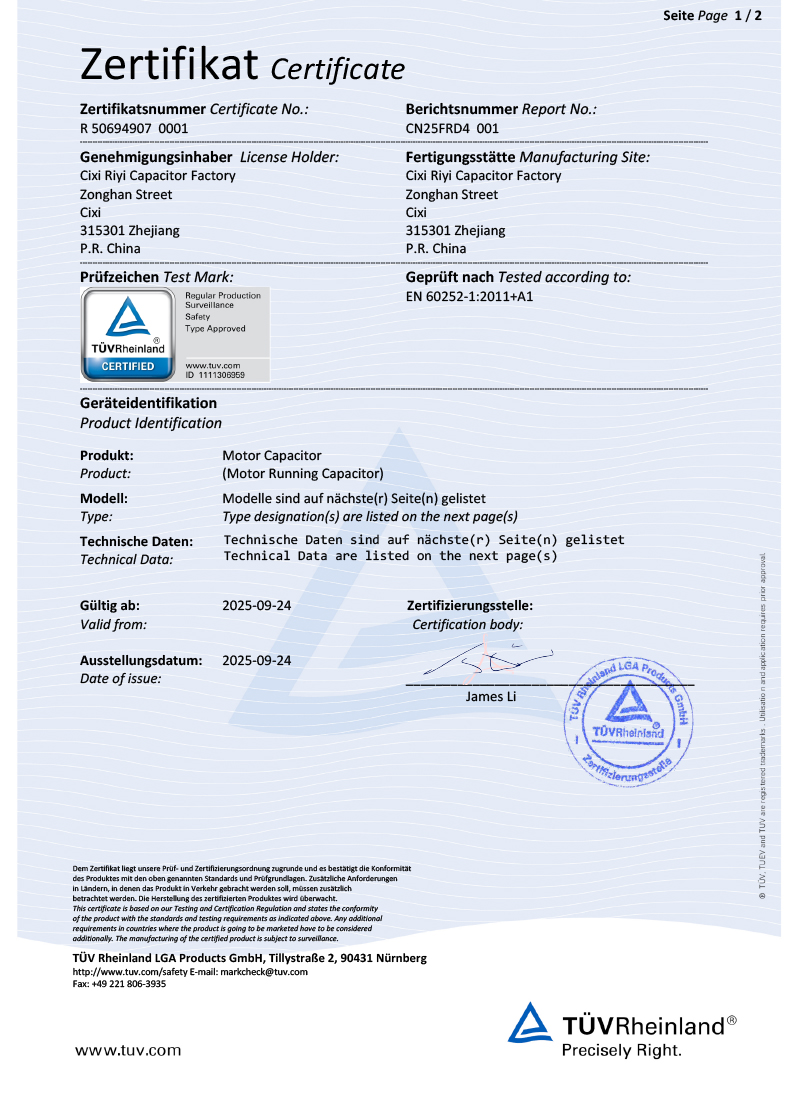
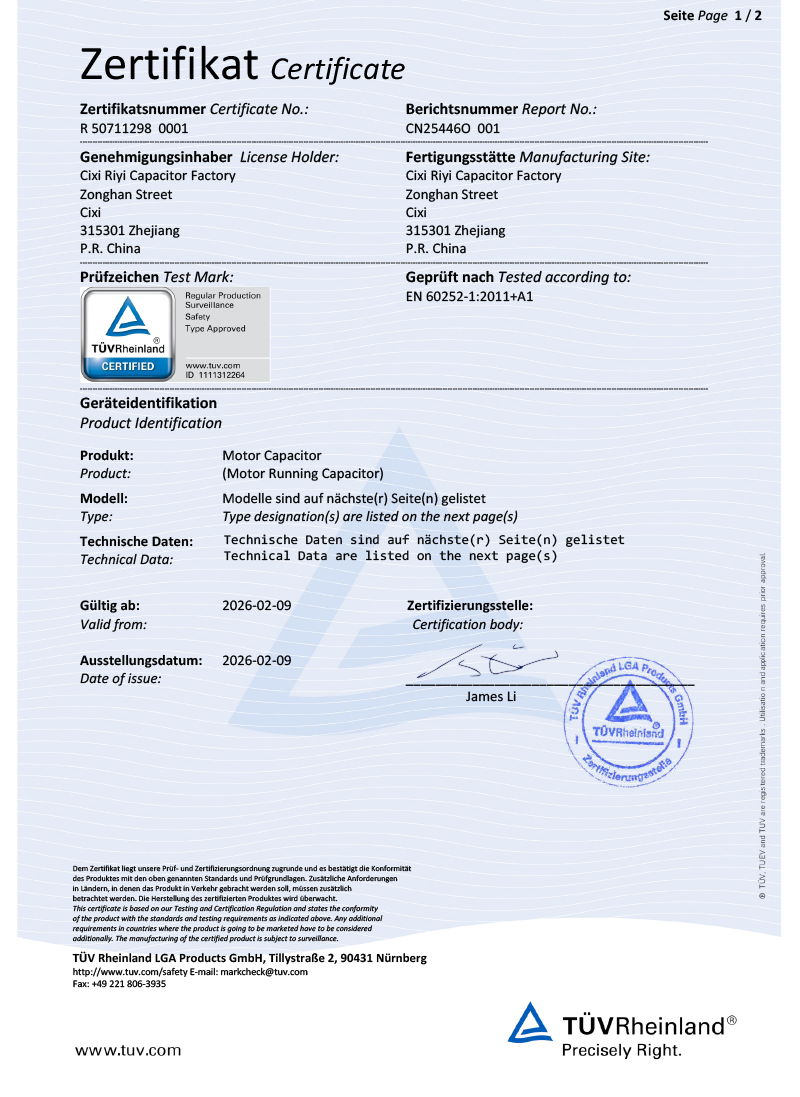
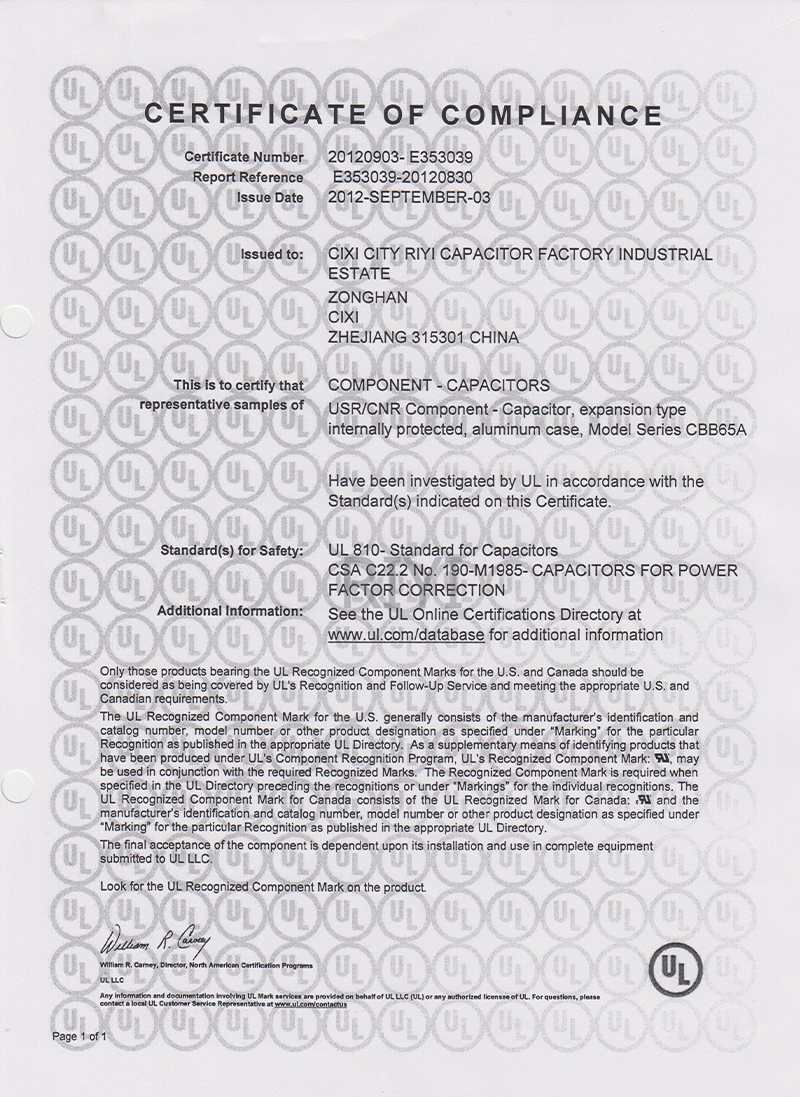
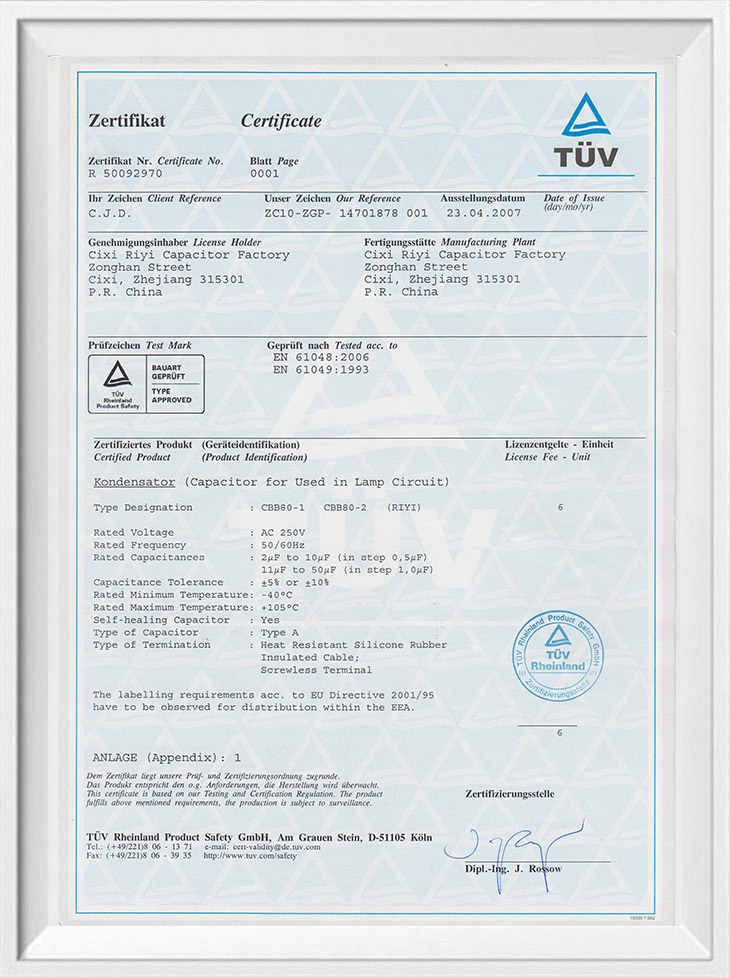
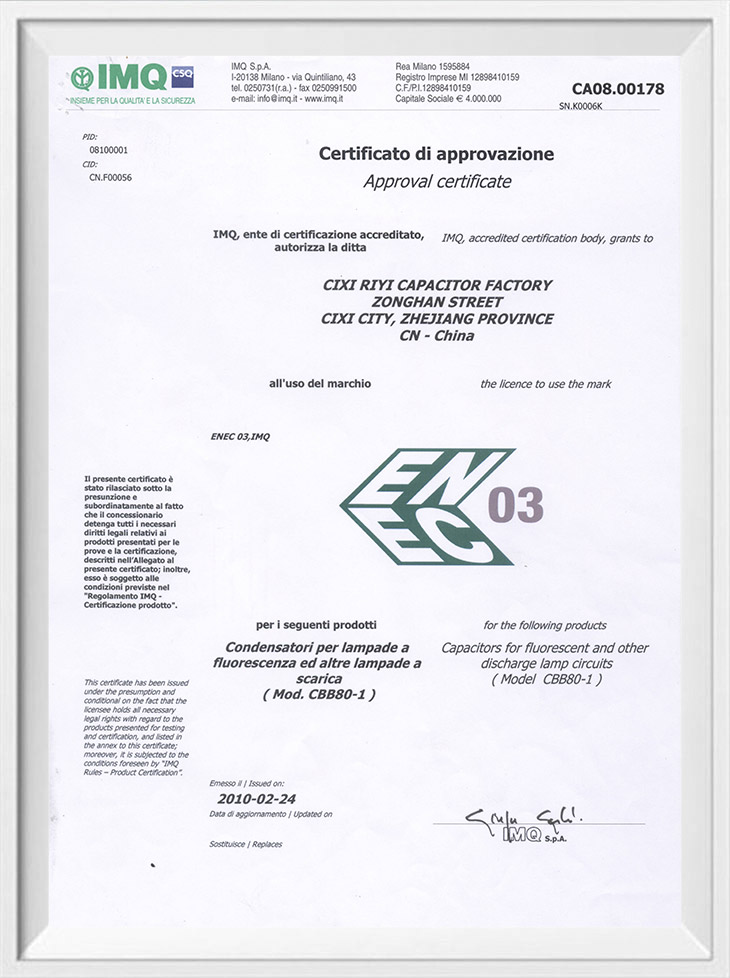
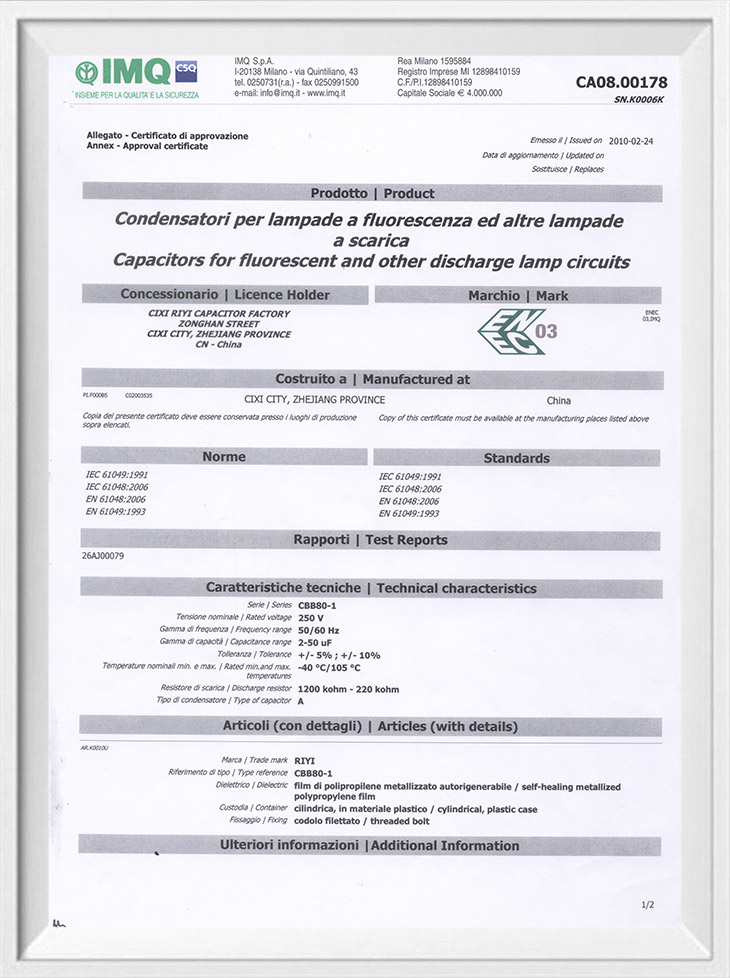
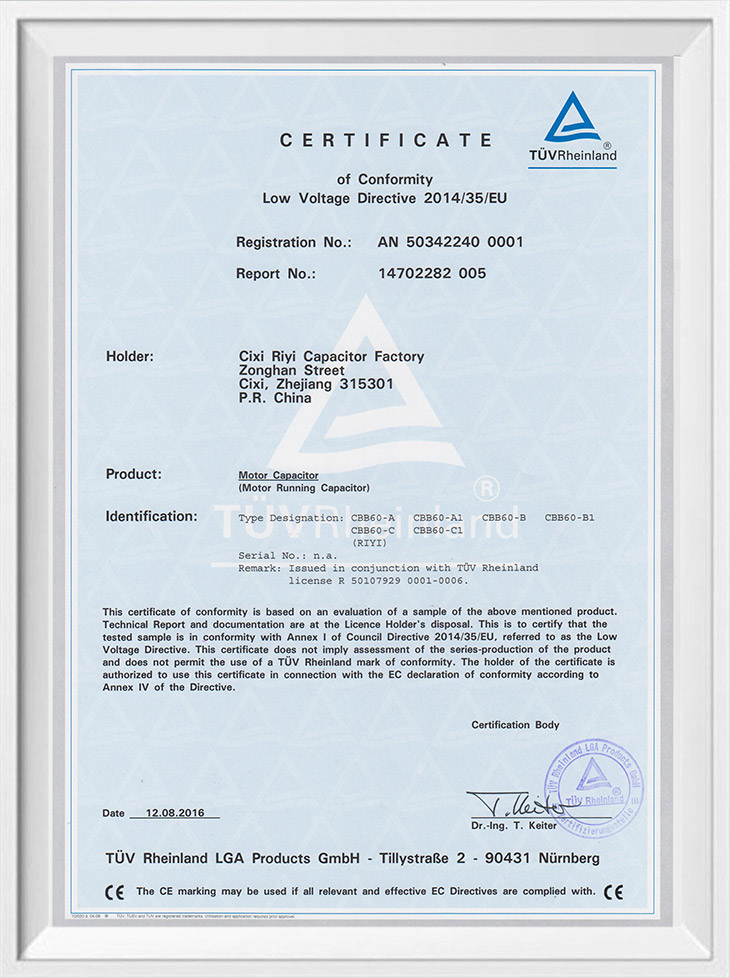
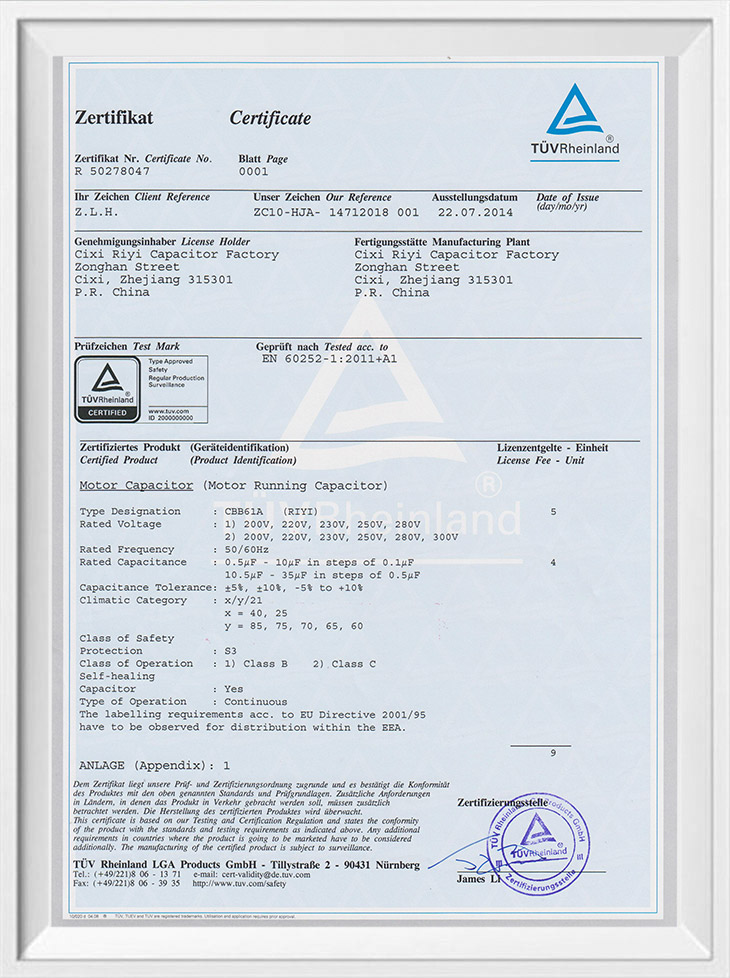
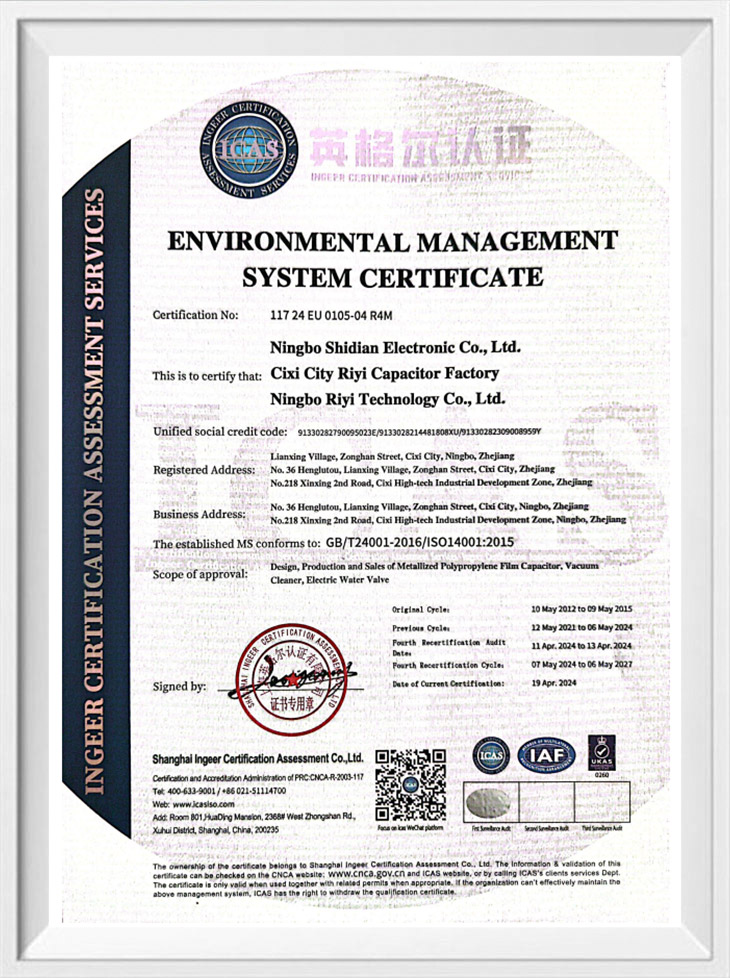
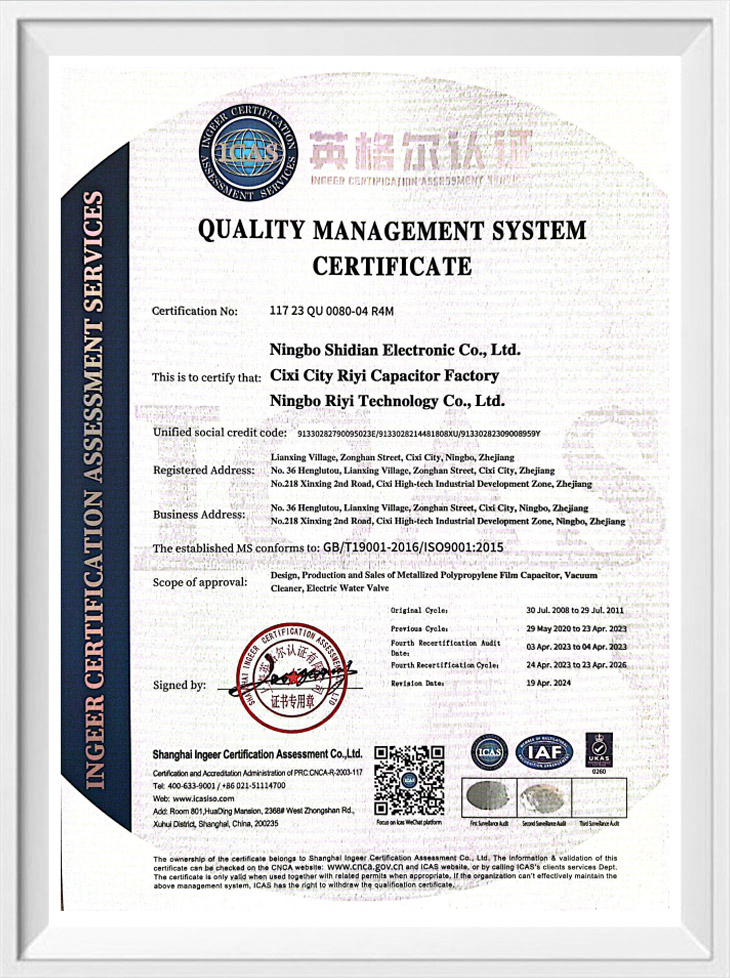
The company has 25,000 square meters of industrial plants and production for the workshop. Has strong technical force, advanced equipment, exquisite workmanship, and perfect detection means. It is market-oriented and based on the principle of meeting the customer's needs, while researching and producing a series of products. It had passed the ISO9001 quality management system and the ISO14001environmental management system certification, and all kinds of products have obtained certificates such as CQC, TUV, VDE, IMQ, UL, CE, etc.
Since its inception, the company has worked hard, strives for excellence, and with utmost dedication, it serves the electronics industry, power industry, household electrical appliance industry, and provides support services for high-tech enterprises. And as a result, we won the trust of our customers and became a well-known enterprise at home and abroad.
RIYI looks forward to working with your cooperation and creating a better tomorrow!

Cbb60 Ac Motor Washing Machine Motor Capacitor Manufacturers
Washing Machine Motor Capacitor is the washing machine group inside our CBB60 Plastic Case Capacitor category, part of the CBB60 AC Motor Capacitor range.
Models Listed:
• Dual models: 12+5uF with mounting caliber 40, 12+5uF and 15+5uF double barrel with mounting caliber 50, 14+6uF 450V S0 white flame retardant V0, 15+6uF 4 claws, 18+7uF 500V S0 caliber 50, and 5+3uF mini.
• Single models: 10uF 450V S0 automatic capacitor, 10uF with 30uH inductance lead, 12uF 450V S0 mounting size 42, and a 4uF 450V mini dewatering machine capacitor.
Key Features:
• Mounting calibers and sizes such as 40, 42 and 50 are named in the models, so you can match the original fitting.
• Low loss, good self-healing and strong overload capability from the CBB60 range.
Typical Applications:
• Washing machines and small dewatering (spin dryer) machines.
Selection Tips: check the mounting caliber, claw layout and capacitance pair before ordering. Custom products are developed from your drawings or samples.
CIXI RIYI CAPACITOR FACTORY
CERTIFICATE OF HONOR
- <
- <
- <
- <
- <
- <
- <
- <
- <
- <
- <
MESSAGE FEEDBACK
Industry knowledge
CBB60 Washing Machine Motor Capacitor Built by Cixi Riyi Capacitor Factory
Cixi Riyi Capacitor Factory produces the CBB60 plastic case washing machine motor capacitor family in our own plant in Cixi City, Zhejiang Province, China, on the south bank of Hangzhou Bay with fast access to Ningbo for container loading. These metallized polypropylene film capacitors provide the phase shift that gives single-phase washer and spin-dryer motors their starting torque and stable running behaviour.
We supply the full washing machine motor capacitor group as shown on this product page: single-value parts from 4 µF to 12 µF and dual-value parts such as 12+5 µF, 14+6 µF, 15+6 µF and 18+7 µF, in 450 V and 500 V ratings. Models are identified by capacitance pair and mounting caliber so the part can be matched to the existing bracket, and custom units are developed from customer drawings or samples.
DielectricMetallized polypropylene film with self-healing behaviour
HousingPlastic cylindrical case, S0 C class, white V0 flame-retardant option
BehaviourLow loss, low temperature rise, strong overload capability
CustomBuilt to drawings or samples, including non-standard calibers
Our Washing Machine Capacitor Range and Machine Matching
| Model group | Capacitance | Voltage | Case and mounting | Machine fit |
|---|---|---|---|---|
| Mini dewatering capacitor | 4 µF | 450 V | Compact case, lead | Small spin dryer |
| Mini capacitor | 5+3 µF | 450 V | Mini case, caliber 50 | Compact twin-tub washer |
| S0 C automatic | 10 µF | 450 V | S0 C, tension-free fixing | Washer drive motor |
| Lead with inductance | 10 µF | 450 V | Lead with 30 µH series inductance | Motors needing suppression |
| Single barrel | 12 µF | 450 V | S0 C, mounting size 42 | Washer drive motor |
| Dual, single barrel | 12+5 µF | 450 V | Caliber 40, or double barrel caliber 50 | Wash and spin motors in one unit |
| Dual, V0 shell | 14+6 µF | 450 V | S0 C, white flame-retardant V0 | Household twin-tub washer |
| Dual, four claws | 15+6 µF | 450 V | 4-claw mounting | Dual-motor equipment |
| Dual, high voltage | 18+7 µF | 500 V | S0 C, caliber 50 | Higher-voltage motor circuits |
Capacitance Steps Available in This Group
4 µF
5+3 µF
10 µF
12 µF
12+5 µF
14+6 µF
15+6 µF
18+7 µF
Bars show the high-value section only; dual capacitors carry the full pair in one case.
Construction and Working Boundaries
- Metallized polypropylene film dielectric in a plastic cylindrical case, sealed for the vibration and humidity found inside appliance motor bays.
- Self-healing electrodes: local breakdown clears without shorting the whole element, which supports long service in continuous appliance duty.
- Low dissipation factor keeps internal heating modest, and the film system tolerates the inrush of repeated start-stop cycles.
- Group voltage ratings are 450 V and 500 V; the wider CBB60 AC Motor Capacitor line also covers 250 V and 300 V duty.
- Termination options in this group include wire leads, leads with a 30 µH series inductance, insert terminals, and four-claw or double-barrel mounts.
Configuration Choices We Build To
Capacitance
Single values, matched value pairs for two motor windings, or an asymmetric pair where the wash and spin sections differ.
Mounting
Mounting calibers 40, 42, 48 and 50, claw positions, ear layouts and case length are named in each model so the fitting matches the original bracket.
Shell
Standard or white V0 flame-retardant shell, selected with the appliance safety requirement in mind.
Custom development
We develop and produce from your drawings or samples, including dual-barrel casings and non-standard capacitance combinations.
Where Each Variant Fits
- Mini 4 µF and 5+3 µF units for small spin dryers and compact twin-tub machines with limited cavity space.
- 10 µF and 12 µF single barrels for washer drive motors that need one stable run value and a simple bracket fit.
- Dual 12+5 µF, 15+5 µF and 14+6 µF parts where wash and spin motors share one capacitor position; the V0 shell suits household builds.
- 15+6 µF four-claw and 18+7 µF 500 V parts for dual-motor equipment and circuits that need extra voltage margin.
- 10 µF with 30 µH inductance for motors where series inductance is part of the original circuit design.
The same plastic case platform extends beyond laundry: our AC Cbb60 Water Pump Water Pump Motor Capacitor Manufacturers range serves pump and cooler motors, while the full AC Cbb60 Plastic Case Capacitor Suppliers group covers cooler, motor and pump duty from the same tooling. The complete CBB60 AC Motor Run And Start Capacitor Manufacturers catalogue also includes aluminum case versions where a different housing suits the assembly. This washing machine group is documented on our Cbb60 Ac Motor Washing Machine Motor Capacitor Manufacturers product page.
Production Capacity and Quality Control
25,000 m²plant and workshop area
11automatic slitting machines
15imported automatic winding machines
60,000pieces per day
Film slitting, winding, assembly and testing run in sequence inside our plant, with incoming film checks, in-process inspection and final electrical testing on capacitance, dissipation and withstand voltage. We hold ISO9001 and ISO14001 system certification, and our products carry certificates including CQC, TUV, VDE, IMQ, UL and CE. The factory has more than 150 employees, 21 technical personnel and 3 engineers supporting model changes and new developments.
Installation and Acceptance Notes
- Match the mounting caliber and claw layout to the appliance bracket before assembly; a 42 mm body will not seat in a 50 mm sleeve cut-out.
- Confirm the capacitance pair against the motor nameplate rather than against the failed part alone, since replacement values are sometimes substituted.
- Keep lead routing away from sharp edges and heat sources, and hold the specified terminal orientation where the harness is pre-formed.
- Discharge any charged capacitor through a rated resistor before handling during service; do not short the terminals with a screwdriver.
- Line acceptance covers capacitance tolerance, dissipation factor, insulation resistance and voltage withstand on sampled or full batches as agreed.
Information We Use to Configure Your Solution
- Motor nameplate data: rated voltage, frequency and motor power.
- Required capacitance value or pair, tolerance and voltage rating.
- Mounting caliber, claw or ear layout, and maximum case length allowed by the cavity.
- Termination: lead length and gauge, insert terminal, or lead with series inductance.
- Shell requirement, including white V0 flame-retardant casing where specified.
- Annual or per-batch quantity, packing preference and destination port.
- A sample or drawing for non-standard models, which we develop before tooling release.
Frequently Asked Questions
Are you a direct washing machine capacitor manufacturer?
Yes. Cixi Riyi Capacitor Factory is a direct manufacturer in Cixi City, Zhejiang Province, China, producing AC motor capacitors in our own 25,000 m² plant rather than trading resold parts.
Can one CBB60 part replace two capacitors in a twin-tub washer?
Dual models such as 12+5 µF, 14+6 µF and 15+6 µF place both values in one case with separate terminals, so one component serves the wash and spin windings where the original machine used a dual body.
How do I choose between the 450 V and 500 V versions?
Follow the motor nameplate and the mains conditions at the installation. The 500 V parts, such as the 18+7 µF S0 C model, are used where the circuit calls for additional voltage margin.
Do you build custom capacitance and mounting combinations?
We develop and produce custom products from drawings or samples, including non-standard capacitance pairs, mounting calibers, ear positions, lead lengths and casing colours.
What documentation accompanies a shipment?
Batches are supplied with the agreed inspection records covering capacitance, dissipation and voltage withstand, alongside the model marking that identifies value, voltage, mounting caliber and terminal type on the part itself.
Which markets do you currently serve?
Our capacitors are exported to markets including the United States, Indonesia, the Philippines, Turkey and Egypt, shipping by sea from Ningbo with air freight available for urgent volumes.

CONTACT US
MESSAGE US RIGHT NOW!
QR Code
Quick Links
Our Product
Contact us
- Tel: +86-13600614158
- E-mail: mina@cxriyi.com
- Address: Zonghan Street,Cixi City, Zhejiang Province, China.
Copyright © CIXI RIYI CAPACITOR FACTORY
All Rights Reserved.
 China starting capacitor for washing machine factory
Custom washing machine motor start capacitor manufacturers
China starting capacitor for washing machine factory
Custom washing machine motor start capacitor manufacturers