 en
 English

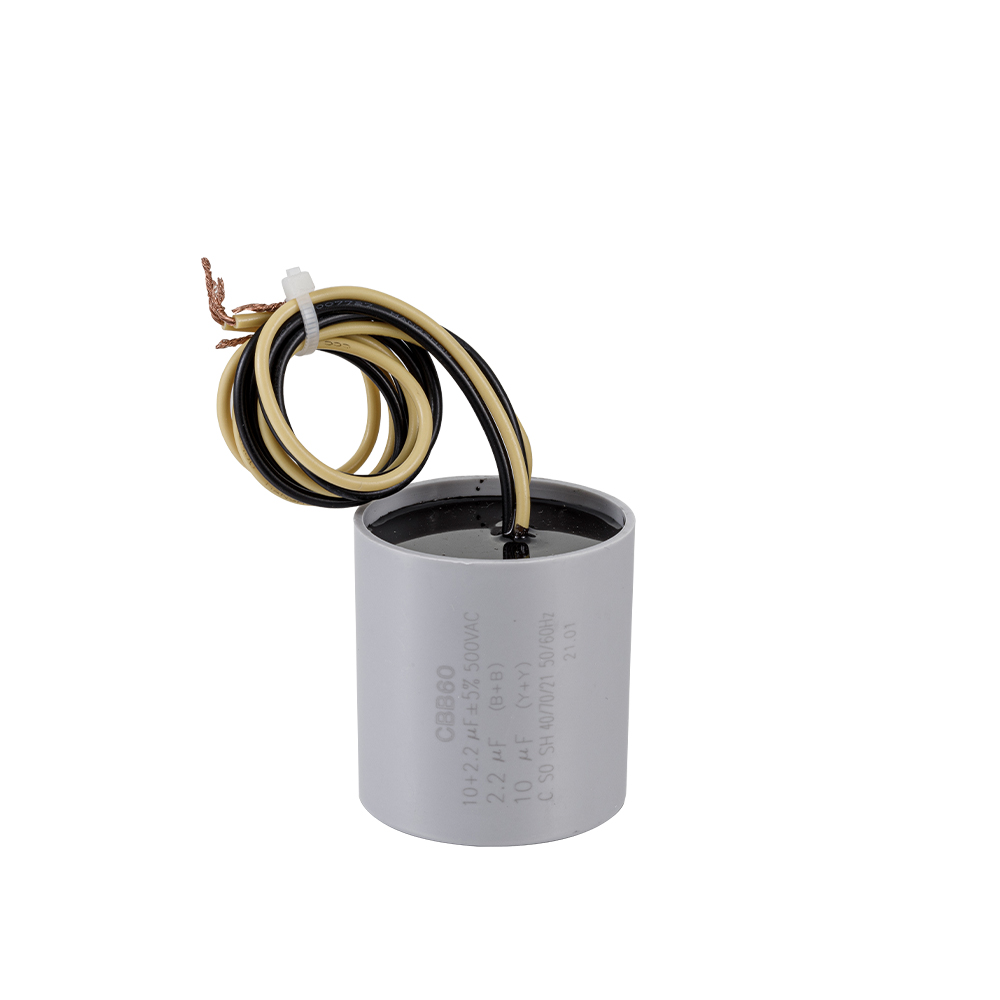
As China ac cbb60 plastic case cooler motor capacitor manufacturers and cooler motor capacitor factory, CIXI RIYI CAPACITOR FACTORY is a professional enterprise specializing in the production of AC motor capacitors, compensation capacitors for lighting fixtures, filters, and other products. The company is located on the south bank of Hangzhou Bay Bridge, where traffic is very convenient.
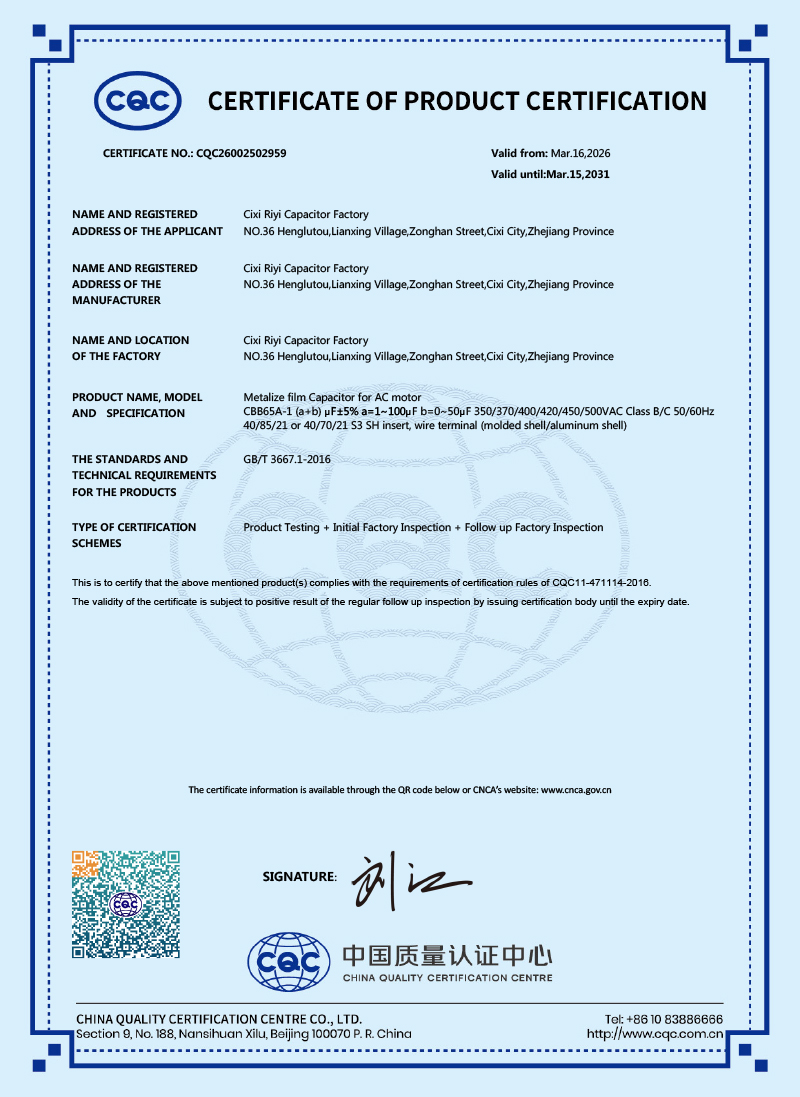
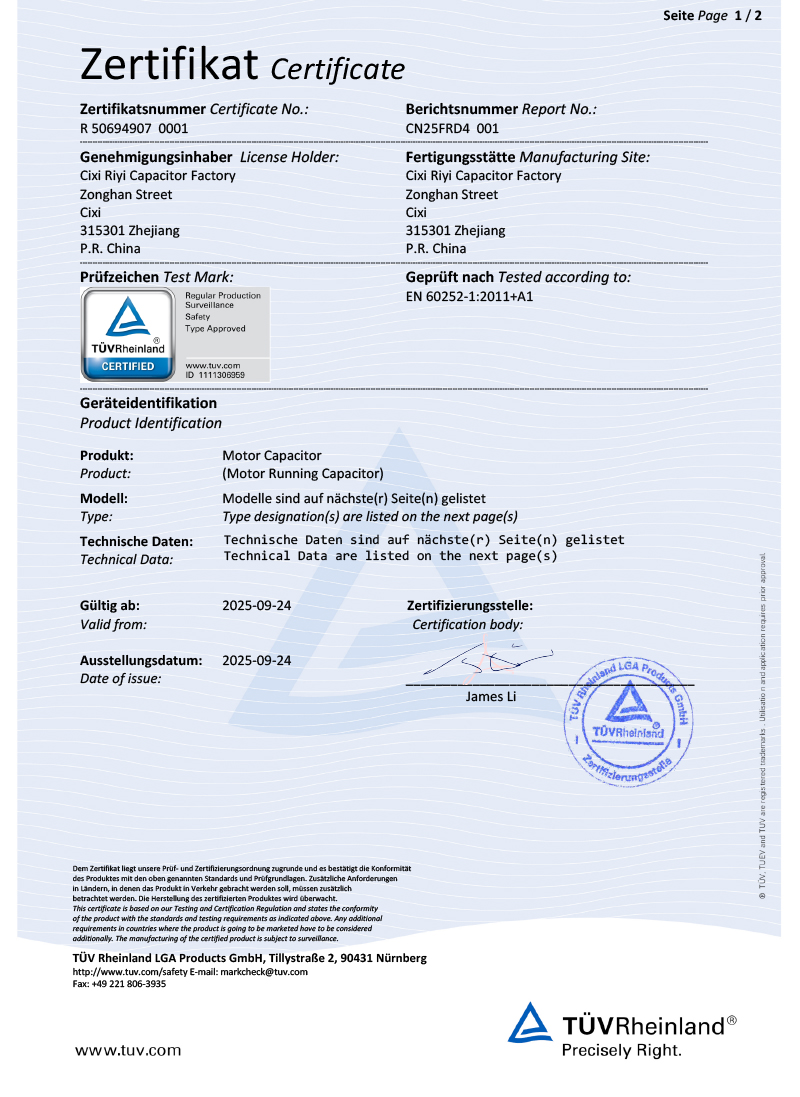
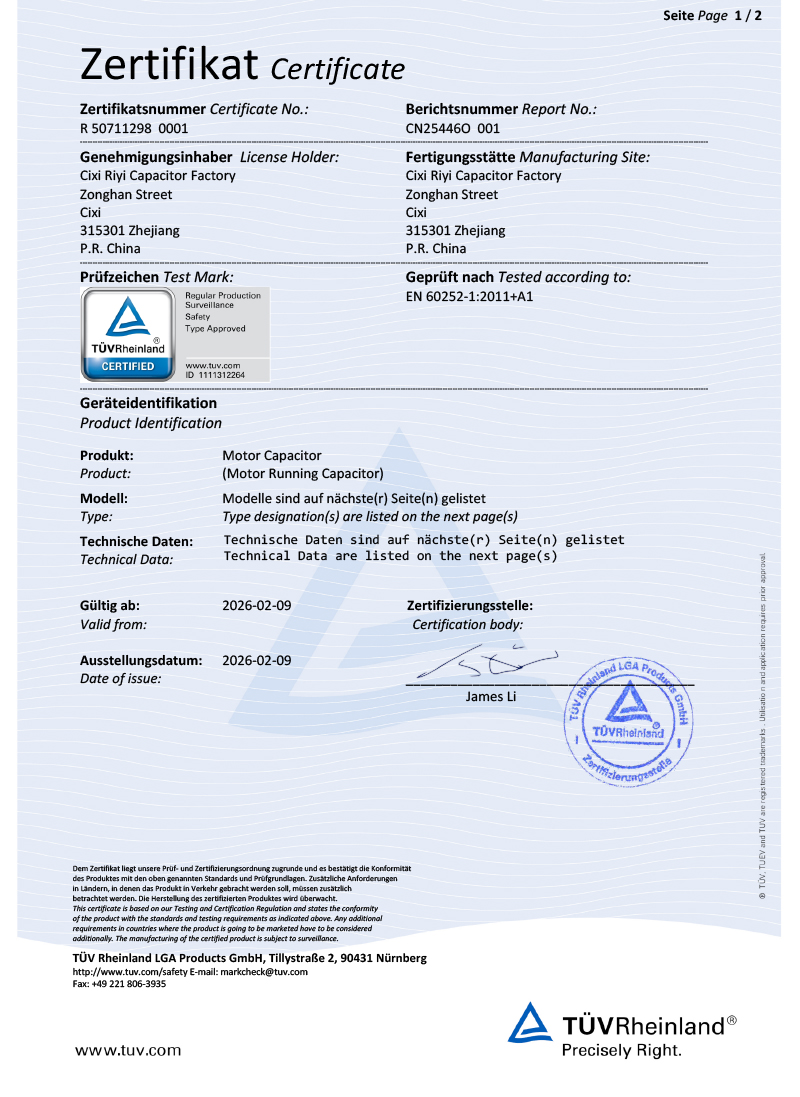
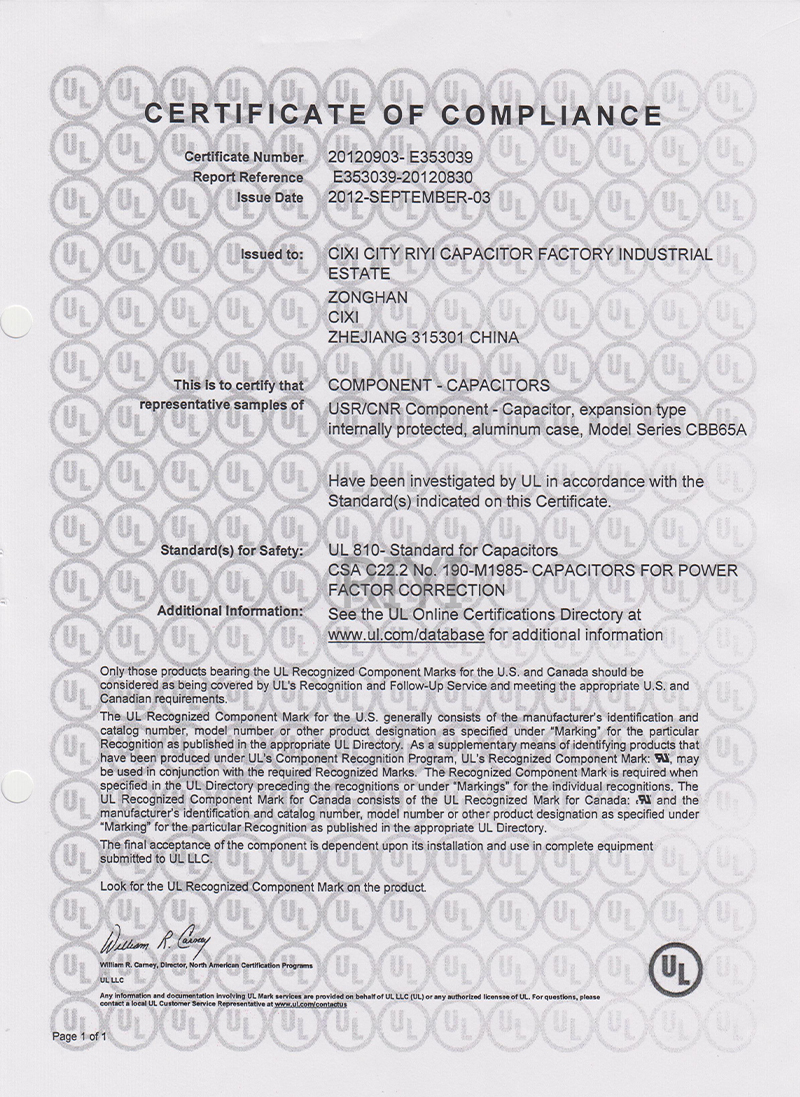
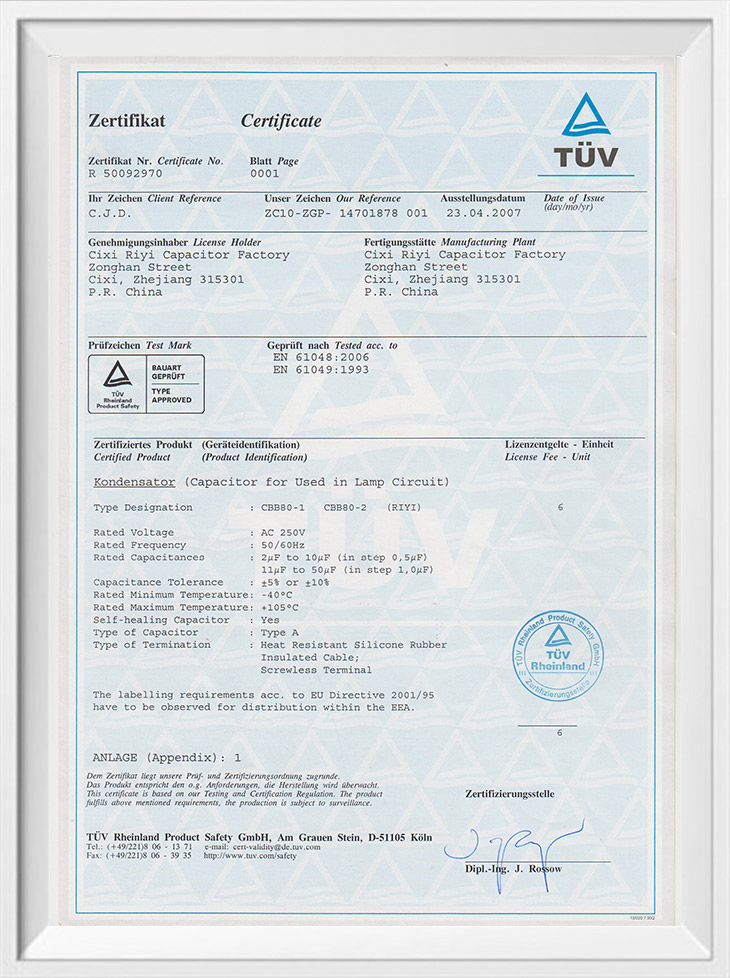
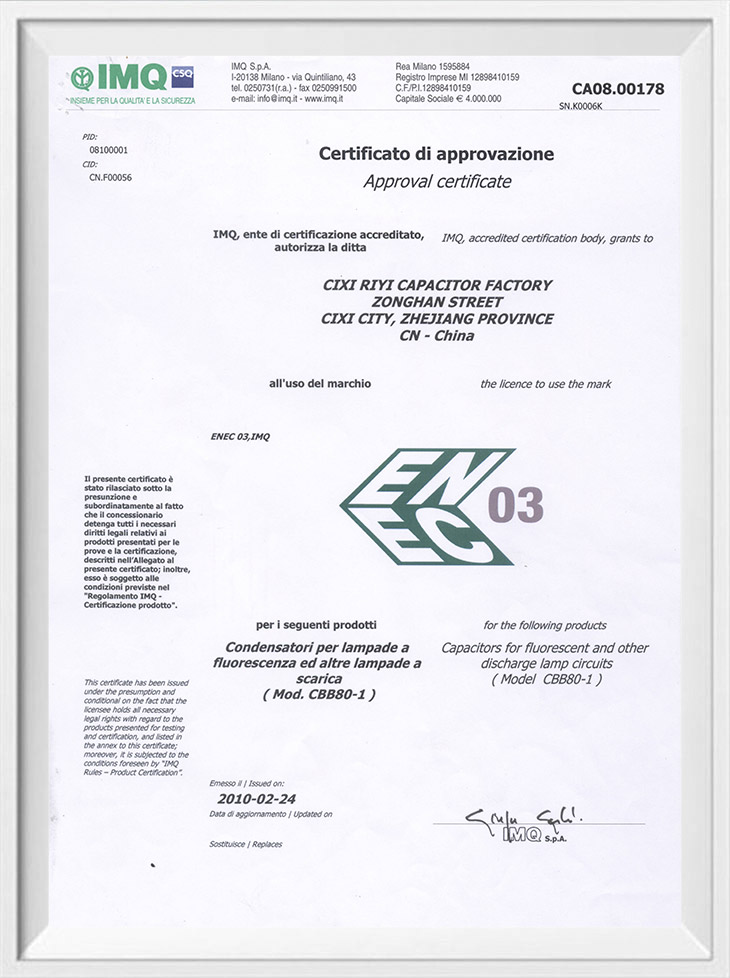
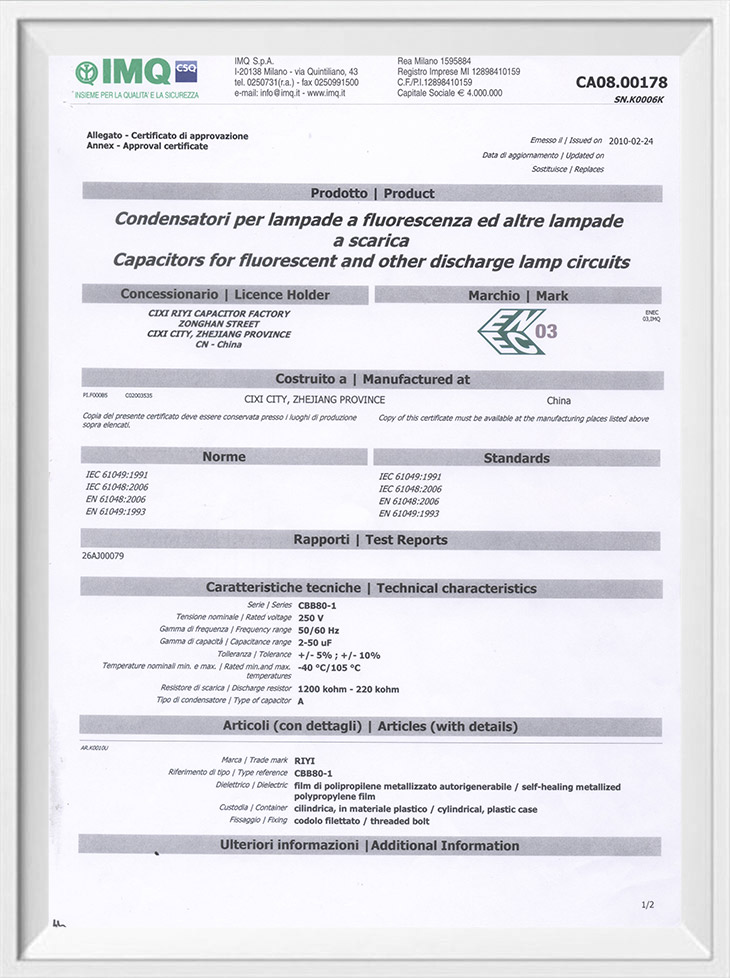
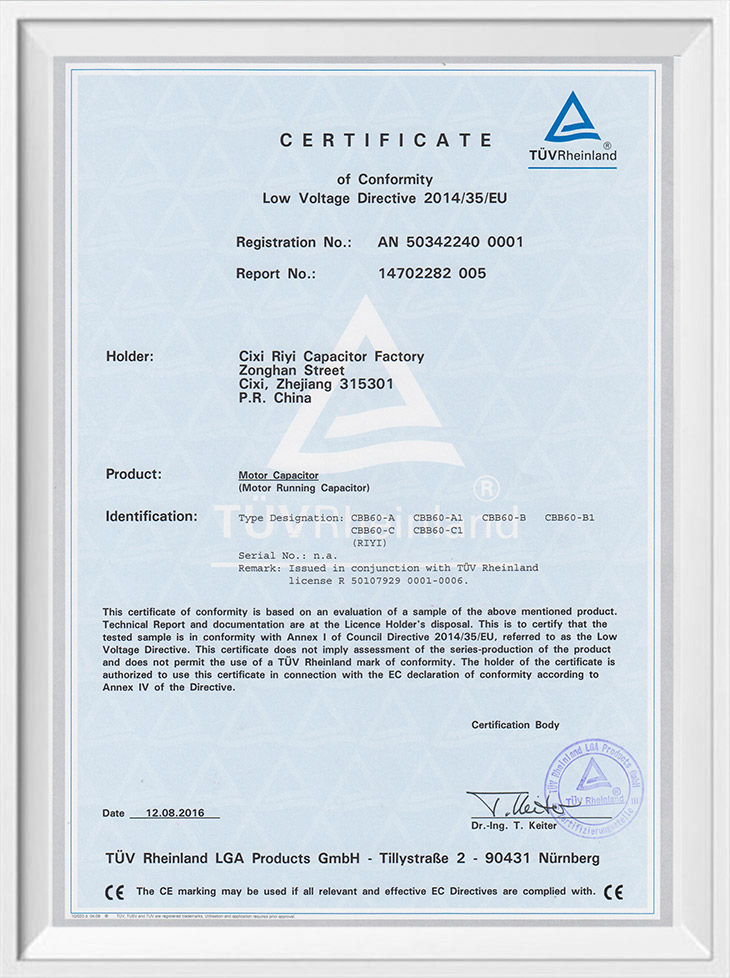
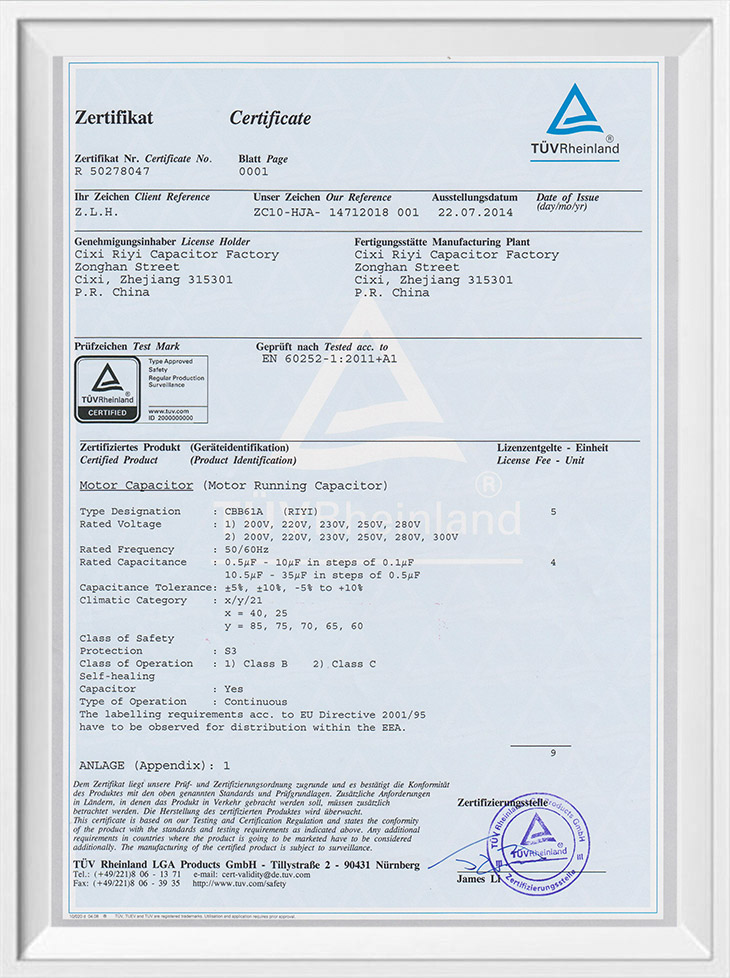
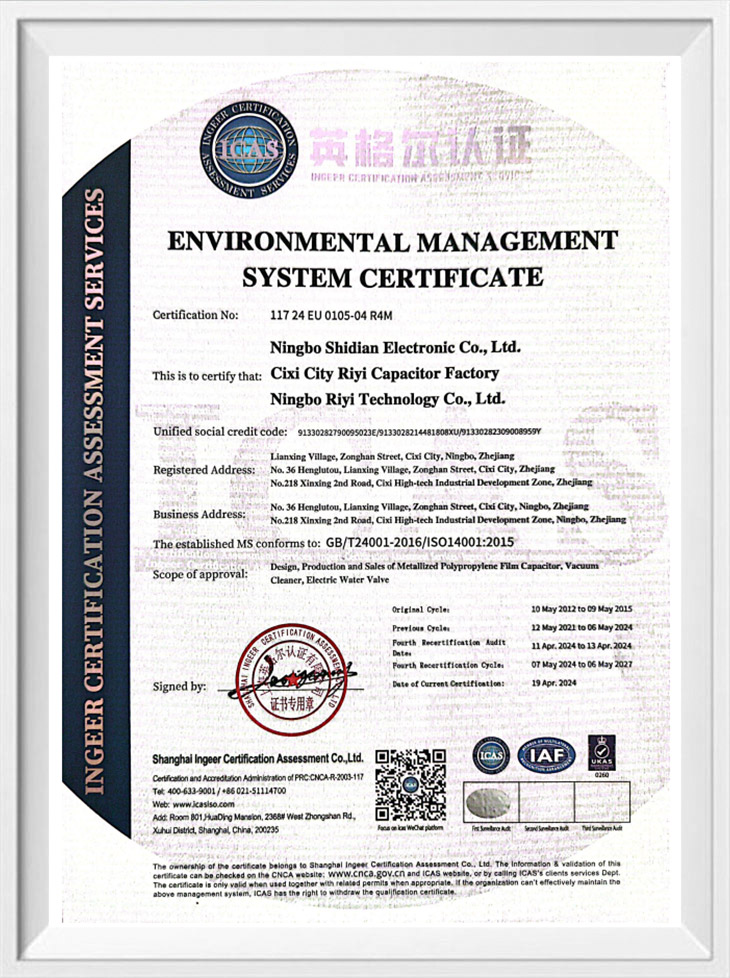
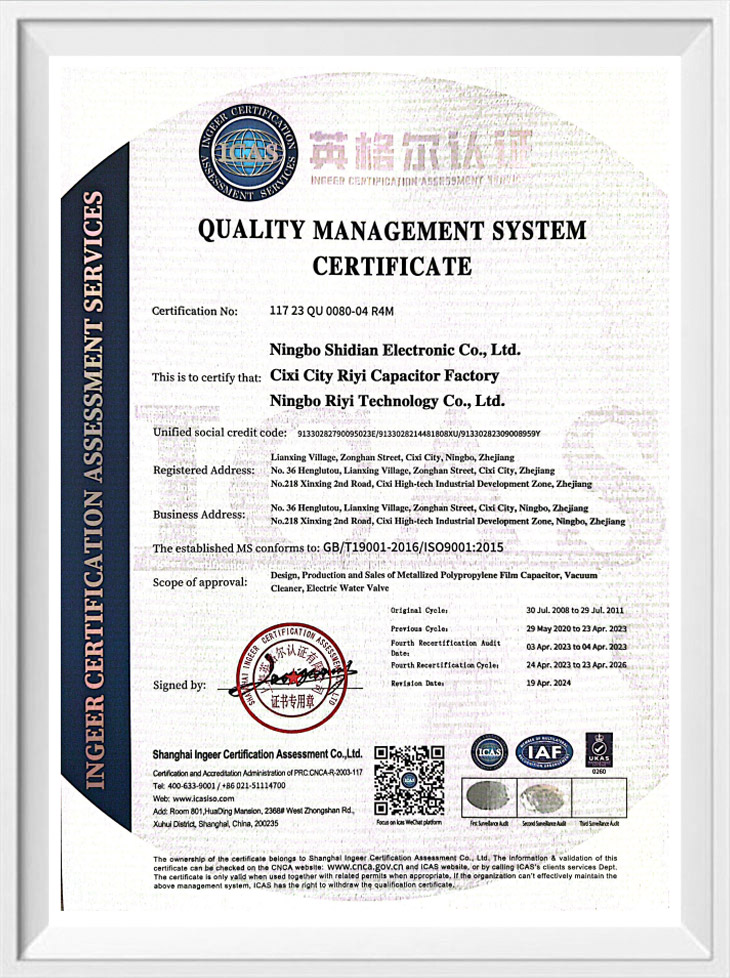
The company has 25,000 square meters of industrial plants and production for the workshop. Has strong technical force, advanced equipment, exquisite workmanship, and perfect detection means. It is market-oriented and based on the principle of meeting the customer's needs, while researching and producing a series of products. It had passed the ISO9001 quality management system and the ISO14001environmental management system certification, and all kinds of products have obtained certificates such as CQC, TUV, VDE, IMQ, UL, CE, etc.
Since its inception, the company has worked hard, strives for excellence, and with utmost dedication, it serves the electronics industry, power industry, household electrical appliance industry, and provides support services for high-tech enterprises. And as a result, we won the trust of our customers and became a well-known enterprise at home and abroad.
RIYI looks forward to working with your cooperation and creating a better tomorrow!

AC Cbb60 Plastic Case Cooler Motor Capacitor Manufacturers
Cooler Motor Capacitor is a use-based group inside our CBB60 Plastic Case Capacitor category, which belongs to the CBB60 AC Motor Capacitor range.
Currently Listed:
• CBB60 10+2.2uF C S0 500V Lead: a high-performance dual-capacitor component for starting and running, with wire leads and a 500V rating.
Key Features:
• Two capacitance sections, 10uF and 2.2uF, in one part.
• Low loss, good self-healing and strong overload capability from the CBB60 range.
• Epoxy resin fully sealed structure.
Browse Also: Water Pump Motor Capacitor and the electric motor capacitor category for other CBB60 plastic case values. If your cooler uses a different capacitance pair, we can develop one from your drawing or sample.
CIXI RIYI CAPACITOR FACTORY
CERTIFICATE OF HONOR
- <
- <
- <
- <
- <
- <
- <
- <
- <
- <
- <
MESSAGE FEEDBACK
Industry knowledge
CIXI RIYI CAPACITOR FACTORY produces the plastic case CBB60 motor capacitor family from our 25,000 m² plant in Cixi, Zhejiang, and the cooler motor capacitor group is one of the use-specific builds inside that range. The part listed here is a CBB60 10+2.2 µF C S0 500 V lead capacitor: two capacitance sections inside one sealed can, wired into the fan and pump windings of an evaporative cooler.
We manufacture this build for cooler assemblies that need a run section and a smaller auxiliary section from a single component, and we develop equivalent values from your drawing or a working sample when the standard pair does not match the motor.
What the Cooler Motor Capacitor Build Provides
As a AC Cbb60 Plastic Case Cooler Motor Capacitor Manufacturers, we match product configuration to the application, operating limits, interfaces and acceptance criteria defined for each project.
A cooler drives at least two single-phase loads — the circulating blower and, on many units, a water pump or a second fan. Fitting two capacitors costs board space and two sets of connections; the 10+2.2 µF build puts both sections in one component so the wiring harness carries a single part number.
- Two sections in one can: 10 µF main run section and 2.2 µF auxiliary section, marked for identification.
- 500 V rating: headroom above the 230 V single-phase supplies typical of coolers, useful where mains transients are common.
- Wire lead termination: tinned flexible leads for screw-terminal blocks, crimp splices or direct soldering into fan motor harnesses.
- Plastic case: the CBB60 plastic housing used across our motor run range, with an epoxy-resin fully sealed body.
- CBB60 dielectric system: low loss, self-healing behaviour and strong overload capability carried over from the CBB60 range.
Reading the Model Code
The designation on the label tells you what the motor sees before you open the carton. Capacitance is stated first as the dual pair, then the case reference, then the voltage class, then the termination style.
| Code element | Meaning on this part | Why it matters at the cooler |
|---|---|---|
| CBB60 | Metalized polypropylene AC motor run capacitor family, plastic case | Continuous duty in the auxiliary winding, not an intermittent start part |
| 10+2.2 µF | Dual capacitance: 10 µF section plus 2.2 µF section | Matches a larger fan winding and a lighter auxiliary winding in one body |
| C S0 | Case and dimensional reference for this housing | Confirms mounting clearance and lead exit position in the cooler cabinet |
| 500 V | Rated AC working voltage | Voltage class must be equal to or above the circuit rating |
| Lead | Wire lead termination | Defines harness routing and the connector or splice on the motor side |
Our CBB60 Plastic Case Range and Where Each Value Fits
Cooler motors are one application slice of a broader plastic case offering. The same production line supplies the neighbouring builds, so a cooler programme and a pump programme can ship under one capacitor sourcing plan — see our AC Cbb60 Plastic Case Capacitor Suppliers range for the full value list.
| Build in the range | Typical capacitance | Application fit |
|---|---|---|
| Cooler motor capacitor (this build) | 10+2.2 µF, 500 V, lead | Evaporative coolers, air coolers and condenser fan assemblies with two windings |
| Single-value plastic case CBB60 | Built to the stated capacitance and voltage | Single-winding blower and fan motors in ventilation equipment |
| Water pump motor capacitor | Per pump motor rating | Cooler circulation pumps and small single-phase water pumps |
| Aluminum case CBB60 | Insert terminal or double lead | Higher thermal demand, metal-can mounting, heavier duty cycles |
| CBB61 square capacitor | Small values, insert or lead | Compact ceiling and exhaust fans where board space is tight |
| CBB65 explosion-proof | Single and dual run sections, 250–500 V | Compressor and pump motors requiring an explosion-proof can |
Application Fit and Environmental Demands
Cooler service is hard on capacitors: continuous running through hot afternoons, dust-laden air moving across the cabinet, and a motor that is often switched on and off with the water pump still loaded. The plastic case lid and epoxy sealing keep the element protected from that dust and from condensation when the unit is shut down overnight.
- Continuous run duty, not intermittent starting duty — the section stays energised with the fan.
- Capacitance tolerance, voltage class and expected service life are the three values we confirm against the motor nameplate or test data.
- Lead length, lead gauge and stripping length are set to the harness drawing rather than left to a default.
- Position the can away from direct radiant heat and secure the leads so vibration from the blower does not work the terminals loose.
Configuration Options and Custom Development
If your cooler runs a different capacitance pair, we develop the part from your drawing or a sample — that is the standard route for this group rather than a fixed catalogue of only one value. Confirmed variables on a custom build include:
- Capacitance pair and individual section tolerance for each winding.
- Voltage class matched to the supply and expected transient level.
- Case reference and overall dimensions against the mounting bracket.
- Lead length, colour coding, connector type or bare tinned ends.
- Label marking, including the section identification used on dual builds.
The same applied approach covers our CBB60 water pump motor capacitor group, where a cooler maker often needs both a fan capacitor and a pump capacitor under one purchase order.
Manufacturing, Quality Control and Acceptance
Our Cixi plant runs 11 automatic slitting machines and 15 automatic imported winding machines with a daily output of 60,000 pieces, supported by more than 150 employees including 21 technical staff and 3 engineers. Production is organised under an ISO9001 quality management system and an ISO14001 environmental management system, and our capacitors hold certificates including CQC, TUV, VDE, IMQ, UL and CE.
Acceptance for a cooler capacitor order is normally built around capacitance measurement per section, dissipation factor or loss, insulation resistance, and a visual check of sealing, lead pull strength and marking. Where your programme needs documented results, we agree the test list and sampling basis with the order rather than leaving it to a verbal understanding.
Installation, Maintenance and Spare Parts
The plastic case body mounts on a bracket or clips into a moulded seat inside the cooler cabinet, and the leads run to the fan motor terminals and pump connection. Discharge the capacitor before handling it during service; a capacitor that has been energised can hold a charge after the supply is removed.
- Keep the marked section identification consistent between the replacement part and the original wiring.
- Replacement is a like-for-like exercise: capacitance pair, voltage class and case reference must all match.
- Record the part number on the cooler rating label so service stock is reordered correctly.
- For volume programmes we hold agreed reference samples so later production batches can be checked against the approved build.
Information We Use to Configure Your Solution
| Input | What we do with it |
|---|---|
| Motor nameplate or winding data (capacitance, voltage, frequency) | Fix the section values and voltage class |
| Cooler model, duty cycle and ambient conditions | Confirm continuous-duty suitability and expected thermal load |
| Drawing or physical sample | Set case reference, dimensions and lead exit position |
| Harness details: lead length, gauge, connector | Build the termination to the assembly requirement |
| Annual volume and delivery schedule | Plan winding and sealing capacity against the shipment dates |
| Marking, packaging and test documentation requirements | Set the label, carton scope and inspection record for the order |
Assembly capacity across the CBB60, CBB61, CBB65 and CBB80 groups sits on one shop floor, so mixed capacitor orders for a cooler or appliance programme can be quoted together — browse the AC Sourcing Cbb60, Cbb61, Cbb65, Cbb80 Capacitor Direct Here range. As a China capacitor manufacturer, we ship from Ningbo by sea for scheduled volumes and by air where a programme is urgent, and we confirm FOB, CIF, CNF or other terms at quotation.
Frequently Asked Questions
Is the 10+2.2 µF CBB60 a start capacitor or a run capacitor?
It is a run capacitor with two sections. Both sections remain in circuit while the cooler fan motor runs, creating the phase shift in the auxiliary winding. It is not intended to be switched out after starting.
Can you supply a different capacitance pair for our cooler model?
Yes. We develop cooler motor capacitors from your drawing or a sample, and we set the two section values, voltage class, case reference and lead configuration to match the motor. Send the nameplate data and the mounting dimensions and we will confirm the build.
Why is the voltage rating 500 V on a 230 V cooler?
The voltage class is the capacitor's working limit, not the supply value. A 500 V rating gives margin for switching transients and supply variation in the field, and it is a common specification for cooler and fan motors running on single-phase mains.
How do I wire a dual-section capacitor into the fan and pump?
Each section is marked, and the larger section goes to the main winding while the smaller section serves the auxiliary winding or the second load. Keep the marking consistent with the original wiring during service so the sections are not reversed.
What quality documents come with a cooler motor capacitor order?
Production is governed by our ISO9001 quality management system, and the product range holds certificates including CQC, TUV, VDE, IMQ, UL and CE. Inspection records, test items and sampling are agreed with the order so the paperwork matches what your receiving inspection expects.
How should failed cooler capacitors be replaced in the field?
Isolate the cooler, discharge the capacitor through a suitable resistor, and verify with a meter before touching the leads. Replace with the same capacitance pair, voltage class and case reference, and secure the leads so blower vibration does not stress the terminations.

CONTACT US
MESSAGE US RIGHT NOW!
QR Code
Quick Links
Our Product
Contact us
- Tel: +86-13600614158
- E-mail: mina@cxriyi.com
- Address: Zonghan Street,Cixi City, Zhejiang Province, China.
Copyright © CIXI RIYI CAPACITOR FACTORY
All Rights Reserved.
 China capacitor for cooler motor factory
Custom AC Cbb60 Plastic Case Cooler Motor Capacitor Manufacturers