
 en
en
 English
CBB60 vs CBB65 Capacitor: Key Differences Explained
Content
- 1 CBB60 vs CBB65: The Short Answer
- 2 Physical Construction and Form Factor
- 3 Electrical Ratings Comparison
- 4 Typical Application Environments
- 5 Thermal Performance and Heat Dissipation
- 6 Safety Features and Failure Modes
- 7 Dual-Run Capacitors: A CBB65-Specific Feature
- 8 Certification Standards and Compliance
- 9 How to Read the Markings on Each Capacitor
- 10 Lifespan Expectations and Degradation Patterns
- 11 Interchangeability: Can You Replace One with the Other?
- 12 Price and Availability Considerations
CBB60 vs CBB65: The Short Answer
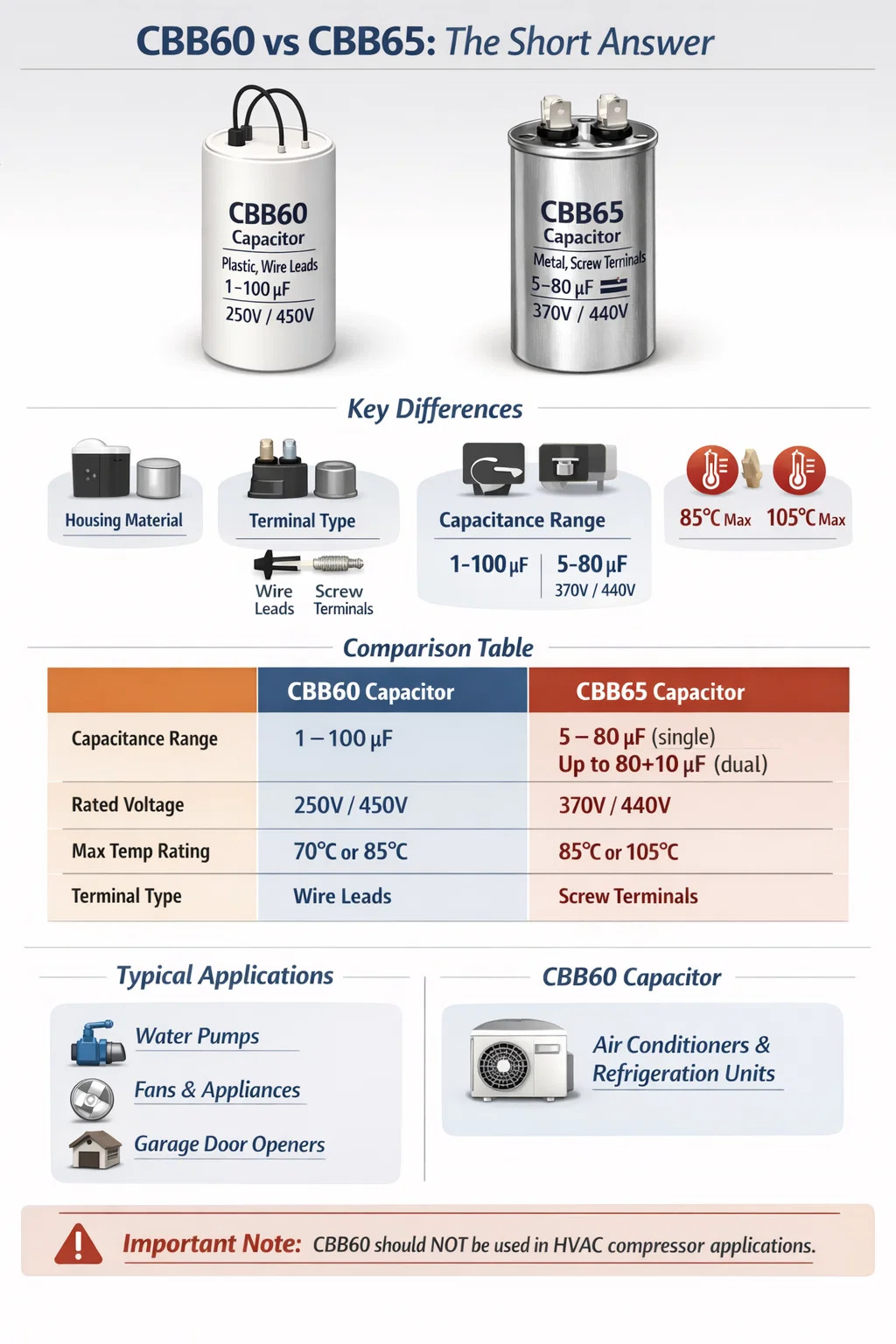
The fundamental difference between a CBB60 capacitor and a CBB65 capacitor comes down to physical construction and intended application environment. CBB60 is a cylindrical, wire-leaded capacitor primarily designed for single-phase AC motor starting and running circuits, while CBB65 is a metal-can, screw-terminal capacitor engineered for heavier-duty applications such as air conditioner compressors and refrigeration units. Both are polypropylene film capacitors operating on AC circuits, but they differ significantly in form factor, terminal type, capacitance range, and thermal resilience.
If you are selecting a replacement or sourcing a capacitor for a new design, the two are generally not interchangeable without attention to mounting method, terminal configuration, and operating temperature ceiling. Confusing these two types—even when the capacitance value and voltage rating appear identical—can result in premature failure or safety hazards in high-load environments.
Physical Construction and Form Factor
The most immediately visible distinction between CBB60 and CBB65 lies in their physical packaging.
CBB60 Capacitor: Cylindrical Plastic Housing
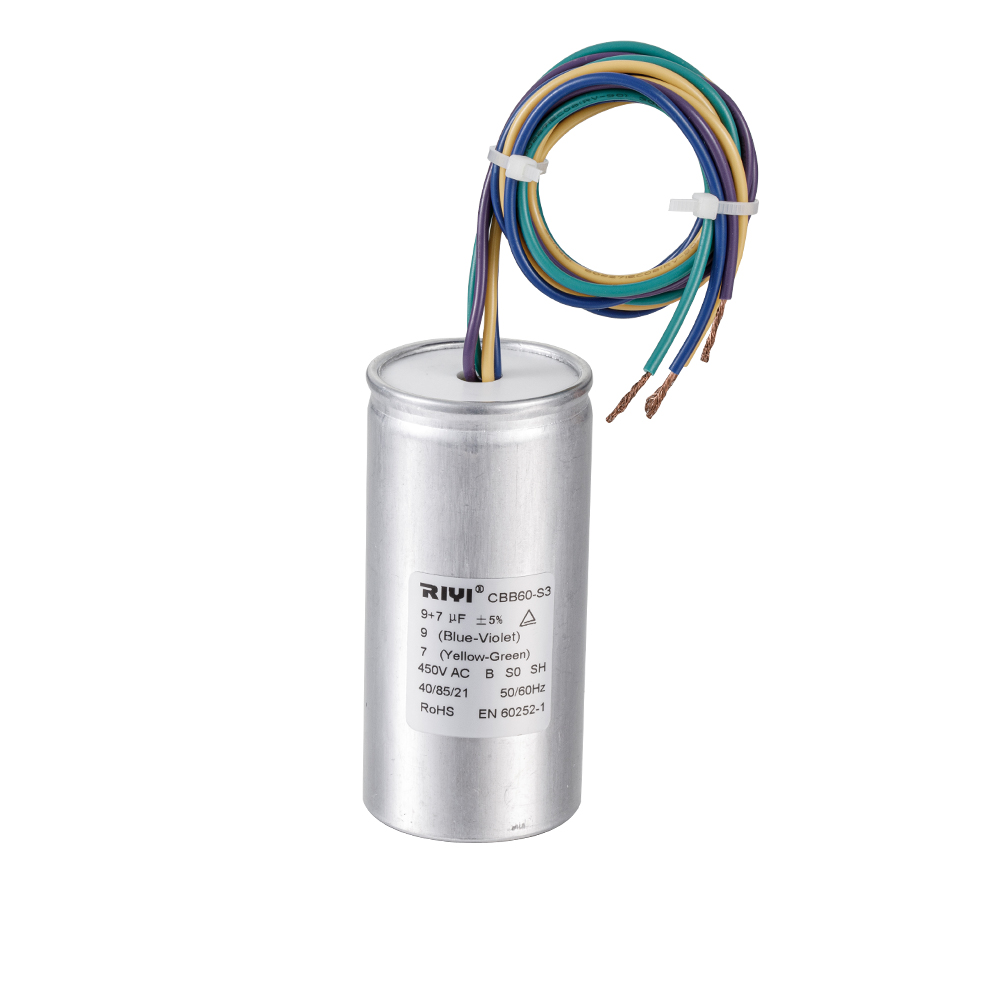
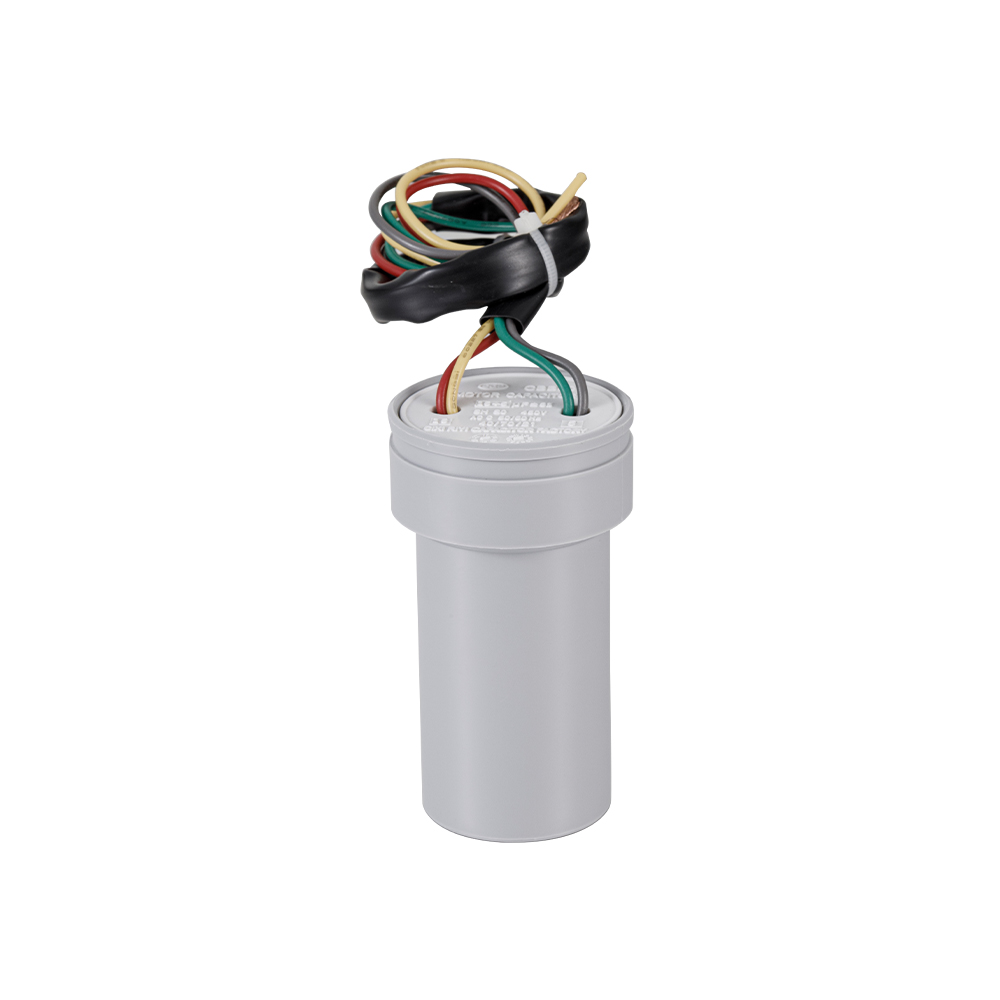
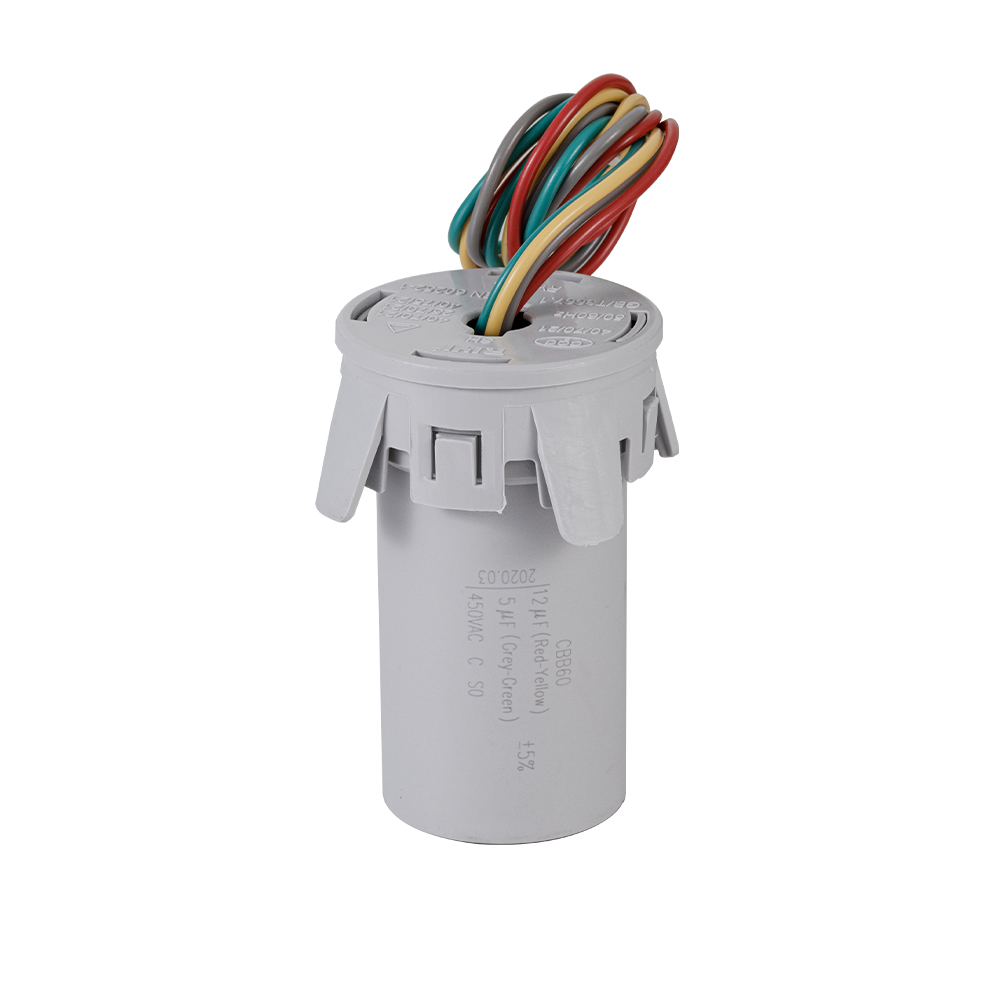
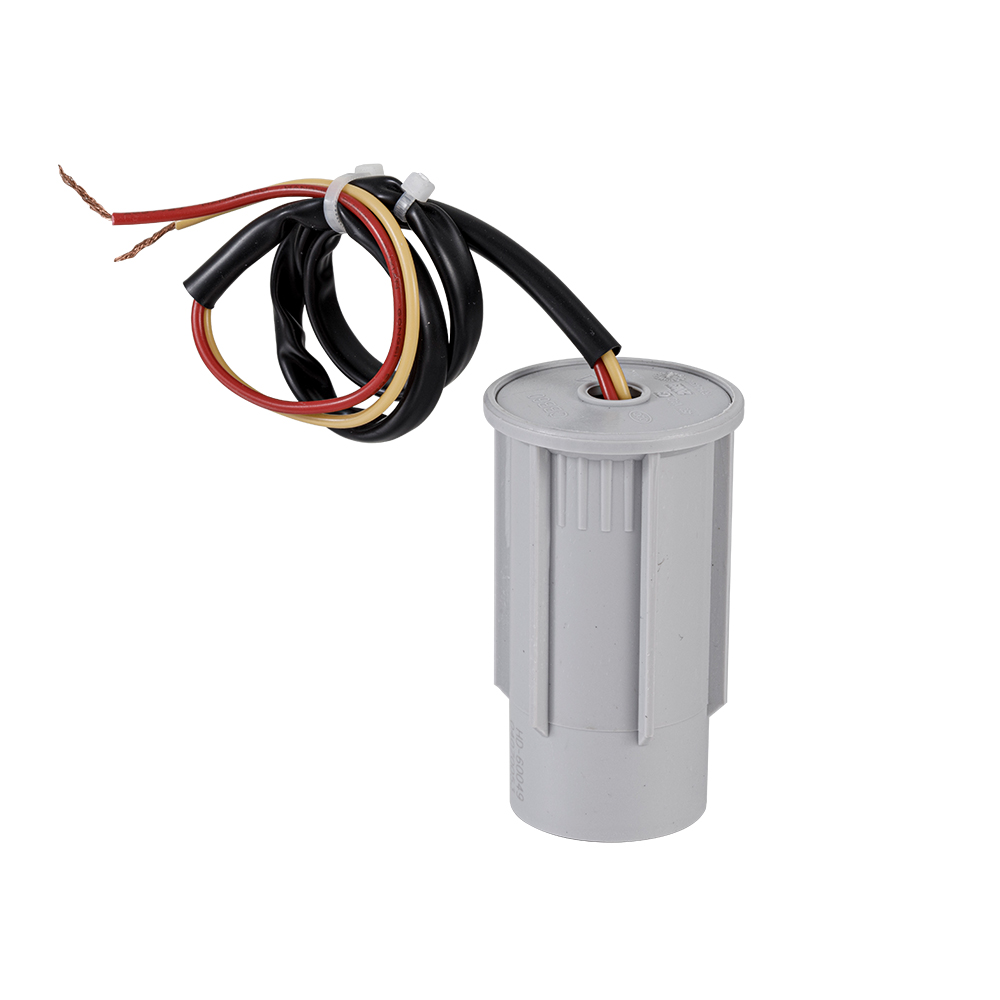
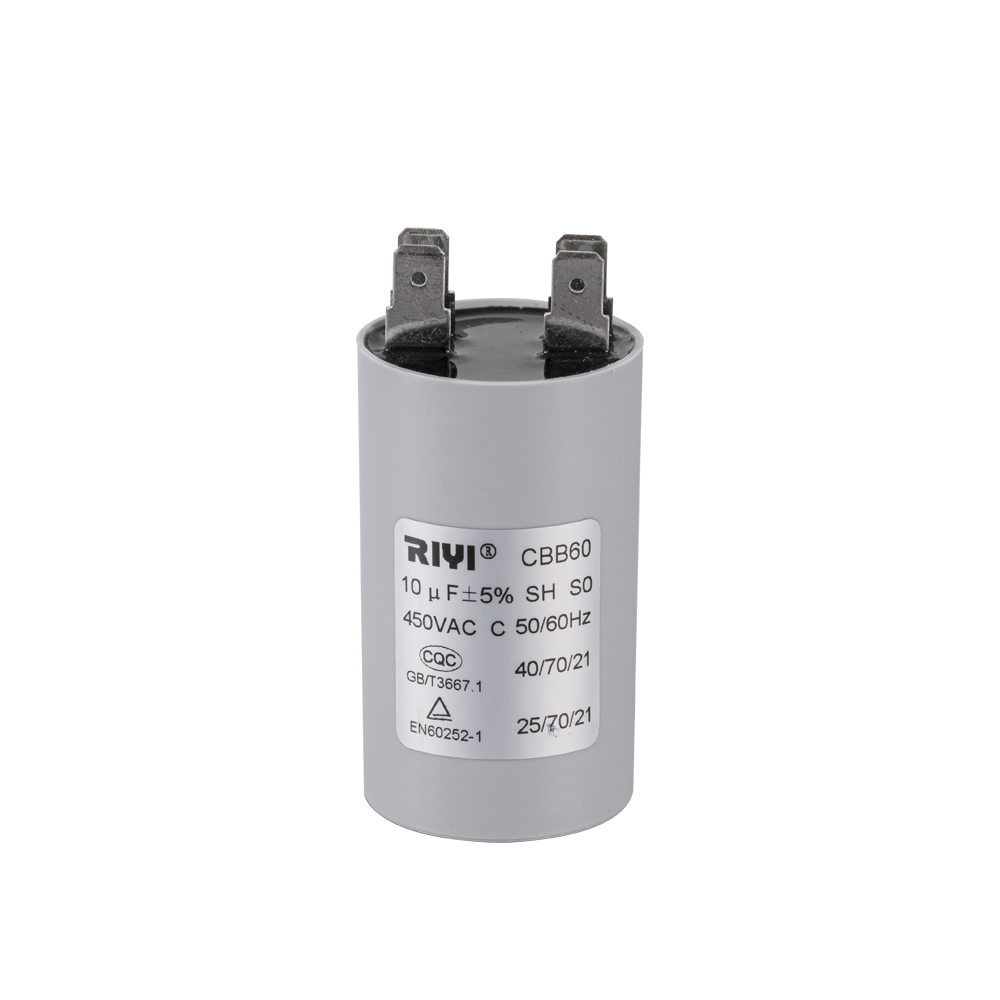
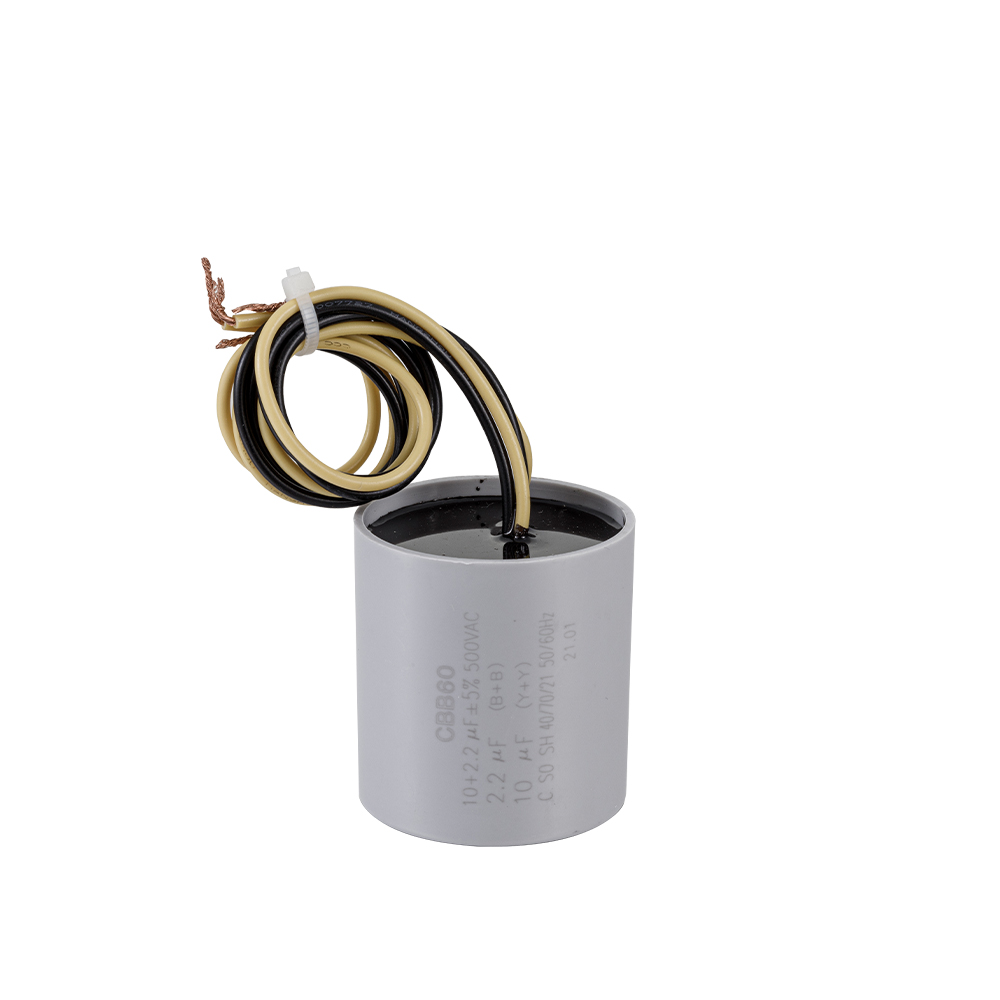
A CBB60 capacitor uses a cylindrical plastic (usually polypropylene or flame-retardant housing) body with two or four wire leads extending from one end. The body diameter typically ranges from 30 mm to 50 mm, with height varying between 60 mm and 100 mm depending on capacitance. These leads allow it to be mounted directly into motor terminal boards or connected via quick-connect terminals. The plastic casing is filled with epoxy resin or similar insulating filler to seal the internal film winding against moisture ingress.
Because it uses lead wires, the CBB60 is considered a "leaded" component. It typically sits upright or at an angle within a motor's capacitor compartment, secured by a plastic bracket or clip. This design is space-efficient and low in production cost, which is why it dominates the water pump motor, fan motor, and small appliance motor segment.
CBB65 Capacitor: Metal Aluminum Can Housing
A CBB65 capacitor, by contrast, is housed in a round aluminum alloy canister. Its terminals are screw-type connectors mounted on the top, which allows secure wiring connections that resist vibration better than simple wire leads. The metal enclosure provides superior heat dissipation and mechanical protection compared to plastic. Typical dimensions include diameters of 40 mm to 50 mm and heights from 70 mm to 120 mm, though dual-run capacitors (which combine two capacitance values in one unit) can be larger.
The aluminum can is sealed with a pressure relief vent at the bottom or top, which acts as a safety valve in the event of internal overpressure. This feature is critical in compressor environments where ambient temperatures can spike rapidly. The metal body also supports external mounting via a steel strap band or bracket, which is the industry-standard method for HVAC capacitor installation.
Electrical Ratings Comparison
Both capacitor types operate on AC circuits, but their rated parameters differ in ways that reflect their intended use cases.
| Parameter | CBB60 | CBB65 |
|---|---|---|
| Capacitance Range | 1 µF – 100 µF | 5 µF – 60 µF (single); up to 80+10 µF (dual) |
| Rated Voltage | 250 VAC / 450 VAC | 370 VAC / 440 VAC |
| Frequency | 50 Hz / 60 Hz | 50 Hz / 60 Hz |
| Max Operating Temp | 70°C or 85°C | 85°C or 105°C |
| Capacitance Tolerance | ±5% or ±10% | ±5% or ±6% |
| Terminal Type | Wire leads | Screw terminals |
| Housing Material | Plastic (PP or ABS) | Aluminum alloy |
The voltage ratings deserve particular attention. The CBB65 is almost exclusively available in 370 VAC and 440 VAC to handle the voltage conditions inside HVAC compressor systems, where momentary surges during motor startup can reach well above the nominal line voltage. CBB60 capacitors at 250 VAC would be dangerously underrated in those conditions—even if the capacitance value happened to match.
Typical Application Environments
Understanding where each capacitor is designed to work helps clarify why the physical and electrical differences exist in the first place.
Where CBB60 Capacitors Are Used
CBB60 capacitors are the standard motor-run and motor-start capacitor for a broad range of single-phase induction motors in light-to-medium duty environments. Common applications include:
- Water pump motors (submersible and surface-mounted, typically 0.37 kW to 2.2 kW)
- Ceiling fans and exhaust fans
- Washing machine drum motors
- Small air circulators and ventilation equipment
- Garage door openers
- Pool and spa pump motors in the lower power range
In these environments, operating temperatures tend to stay below 70°C to 85°C, and vibration loads are moderate. The ambient is typically controlled enough that a plastic enclosure provides adequate protection against moisture and mechanical impact.
Where CBB65 Capacitors Are Used
CBB65 capacitors are purpose-built for the demands of HVAC and refrigeration compressor motors. Their main application environments include:
- Central air conditioning compressor units (split systems, package units)
- Heat pump compressors
- Commercial refrigeration compressors
- Air-cooled condensing units
- Condenser fan motors in outdoor HVAC units
In an outdoor HVAC compressor cabinet on a hot summer day, internal temperatures can reach 55°C to 70°C ambient with the compressor motor surface adding further localized heat. The capacitor mounted next to that motor must reliably survive 85°C to 105°C continuous operating temperature—a specification the CBB65 is rated for, but most standard CBB60 units are not.
Thermal Performance and Heat Dissipation
Thermal management is one of the most technically meaningful differences between these two capacitor families, and it directly explains the choice of materials.
Polypropylene film capacitors generate heat internally due to dielectric losses, especially under continuous AC current. In a motor-run application, the capacitor is energized at all times while the motor runs—it is not a brief start-pulse component but a continuously active element in the run circuit. Any heat that is not efficiently dissipated accumulates inside the capacitor body and accelerates dielectric degradation.
Aluminum has a thermal conductivity of approximately 205 W/(m·K), while typical engineering plastics used in CBB60 housings range from 0.1 to 0.5 W/(m·K). This means the metal can of a CBB65 capacitor dissipates heat roughly 400 to 2000 times more efficiently through its walls than the plastic housing of a CBB60. In practical terms, the CBB65's core temperature under load remains substantially lower than a CBB60's would be under the same electrical stress, directly extending service life and reducing risk of thermal failure.
This is why CBB65 capacitors can be rated for 105°C maximum operating temperature in high-grade versions—the metal enclosure keeps the internal film temperature at a survivable level even when the external ambient is extreme. A CBB60 capacitor installed in an outdoor compressor cabinet rated only to 85°C may technically survive at room temperature but will suffer significant life reduction when ambient temperatures push it toward its ceiling continuously throughout summer months.
Safety Features and Failure Modes
The safety design philosophy of CBB60 and CBB65 capacitors differs noticeably, again reflecting their respective deployment environments.
Self-Healing Film in Both Types
Both CBB60 and CBB65 capacitors use metallized polypropylene film with self-healing properties. When a localized dielectric breakdown occurs—a microscopic puncture in the film—the thin metal electrode at that spot instantly evaporates due to the discharge energy, clearing the fault and restoring insulation. This mechanism allows the capacitor to survive thousands of minor fault events over its service life without catastrophic failure. The self-healing characteristic is a shared strength of all CBB-series film capacitors.
Pressure Relief Vent in CBB65
CBB65 capacitors are sealed in an aluminum can with a built-in pressure relief vent, usually located at the bottom of the can or integrated into the lid seal. If internal gases build up due to extended overvoltage or thermal degradation, this vent opens in a controlled way, releasing pressure and preventing the can from rupturing violently. The result is a relatively safe "open failure" mode rather than an explosive one.
CBB60 plastic-cased capacitors lack this vent. Under severe overload, a CBB60 can swell, crack its housing, or in worst cases rupture with more abrupt force, particularly if the fill resin is insufficient or aged. This is a known failure mode in poorly ventilated pump motor cavities where capacitor replacement is delayed beyond practical safe life.
Discharge Resistor
Many CBB65 capacitors—especially those sold in North American HVAC markets—include an internal bleed resistor (typically 10 kΩ to 20 kΩ) wired across the terminals to discharge residual voltage after the unit is de-energized. This is a critical safety feature for service technicians who may handle the capacitor shortly after switching off the system. Residual charge on a 440 VAC capacitor of 40 µF can be lethal if not discharged. CBB60 capacitors may or may not include this resistor depending on the manufacturer and grade.
Dual-Run Capacitors: A CBB65-Specific Feature
One significant product category that exists within the CBB65 family but has no real equivalent in CBB60 is the dual-run capacitor (sometimes labeled "dual capacitor" or "oval capacitor" in North American markets).
A dual-run CBB65 capacitor contains two independent capacitor elements within a single aluminum can, sharing a common terminal. The three terminals are typically labeled HERM (hermetic compressor), FAN (condenser fan motor), and COM (common). This consolidates what would otherwise be two separate capacitors into one unit, saving space and cost in HVAC equipment.
Common dual-run capacitor configurations include values such as:
- 35 µF + 5 µF / 440 VAC (mid-size residential split system)
- 45 µF + 5 µF / 440 VAC (larger residential or light commercial)
- 55 µF + 7.5 µF / 440 VAC (higher-capacity compressor)
- 80 µF + 10 µF / 370 VAC (heavy commercial compressor startup)
This dual configuration is physically only practical in a metal can format because two separate wound film elements need sufficient space and thermal management. A plastic-cased CBB60-style housing would not reliably support this configuration under high-temperature compressor conditions, which is one more reason the CBB65 platform remains dominant in HVAC.
Certification Standards and Compliance
Both CBB60 and CBB65 capacitors are governed by the Chinese national standard GB/T 3667, which covers AC motor capacitors. However, the product categories they fall under within that standard reflect their different requirements. Beyond Chinese standards, capacitors sold in global markets carry additional certifications.
- CBB60 capacitors typically carry CE marking for European markets and UL/CUL certification for North America when used in pump and fan motor replacements.
- CBB65 capacitors for the North American HVAC market are subject to UL 810 (Standard for Capacitors) and must comply with UL-listed requirements for use in listed HVAC equipment. Many also carry CSA and RoHS compliance markings.
When replacing capacitors in equipment that was originally certified with a specific capacitor type, substituting an uncertified or different-category component can technically void the equipment's certification and create liability issues, particularly in commercial installations subject to regular inspection.
How to Read the Markings on Each Capacitor
Both CBB60 and CBB65 capacitors print their key specifications directly on the housing. Understanding these markings allows accurate replacement selection without guesswork.
A typical CBB60 capacitor label might read:
CBB60 — 30 µF ± 5% — 450 VAC — 50/60 Hz — 85°C
A typical CBB65 capacitor label might read:
CBB65A — 45+5 µF ± 5% — 440 VAC — 50/60 Hz — 105°C — P2 (discharge resistor class)
The "A" suffix in CBB65A commonly indicates the presence of an internal discharge resistor. The dual capacitance value (e.g., 45+5 µF) immediately identifies it as a dual-run unit. The voltage rating of 440 VAC and temperature rating of 105°C confirm it is rated for compressor service.
When replacing either capacitor, matching all three key parameters—capacitance value, voltage rating, and temperature rating—is essential. Substituting with a lower voltage or lower temperature rating is never acceptable. A higher voltage or higher temperature rating is electrically safe as a substitute, though physical dimensions must also be verified.
Lifespan Expectations and Degradation Patterns
Capacitor lifespan depends heavily on operating temperature, voltage stress, and duty cycle. Both CBB60 and CBB65 are metallized film types, which generally outlast electrolytic capacitors in AC motor service, but their expected service lives differ because of their application conditions.
CBB60 Service Life
In typical pump motor or fan motor service at moderate ambient temperatures (below 40°C), a quality CBB60 capacitor can achieve 30,000 to 50,000 operating hours before significant capacitance drift occurs. In seasonal-use equipment (such as a pool pump running 8 hours per day during a 6-month season), this translates to roughly 10 to 17 years of service. However, in poorly ventilated enclosures or near heat sources, this can drop sharply—some units fail within 3 to 5 years in high-temperature pump housings.
CBB65 Service Life
For HVAC compressor service, a CBB65 capacitor in good-quality construction is typically rated for 60,000 hours or more at rated temperature. However, real-world HVAC service conditions are hard on capacitors. Voltage surges from utility grid events, repeated compressor hard starts, and sustained operation at ambient temperatures above 40°C can reduce effective service life to 8 to 15 years in residential applications. This is why HVAC service technicians in hot climates often recommend proactive capacitor replacement every 7 to 10 years even before visible failure occurs.
Capacitance drift is the most common degradation mode in both types. A capacitor that has lost more than 10% of its rated capacitance may cause the motor to draw higher current, run hotter, and suffer reduced efficiency—even if it has not failed outright. Measuring capacitance with a capacitance meter during routine maintenance can catch this before it causes a compressor failure.
Interchangeability: Can You Replace One with the Other?
This is one of the most practical questions that arises in field service and replacement scenarios.
In short: CBB65 can substitute for CBB60 in most applications, but CBB60 should not substitute for CBB65 in compressor applications.
If you need a replacement for a pump motor's CBB60 capacitor and a CBB65 unit with matching capacitance and a higher voltage rating is available, it will work electrically and may actually outperform the original in longevity due to its better thermal characteristics. You would need to address the terminal type difference (screw terminal vs. wire lead) with appropriate connectors.
Going the other direction—installing a CBB60 capacitor into an HVAC compressor application—is inadvisable for several reasons:
- The CBB60's temperature rating (often 85°C) may be insufficient for sustained compressor ambient conditions.
- The voltage rating (250 VAC common on CBB60) is incompatible with 370–440 VAC compressor service.
- Wire leads are not suited for the vibration environment of a compressor unit without additional strain relief.
- No pressure relief vent means a more dangerous failure mode under thermal stress.
- The absence of a dual-run configuration means two separate units would be needed where one CBB65 dual-run unit typically serves.
Price and Availability Considerations
From a commercial sourcing perspective, CBB60 and CBB65 capacitors occupy different market tiers.
CBB60 capacitors are high-volume commodity components. A standard 20 µF / 450 VAC CBB60 from a mid-tier manufacturer costs roughly $0.80 to $2.50 per unit in volume orders. They are widely available from electronics distributors, appliance parts suppliers, and online marketplaces globally.
CBB65 capacitors, especially dual-run types for HVAC use, command higher prices reflecting their more complex construction and higher-grade materials. A 45+5 µF / 440 VAC dual-run CBB65 typically costs $4 to $15 per unit at retail, with branded units from major HVAC OEM suppliers sometimes reaching $20 to $30. Counterfeit and substandard CBB65 capacitors are a documented problem in the HVAC replacement parts market—units with aluminum cans but inadequate internal construction have caused compressor failures by drifting out of tolerance quickly or failing prematurely under heat. Purchasing from reputable distributors and verifying UL listing marks is recommended.


- Tel: +86-13600614158
- E-mail: mina@cxriyi.com
- Address: Zonghan Street,Cixi City, Zhejiang Province, China.
Copyright © CIXI RIYI CAPACITOR FACTORY
All Rights Reserved.
 custom air conditioner capacitor for sale
China Ac Motor Capacitor Factory
custom air conditioner capacitor for sale
China Ac Motor Capacitor Factory