
 en
 English

How Does a Start Capacitor Work: Phase Shift, Torque, and Failure Signs
Content
- 1 The Phase Shift Mechanism: Why a Single-Phase Motor Cannot Self-Start
- 2 Internal Construction: Why Electrolytic Start Capacitors Have a Short Duty Cycle
- 3 Key Ratings You Must Match: Capacitance, Voltage, and Duty Cycle
- 4 Start vs Run Capacitor: Critical Differences You Cannot Ignore
- 5 Failure Symptoms and What They Tell You About the Circuit
- 6 How to Test a Start Capacitor Safely
- 7 Selection and Replacement: Matching the Original Specification
- 8 Frequently Asked Questions
A 1/2 HP capacitor-start motor draws locked-rotor current, hums, and trips its overload within seconds. The start capacitor has failed open. That single component, no larger than a D-cell battery, is the reason the motor cannot produce the rotating magnetic field needed to accelerate from standstill. A start capacitor works by briefly inserting a high-capacitance electrolytic element in series with the auxiliary winding; the resulting current lead creates a phase shift that mimics a two-phase supply, generates starting torque, and then disconnects once the motor reaches roughly 70 to 80 percent of synchronous speed. This article explains the phase shift mechanism, the internal construction that limits start capacitors to short duty cycles, the ratings you must match during replacement, and the failure patterns that point to a worn capacitor rather than a bad motor. For a step-by-step companion reference on core principles, sizing, and failure symptoms, see this guide to start capacitor operation.
The Phase Shift Mechanism: Why a Single-Phase Motor Cannot Self-Start
A single-phase AC supply produces a pulsating magnetic field, not a rotating one. If you energize only the main winding of an induction motor, the rotor sees equal torque in both directions and simply sits there humming. The start capacitor solves this by creating a second current path with a deliberate time offset. When the capacitor is connected in series with the start winding, the capacitive reactance causes the current in that winding to lead the voltage. Meanwhile, the main winding, which is highly inductive, has its current lagging the voltage. The phase difference between the two winding currents can approach 90 electrical degrees. Those two out-of-phase currents produce a rotating magnetic field that drags the rotor into motion.
The amount of starting torque depends on the capacitance value. Too little capacitance and the phase angle is small, so torque is weak. Too much capacitance and the current in the start winding becomes excessive, risking insulation damage. Most capacitor-start motors are designed around a specific capacitance window; a replacement capacitor that is 20 percent below the nameplate value may still start a lightly loaded motor, but it will struggle under load and draw higher current.
Once the rotor reaches about 75 percent of synchronous speed, the centrifugal switch opens and removes the start capacitor from the circuit. If that switch sticks closed, the start capacitor remains energized, overheats, and typically vents or bulges within minutes. That is one of the most common failure modes in capacitor-start motors.
Internal Construction: Why Electrolytic Start Capacitors Have a Short Duty Cycle
Start capacitors are almost always electrolytic types. Two aluminum foils separated by a porous spacer are soaked in a conductive electrolyte. The anode foil has an etched oxide layer that provides high capacitance per unit volume. This construction allows a 200 µF, 250 VAC start capacitor to fit in a package the size of a small can. The trade-off is that the electrolyte cannot tolerate continuous ripple current without overheating. Start capacitors are rated for short duty cycles, often expressed as a maximum number of starts per hour or a percentage duty cycle such as 3 percent.
Run capacitors, by contrast, use metallized polypropylene film. They have lower capacitance per volume but can handle continuous AC ripple for years. That is why you cannot substitute a run capacitor for a start capacitor of the same microfarad rating, and vice versa. A run capacitor forced into start duty will fail quickly because its film cannot handle the high inrush current. A start capacitor left in the circuit as a run capacitor will overheat and vent.
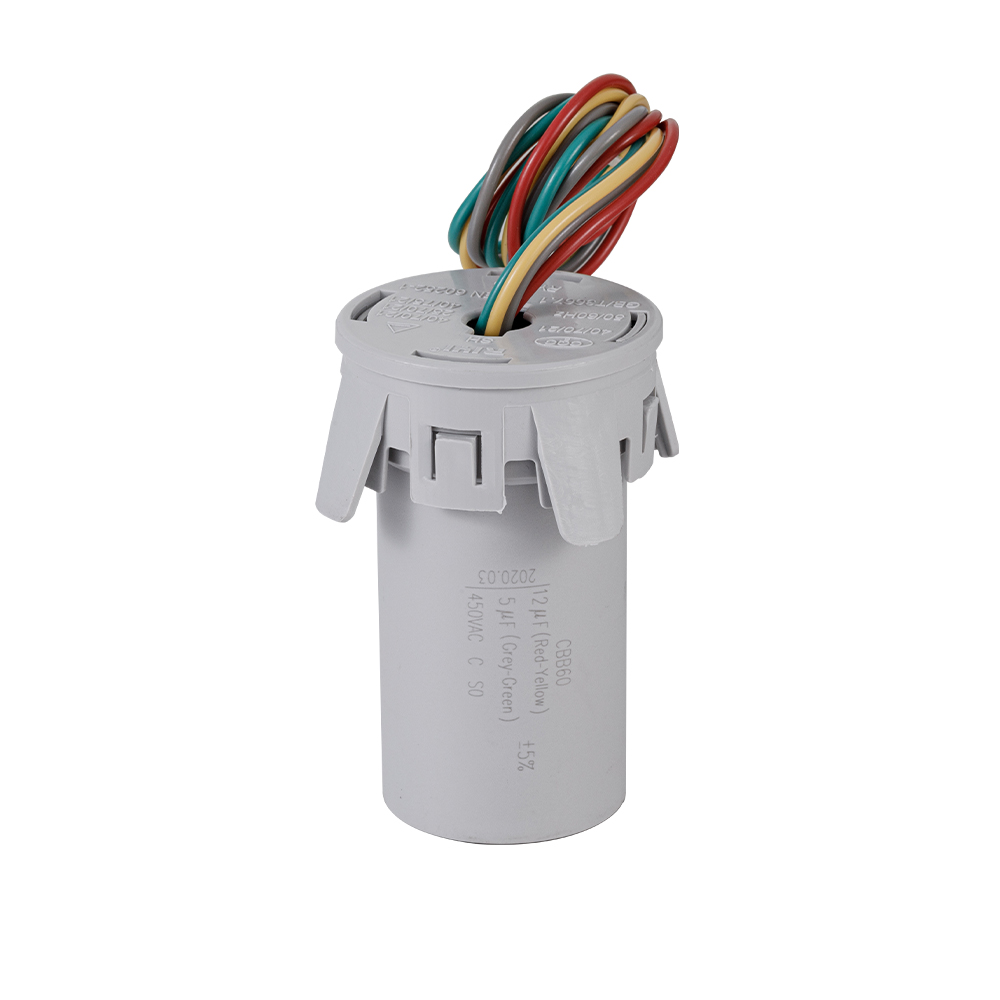
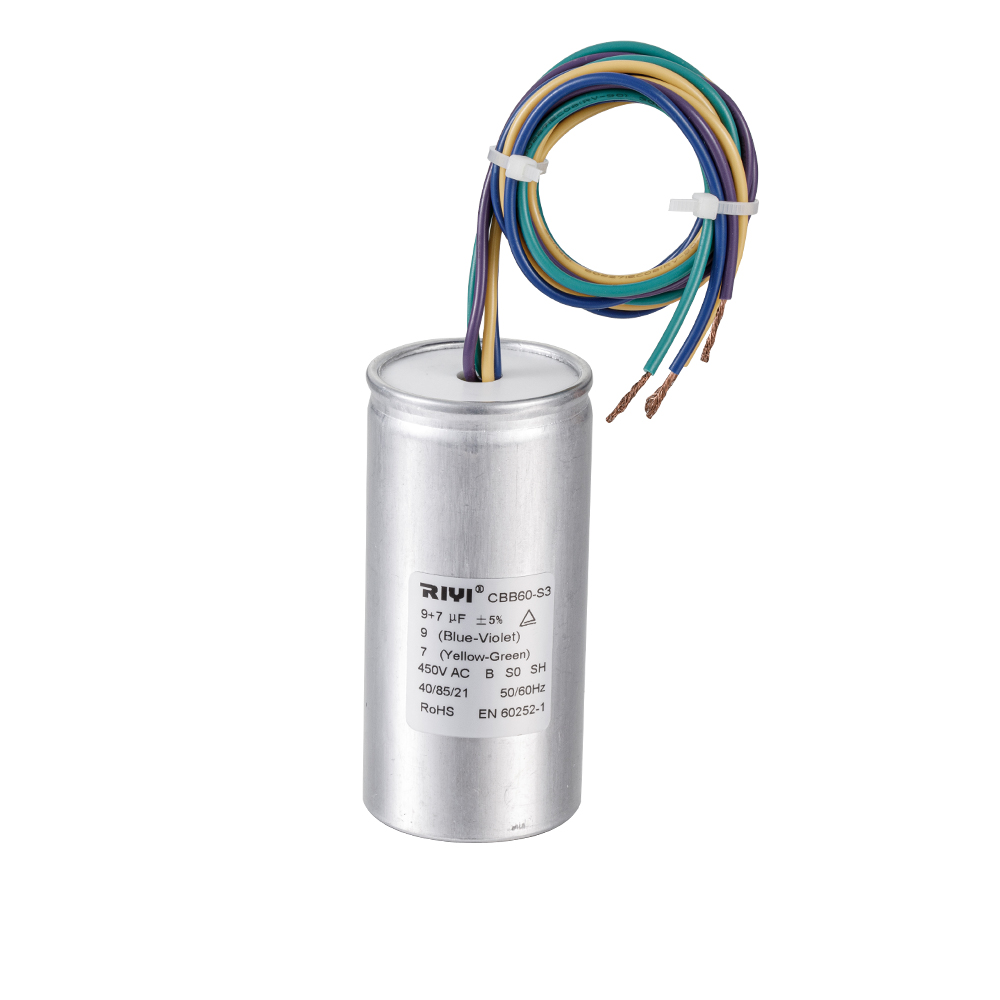 CBB60 AC Motor Run And Start Capacitor ManufacturersCBB60 450V B S0 Combination Lead Capacitor This CBB60 450V B S0 combination lead capacitor is, simply put, an indispensable "energy storage" and "booster" for AC motor...View Product →
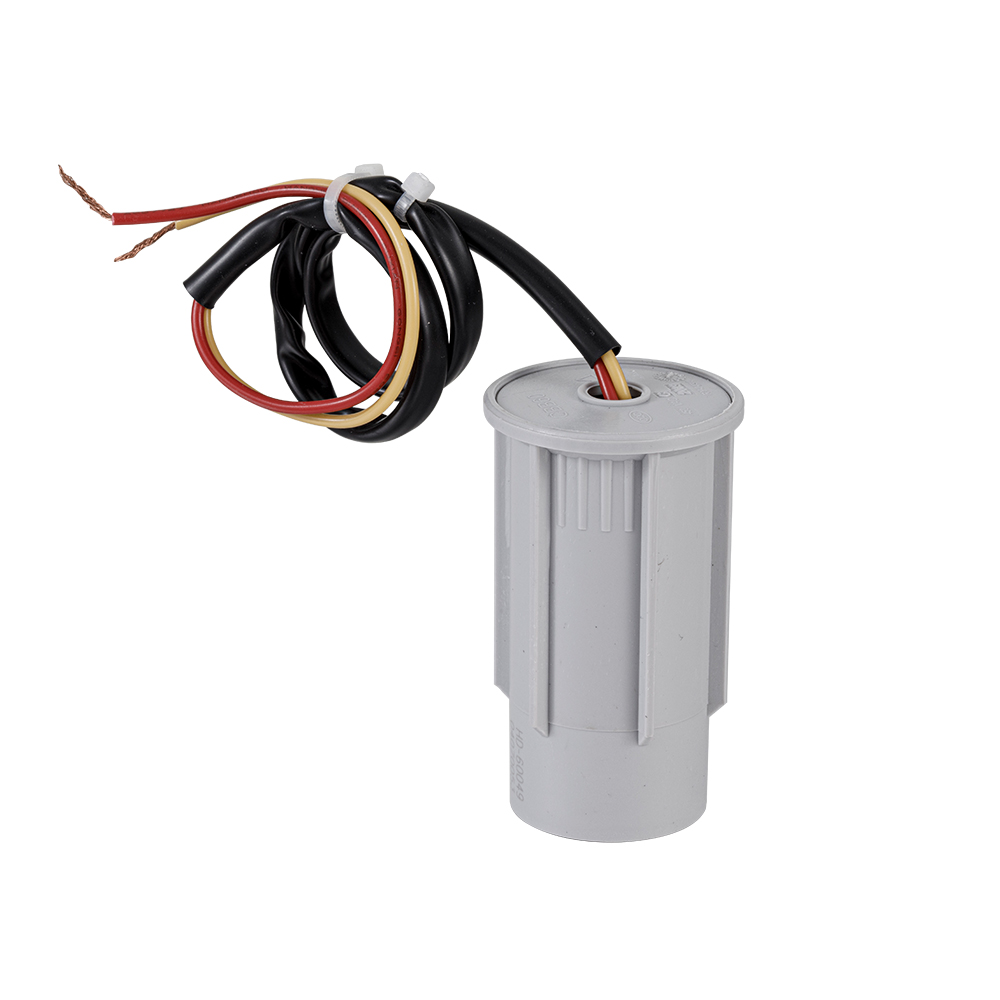
For continuous-duty applications where a motor needs a permanent phase shift, film capacitors such as the CBB60 series are the correct choice. They are available in aluminum or plastic cases with double leads, insert terminals, or screw terminals, and they are designed for 50/60 Hz operation with stable capacitance over thousands of hours.
Key Ratings You Must Match: Capacitance, Voltage, and Duty Cycle
Selecting a start capacitor is not simply about finding the same microfarad value. Voltage rating, duty cycle, and physical mounting all matter. The table below compares the critical parameters of start capacitors and run capacitors so you can avoid a misapplication that leads to repeat failures.
| Parameter | Start Capacitor | Run Capacitor |
|---|---|---|
| Typical capacitance range | 50 to 400 µF | 1 to 100 µF |
| Voltage rating | 125, 165, 250, 330 VAC | 370, 440, 450 VAC |
| Duty cycle | Short duty, 3% or 20 starts/hour | Continuous |
| Dielectric | Electrolytic | Metallized polypropylene film |
| Failure mode | Open circuit, venting, bulging | Capacitance loss, short circuit |
Voltage rating deserves special attention. A start capacitor marked 250 VAC is designed for a 240 VAC circuit with some margin. Using a 125 VAC capacitor on a 240 V line will cause immediate breakdown. Going higher, such as a 330 VAC capacitor on a 240 V circuit, is generally safe and can extend life because the dielectric experiences less stress. However, higher voltage ratings often come with larger physical sizes, so check the mounting space.
Capacitance tolerance is typically ±20 percent for start capacitors. Some motor designs are sensitive to the upper end of that tolerance. If the original capacitor is 200 µF, a replacement between 180 and 220 µF is usually acceptable. A 150 µF replacement is not. If you cannot find the exact value, choose the next higher standard value rather than a lower one, but stay within 20 percent to avoid excessive start winding current.
Start vs Run Capacitor: Critical Differences You Cannot Ignore
The most expensive mistake in motor repair is confusing a start capacitor with a run capacitor. They look similar, both have two terminals, and both are measured in microfarads. But their internal construction and intended duty could not be more different. A start capacitor is built for a few seconds of high inrush current. A run capacitor is built for continuous ripple current at lower magnitude. If you install a run capacitor in a start circuit, it will likely fail within days because the film cannot handle the repeated high-current starts. If you install a start capacitor in a run circuit, it will overheat, vent, and possibly explode because the electrolyte boils under continuous AC.
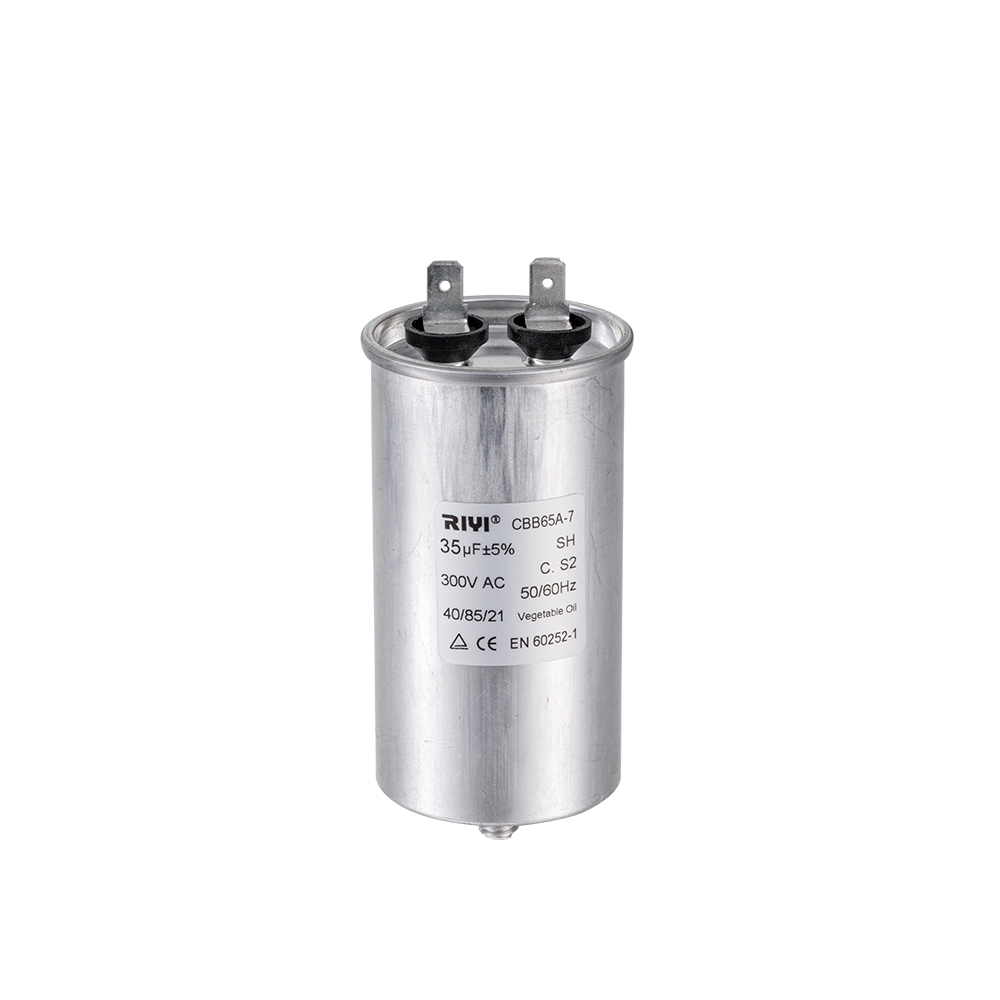
Some air conditioning compressors use a dual run capacitor, often a CBB65 type, which contains two capacitor sections in one can: a hermetic compressor section and a fan section. That is not a start capacitor. It is a pair of run capacitors sharing a housing. Do not connect a dual run capacitor in place of a start capacitor unless the motor nameplate specifically calls for a permanent split capacitor configuration. For air conditioning and refrigeration compressors that need a hard start, a separate start capacitor and relay are added to the run capacitor circuit.
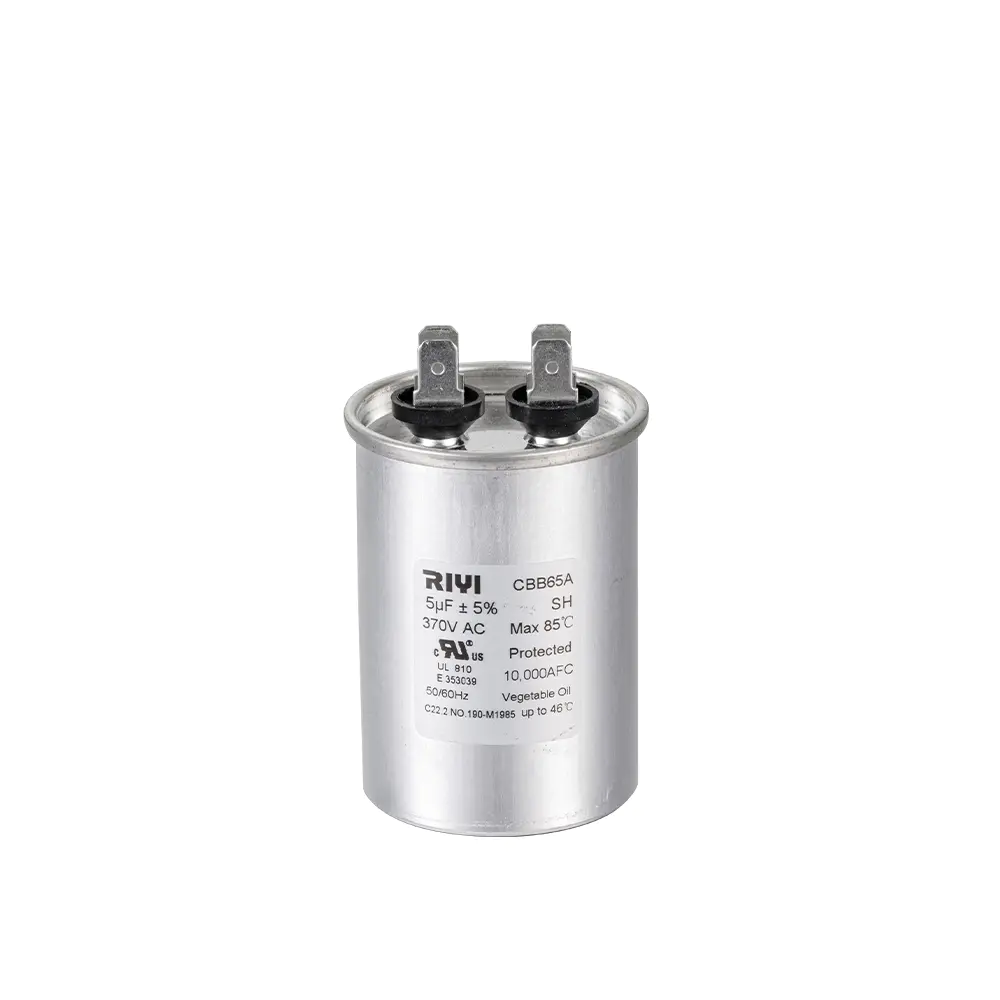 AC CBB65 Explosion-Proof Capacitor ManufacturersCbb65 5uf 370v S2 UL Explosion-Proof Aluminum Housing 2+2 terminal This capacitor essentially acts as a "voltage-stabilizing energy storage pump" in motor drive circui...View Product →
When replacing a run capacitor in an air conditioner, washing machine, or water pump, a CBB65 explosion-proof capacitor or a CBB60 motor capacitor provides the continuous duty rating and safety features required. These film capacitors are available with insert terminals, leads, or screw terminals to match the original mounting.
Failure Symptoms and What They Tell You About the Circuit
A start capacitor rarely fails without warning. The symptoms follow a predictable pattern because the motor loses its phase shift. Here are the most common signs, ranked by how often they appear in service calls.
- Motor hums but does not rotate. The rotor is locked because the start winding current is either missing or too small to create a rotating field. Check the start capacitor first, then the centrifugal switch.
- Overload trips after 5 to 15 seconds. The motor draws locked-rotor current, which is typically 6 to 8 times the full-load current. The overload heater or breaker opens to protect the windings.
- Capacitor case is bulged, cracked, or leaking electrolyte. This indicates the capacitor has been overvoltage or overheated. Replace it and inspect the centrifugal switch for sticking.
- Burning smell near the motor terminal box. The start capacitor may have vented. Disconnect power immediately and do not attempt to restart until the capacitor is replaced.
- Motor starts slowly or only when you manually spin the shaft. This suggests the start capacitor has lost capacitance but is not completely open, or the start winding circuit has high resistance.
If the motor hums and the capacitor looks fine, do not overlook the centrifugal switch. A switch that fails to close will prevent the start capacitor from being connected at all. A switch that fails to open will keep the start capacitor in the circuit, causing it to overheat within minutes. Both conditions mimic a bad capacitor from the operator's perspective.
How to Test a Start Capacitor Safely
Testing a start capacitor requires discharging it first. Even after power is removed, an electrolytic capacitor can hold a dangerous charge. Follow these steps in order.
- Disconnect all power to the motor. Lock out the disconnect if possible. Verify with a non-contact voltage tester that the terminals are de-energized.
- Discharge the capacitor using a 20 kΩ, 5 W resistor across the terminals for at least 10 seconds. Do not short the terminals with a screwdriver; that can damage the capacitor and create a spark hazard.
- Disconnect one lead from the capacitor to isolate it from the circuit. Note the terminal orientation for reassembly.
- Set a digital multimeter to capacitance mode. Connect the test leads to the capacitor terminals. Observe the reading. A good start capacitor should read within ±20 percent of its nameplate value.
- If the reading is zero or very low, the capacitor is shorted. If the reading is open (OL), the capacitor has failed open. Both conditions require replacement.
- Inspect the case for bulging, cracks, or electrolyte leakage. Any physical damage means replacement, even if the capacitance reading looks acceptable.
- Check the centrifugal switch if the capacitor tests good but the motor still will not start. With the motor de-energized, manually actuate the switch and verify continuity changes state.
A capacitance meter is the fastest tool for this job, but an analog multimeter set to resistance can also reveal a shorted or open capacitor. When you connect an analog meter, the needle should jump toward zero and then slowly climb back toward infinity as the capacitor charges. A needle that stays at zero indicates a short. A needle that does not move indicates an open circuit.
Selection and Replacement: Matching the Original Specification
When a start capacitor fails, the safest path is to replace it with a capacitor that matches the original microfarad rating, voltage rating, and physical mounting. Here are the details that matter most.
- Capacitance: Match within 20 percent. Going lower reduces starting torque. Going higher increases start winding current and may cause the overload to trip.
- Voltage: Equal or higher. A 330 VAC capacitor can replace a 250 VAC capacitor. Never go lower. Higher voltage gives more margin against line transients.
- Duty cycle: Start capacitors are rated for short duty. Do not substitute a run capacitor unless the motor is designed for permanent split capacitor operation.
- Terminal type: Match the original: 1/4-inch quick connect, screw terminals, or leads. Poor connections cause arcing and premature failure.
- Operating temperature: Check the capacitor's temperature rating. A capacitor rated for 65°C will not last in a 85°C environment. Choose a higher temperature rating when possible.
For motors that use a run capacitor continuously, such as those in washing machines, water pumps, and air conditioners, the CBB60 and CBB61 series film capacitors are designed for long life. The CBB61 square motor capacitor is common in fan and blower motors, while the CBB65 explosion-proof capacitor is the standard for air conditioning compressors. When ordering a replacement, confirm the case dimensions and mounting ears, because a capacitor that fits electrically but not mechanically will not stay in place.
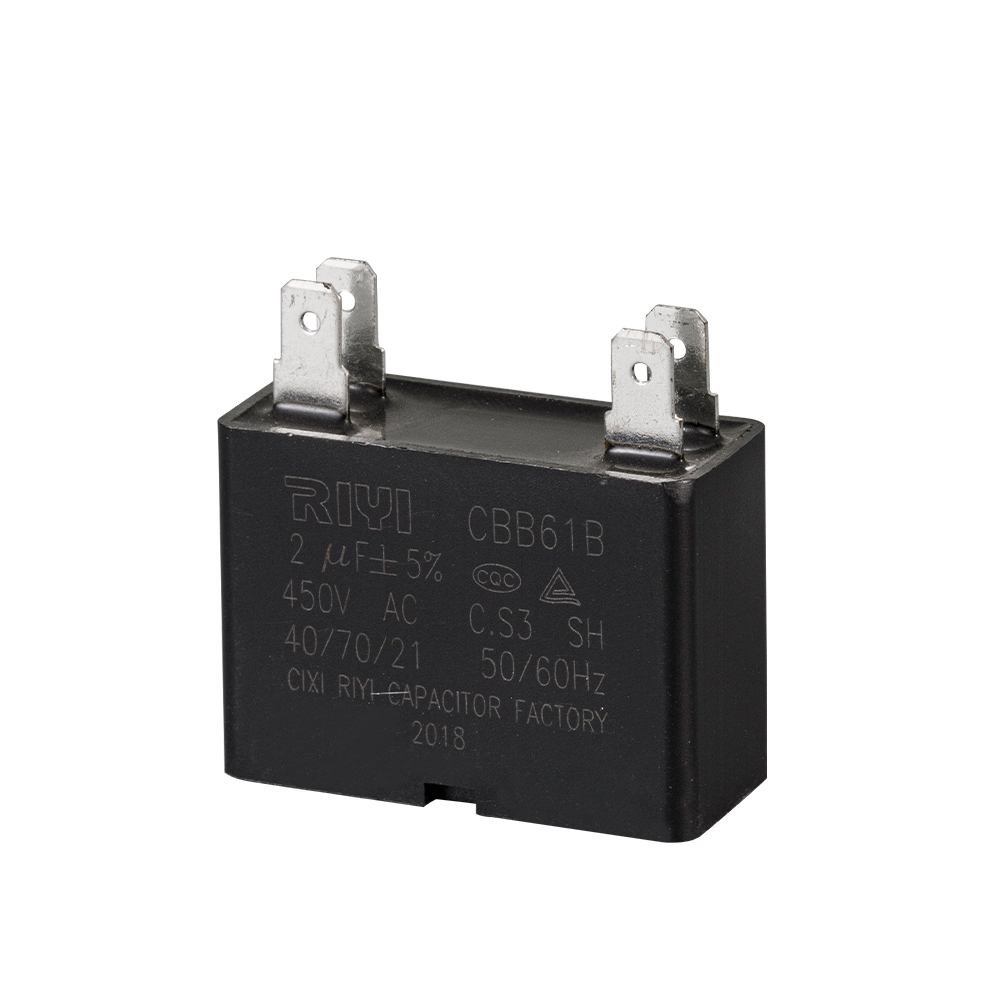 AC Cbb61 Square Motor Fan Capacitor ManufacturerCbb61 2uf 450V S3 2+2 terminal This is a very common starting and running capacitor in power electronic circuits. Simply put, it acts like a "quick-acting accelerator"...View Product →
Frequently Asked Questions
What happens if I use the wrong size start capacitor?
A capacitor that is too small will not create enough phase shift, so the motor will produce weak starting torque, hum, and draw high current. A capacitor that is too large will push excessive current through the start winding, which can overheat the winding and trip the overload. In either case, the motor may fail to start or may start only under no load. Always stay within 20 percent of the nameplate microfarad value.
Can a motor run without a start capacitor?
Only if the motor is a permanent split capacitor motor or a shaded-pole motor. A capacitor-start motor needs the start capacitor to produce initial torque. Without it, the motor will not start from standstill under load. Some motors will start if you manually spin the shaft, but that is not a safe or practical solution.
How long should a start capacitor last?
A quality start capacitor in a properly maintained motor can last 5 to 10 years or more. Factors that shorten life include frequent starts, high ambient temperature, overvoltage, and a sticking centrifugal switch that keeps the capacitor in the circuit after the motor reaches speed.
Why does my start capacitor keep failing?
Repeated failures usually point to a circuit problem rather than a bad batch of capacitors. Check the centrifugal switch for sticking closed, verify the line voltage is not too high, and confirm the replacement capacitor has the correct voltage rating. A motor that starts many times per hour may need a capacitor with a higher duty cycle rating or a different start method.
Can low voltage damage a start capacitor?
Low voltage reduces starting torque and causes the motor to draw higher current for a longer time. The start capacitor stays in the circuit longer, which increases heating. Prolonged low-voltage starting will shorten capacitor life. If the supply voltage is consistently below the motor nameplate rating, correct the voltage before replacing the capacitor again.
What tools do I need to test a start capacitor?
A digital multimeter with capacitance mode is the most convenient tool. An analog multimeter can also be used to check for short or open conditions. You also need a discharge resistor (20 kΩ, 5 W), insulated screwdrivers, and a non-contact voltage tester. Safety glasses are recommended because a failed electrolytic capacitor can vent electrolyte.
A start capacitor works by creating a phase shift that gives a single-phase motor the rotating field it needs to accelerate from standstill. That phase shift lasts only a few seconds, which is why start capacitors use electrolytic construction and are rated for short duty cycles. When a motor hums but does not start, the start capacitor is the first component to test. Match the microfarad value, voltage rating, and duty cycle exactly, and inspect the centrifugal switch while you are in the terminal box.
For continuous-duty run capacitors in appliances, pumps, and air conditioning systems, film capacitors such as the CBB60, CBB61, and CBB65 series provide stable capacitance and long service life. They are available in a range of case styles, terminal configurations, and mounting options to match the original equipment. Replacing a failed capacitor with the correct type is the difference between a motor that runs for years and one that fails again next month.




- Tel: +86-13600614158
- E-mail: mina@cxriyi.com
- Address: Zonghan Street,Cixi City, Zhejiang Province, China.
Copyright © CIXI RIYI CAPACITOR FACTORY
All Rights Reserved.
 custom air conditioner capacitor for sale
China Ac Motor Capacitor Factory