
 en
en
 English
What does CBB60 mean on a capacitor?
Content
The Direct Meaning of CBB60 on a Capacitor
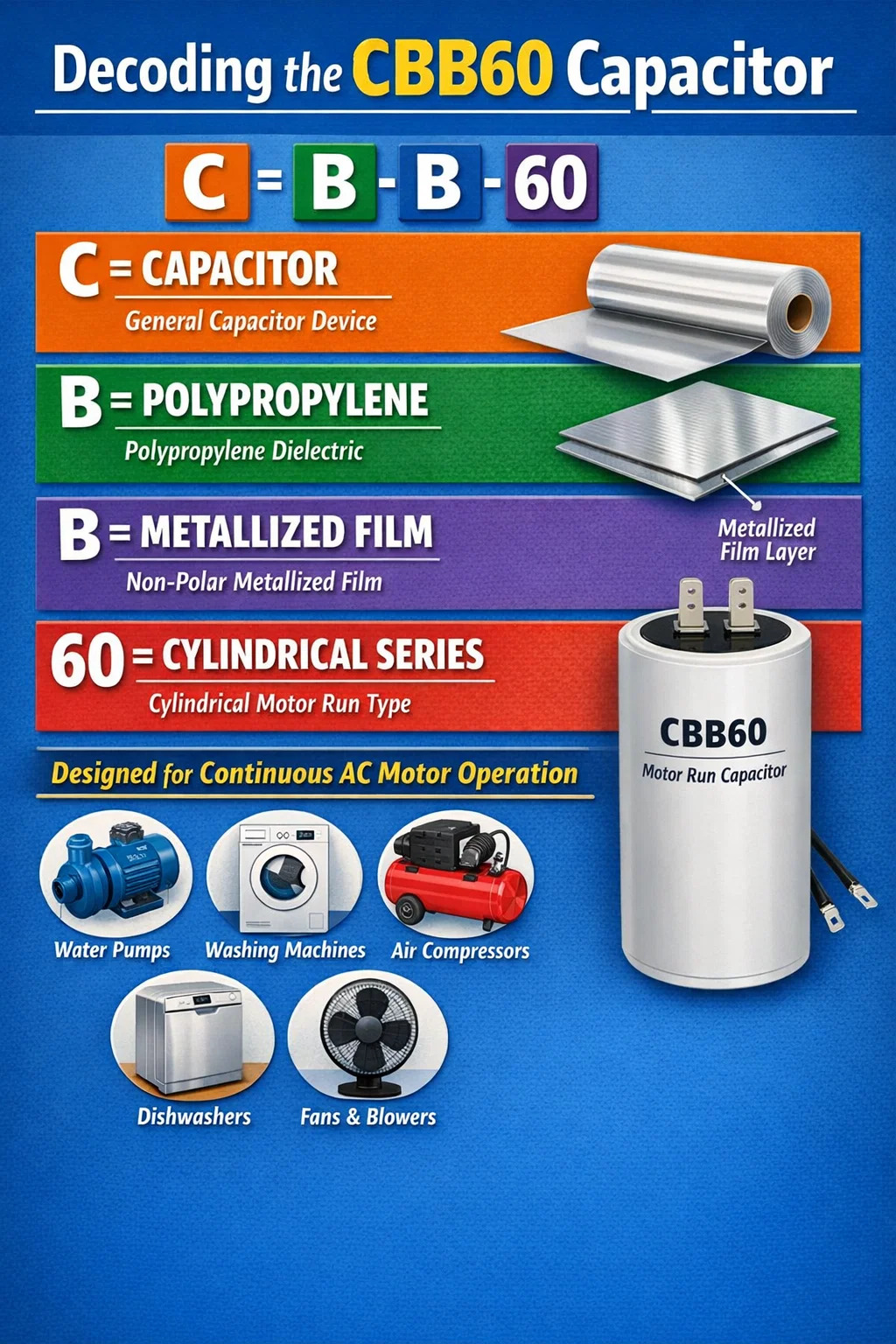
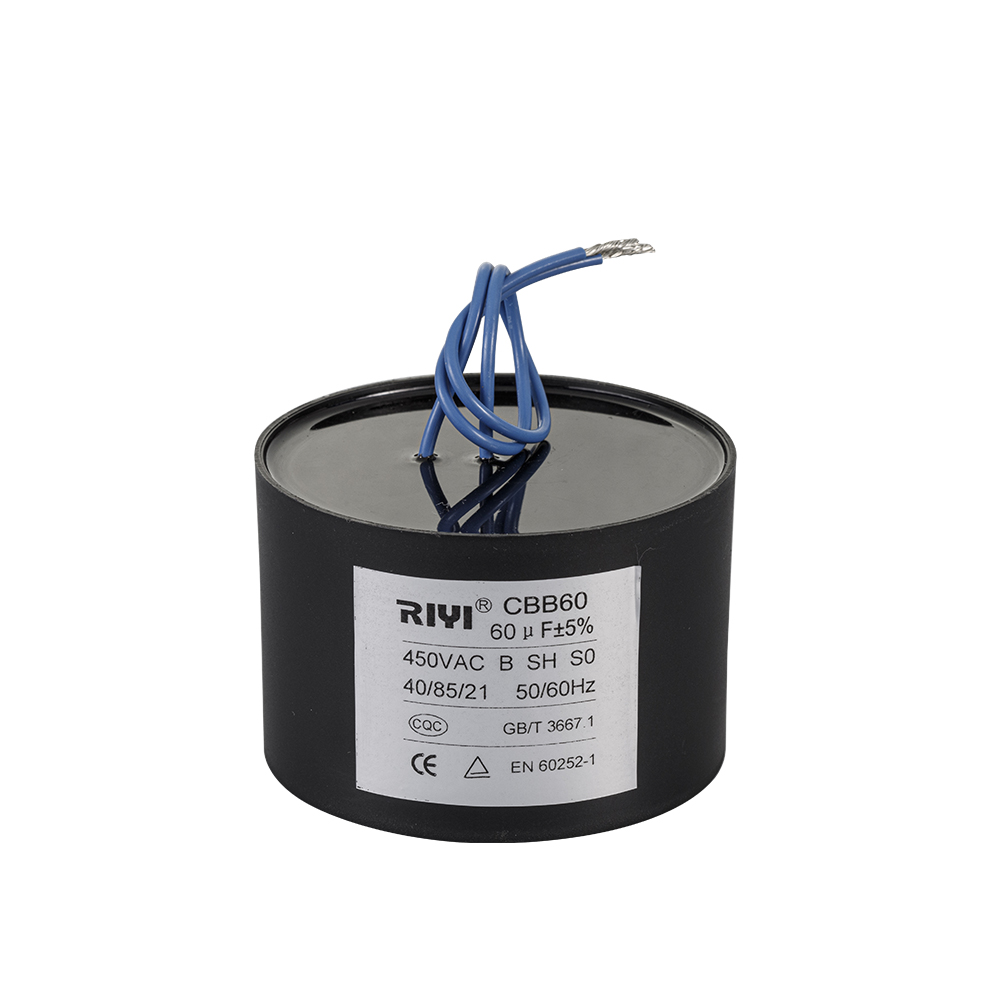
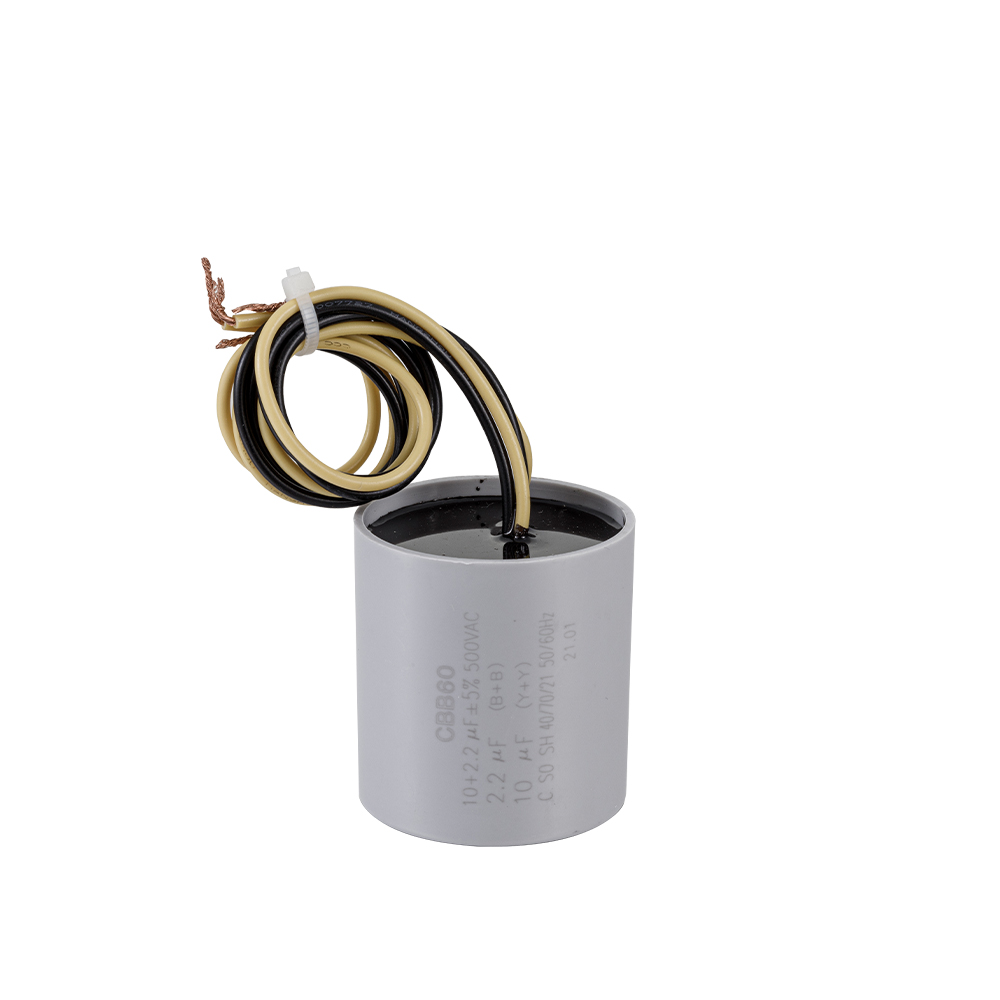
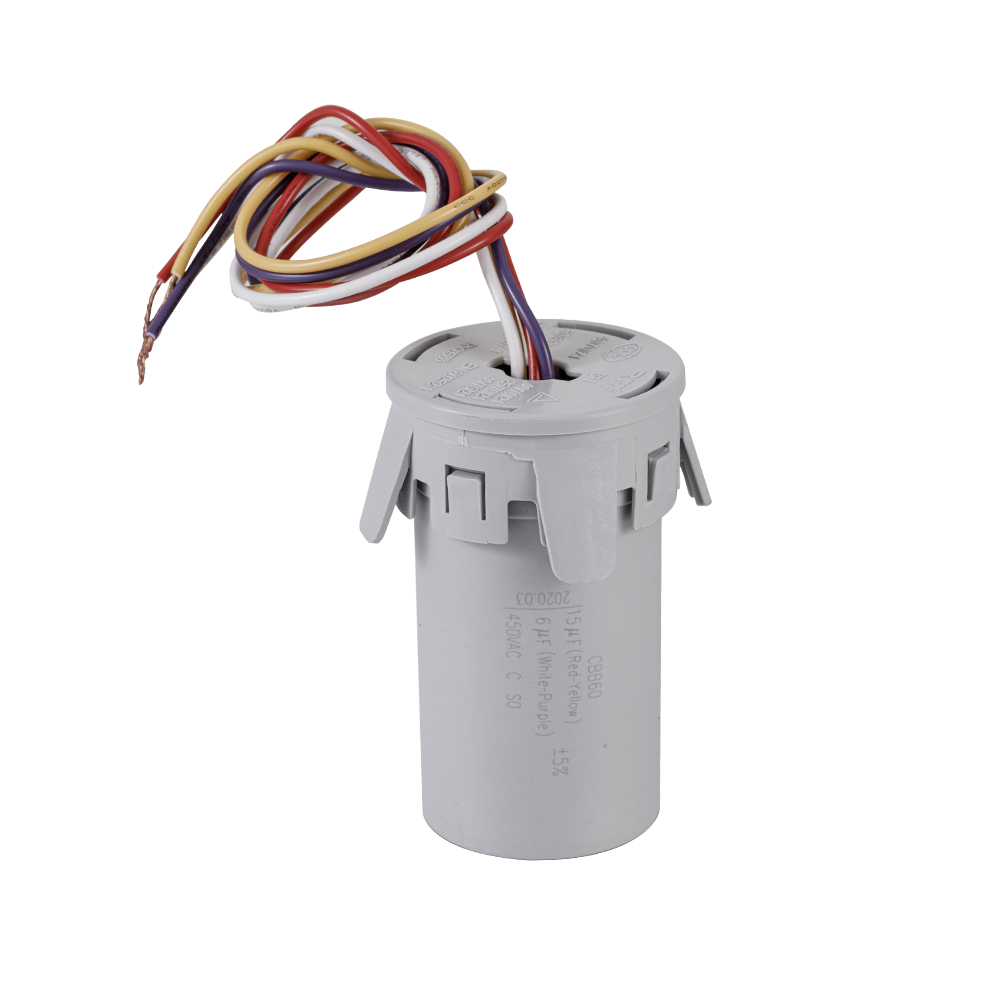
On an electrical component, the term CBB60 is a Chinese industrial standard code (GB) that identifies the specific dielectric material and functional category of the capacitor. In plain English, CBB60 represents a metallized polypropylene film motor run capacitor shaped in a cylindrical housing. This component is specifically designed to stay in an AC circuit continuously while a motor is running, providing the necessary phase shift to maintain motor torque and efficiency.
The code itself is an alphanumeric abbreviation where each letter carries a specific technical weight regarding the internal construction and application of the device. Unlike start capacitors that kick out of the circuit once a motor reaches speed, the CBB60 capacitor is built for durability and continuous electrical duty.
Decoding the Alphanumeric Sequence of CBB60
To understand what makes a CBB60 unique compared to other capacitors like the CBB61 or CBB65, one must break down the individual characters used in the naming convention. This standard is widely adopted by manufacturers globally to ensure compatibility and safety across various AC motor-driven appliances.
The "C" Breakdown
The first letter stands for Capacitor. This is the universal identifier for a component that stores an electrical charge in an electrostatic field. In the context of an AC motor, this charge is used to create a magnetic field that is "out of step" with the main power line, which is required for single-phase motors to spin.
The First "B" Breakdown
The second letter indicates the Dielectric Material. In this case, "B" stands for Polypropylene. This material is chosen for the CBB60 capacitor because it has an extremely low dissipation factor and high insulation resistance. This allows the capacitor to handle high frequencies and maintain a stable capacitance even when the internal temperature rises during long hours of motor operation.
The Second "B" Breakdown
The third letter describes the Non-polar Metallized Film. It signifies that the capacitor does not have a positive or negative lead, making it safe for AC (Alternating Current) circuits. The "metallized" aspect refers to a thin layer of metal vapor-deposited directly onto the polypropylene film, which provides the "self-healing" capability—if a small short occurs inside, the metal layer vaporizes and clears the fault without destroying the entire unit.
The "60" Breakdown
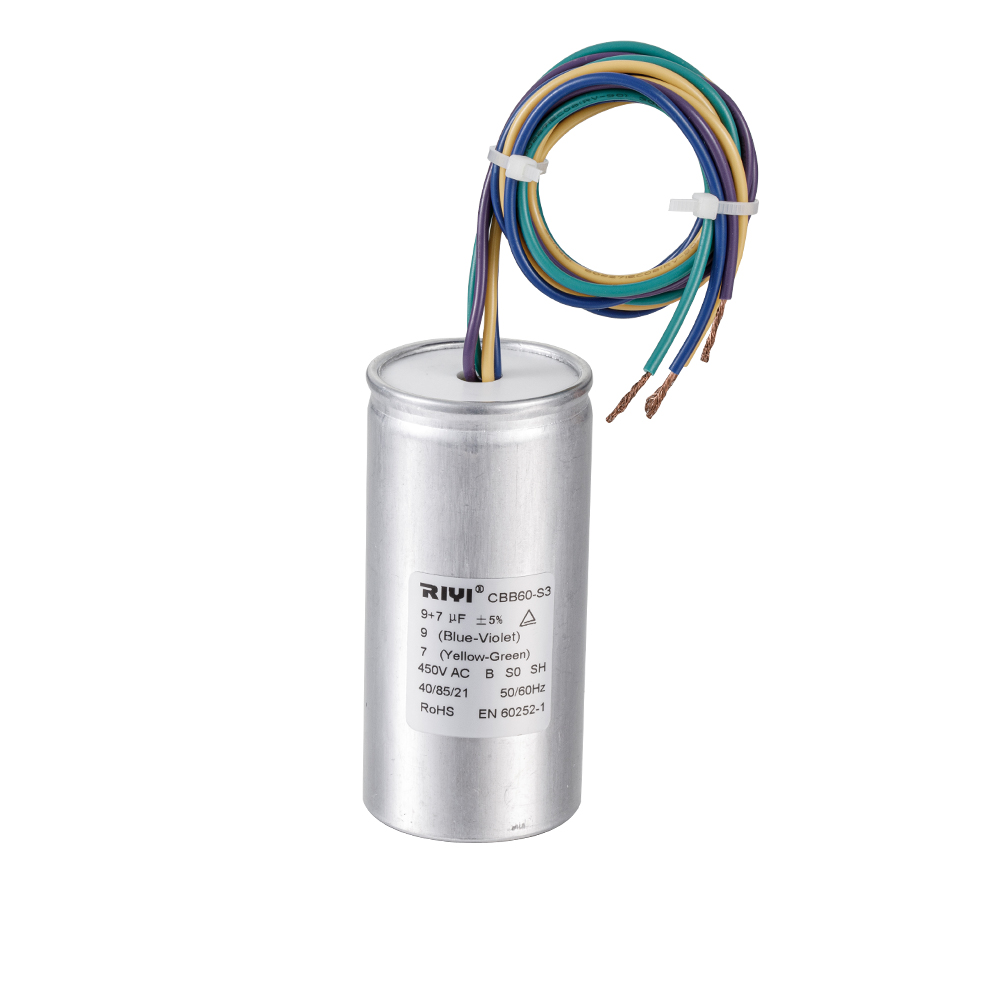
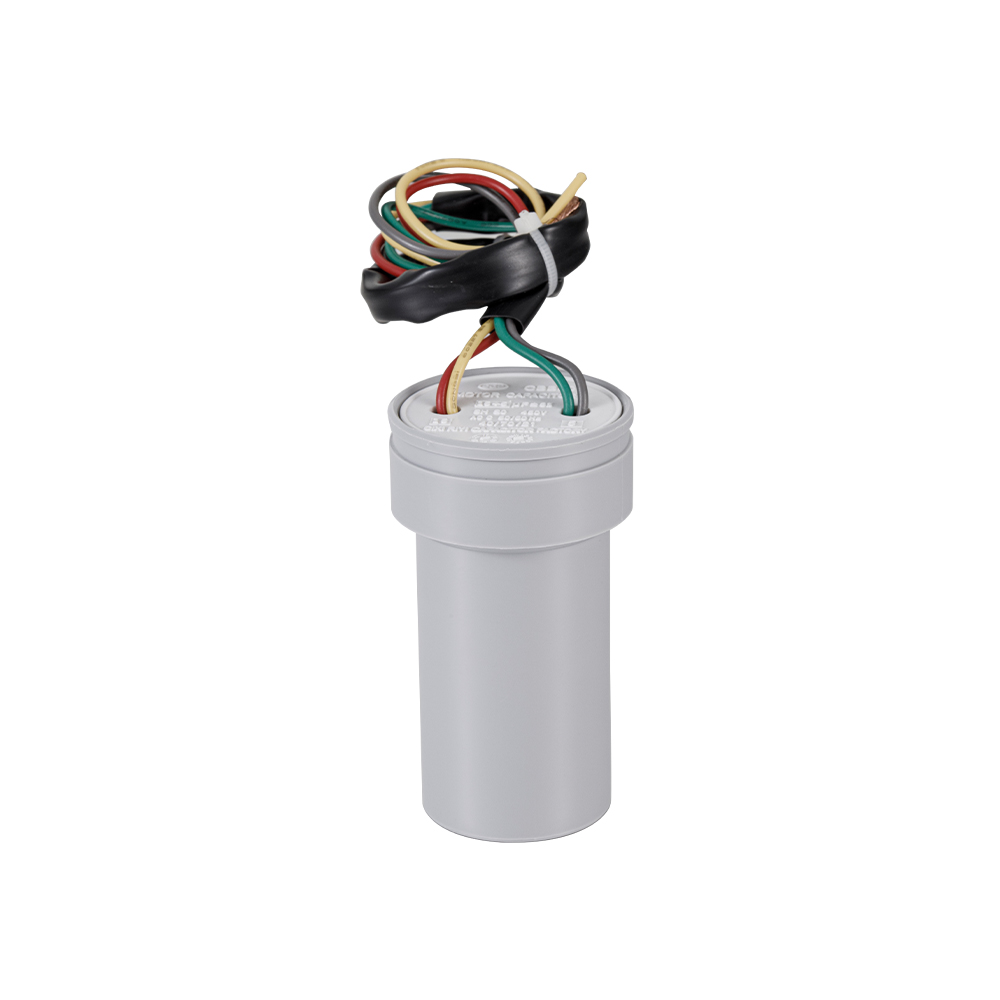
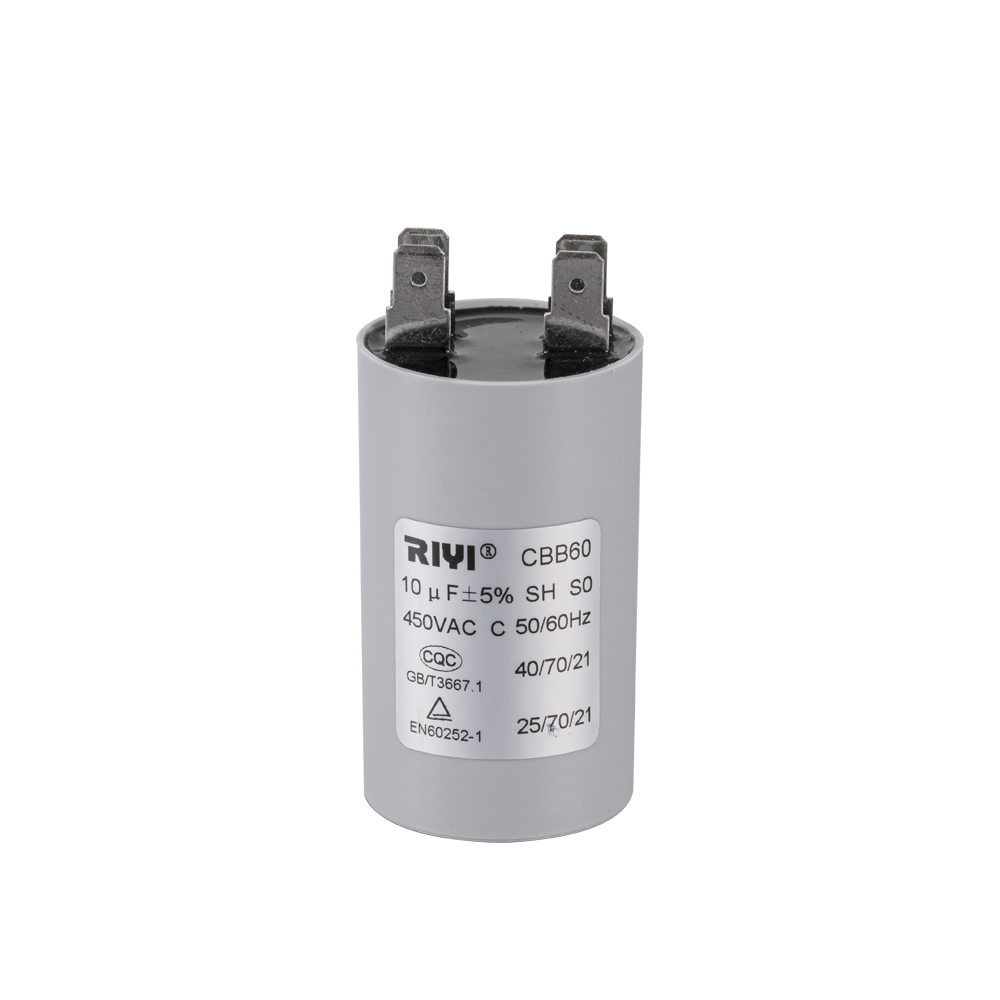
The digits "60" represent the Model Series or application form factor. In the industry, "60" typically denotes a cylindrical plastic or aluminum shell with either wire leads or spade terminals, used primarily for motor-run applications in appliances like pumps, washing machines, and compressors.
Core Functionality in AC Motors
A CBB60 capacitor is essential for single-phase induction motors. Because a single-phase AC source doesn't naturally produce a rotating magnetic field, the motor would simply sit and vibrate without the help of a capacitor. The CBB60 creates a secondary magnetic field by delaying the current in the auxiliary winding.
Applications for this specific model are vast due to its robust design. Common examples include:
- Water pumps (domestic and industrial irrigation).
- Washing machines and spin dryers.
- Small air compressors.
- Dishwashers and garbage disposals.
- High-velocity floor fans.
Technical Specifications and Data Comparison
When replacing a CBB60 capacitor, simply knowing the model code is not enough. You must match the electrical ratings printed on the label. Using a capacitor with an incorrect voltage or microfarad (µF) rating can lead to motor burnout or capacitor explosion.
| Parameter Name | Common Value / Range | Importance Level |
|---|---|---|
| Capacitance (µF) | 1µF to 100µF | Critical |
| Rated Voltage (VAC) | 250V, 400V, 450V, 500V | High (Voltage must meet or exceed original) |
| Frequency (Hz) | 50/60 Hz | Standard |
| Tolerance | ±5% (J), ±10% (K) | Medium |
| Climate Category | 40/70/21 or 40/85/21 | Operating Environment |
How to Identify a Failing CBB60 Capacitor
Because a CBB60 capacitor is a run capacitor, its failure often results in a motor that is sluggish, noisy, or fails to start under load. Unlike electronic components that may show no outward signs, film capacitors often fail in visible ways.
Visual and Audible Red Flags
If you suspect your appliance is failing, look for the following clues related to the capacitor:
- The cylindrical casing is bulging or "mushrooming" at the top or bottom. This indicates internal gas pressure from an electrical failure.
- Oily or sticky residue leaking from the terminals. While CBB60 capacitors are often "dry" (filled with resin), some variants contain oil that can leak under extreme heat.
- The motor hums loudly but doesn't spin. If you give the motor a manual nudge and it starts spinning, the capacitor is likely dead.
- Frequent "tripping" of the circuit breaker or thermal overload protection on the motor.
Safety and Maintenance Practices
Handling any CBB60 capacitor requires strict adherence to safety protocols. Capacitors store electricity even after the power source has been disconnected. Before touching the terminals of a CBB60, you must discharge it by using a high-wattage resistor or a specialized discharge tool across the terminals. Simply shorting the terminals with a screwdriver can cause an arc flash and damage the internal foil of the capacitor.
When replacing the unit, ensure the new CBB60 has the same microfarad rating (e.g., 40µF) and a voltage rating that is equal to or higher than the original (e.g., if the original was 400VAC, a 450VAC unit is a safe upgrade). Never use a lower voltage rating, as it will lead to immediate failure.


- Tel: +86-13600614158
- E-mail: mina@cxriyi.com
- Address: Zonghan Street,Cixi City, Zhejiang Province, China.
Copyright © CIXI RIYI CAPACITOR FACTORY
All Rights Reserved.
 custom air conditioner capacitor for sale
China Ac Motor Capacitor Factory
custom air conditioner capacitor for sale
China Ac Motor Capacitor Factory