
 en
en
 English
Understanding C65R and CBB65 Capacitor Specs & Applications
Direct Overview and Functional Conclusion
The c65r capacitor and the broader cbb65 capacitor family serve as vital components in modern electrical engineering, primarily acting as motor run capacitors for high-demand alternating current (AC) applications. Structurally, these components provide the continuous phase-shift required to keep single-phase induction motors running smoothly in heating, ventilation, air conditioning (HVAC), and industrial pumping systems. The direct operational conclusion is that selecting between a standard model and a heavy-duty C65R variation depends entirely on the required microfarad (µF) capacitance tolerance, voltage peaks up to 450V AC, and environmental temperature extremes. Choosing an accurately matched run capacitor prevents motor overheating, reduces energy consumption, and extends the operational lifespan of the compressor or fan motor it supports.
Decoding the Technical Nomenclature of CBB65 and C65R Capacitors
Understanding the designation of these components requires breaking down industrial naming conventions. The term CBB65 represents a specific type of metallized polypropylene film capacitor. In international coding standards, the letter C stands for capacitor, the first B signifies a polypropylene dielectric material, and the second B denotes that it utilizes a film layer design. The numerical suffix 65 is an industry-standard indicator for high-voltage, oil-filled, anti-explosion safety structures.
The designation c65r capacitor often points to specific manufacturer product lines or reinforced designs optimized for high-reliability applications, frequently integrated into premium residential condenser units. The "R" frequently highlights a round physical geometry or enhanced heavy-duty construction metrics tailored for strict operational environments. These capacitors utilize an extremely thin layer of aluminum or zinc-aluminum alloy vacuum-deposited onto a polypropylene film base to store and release electrical energy efficiently.
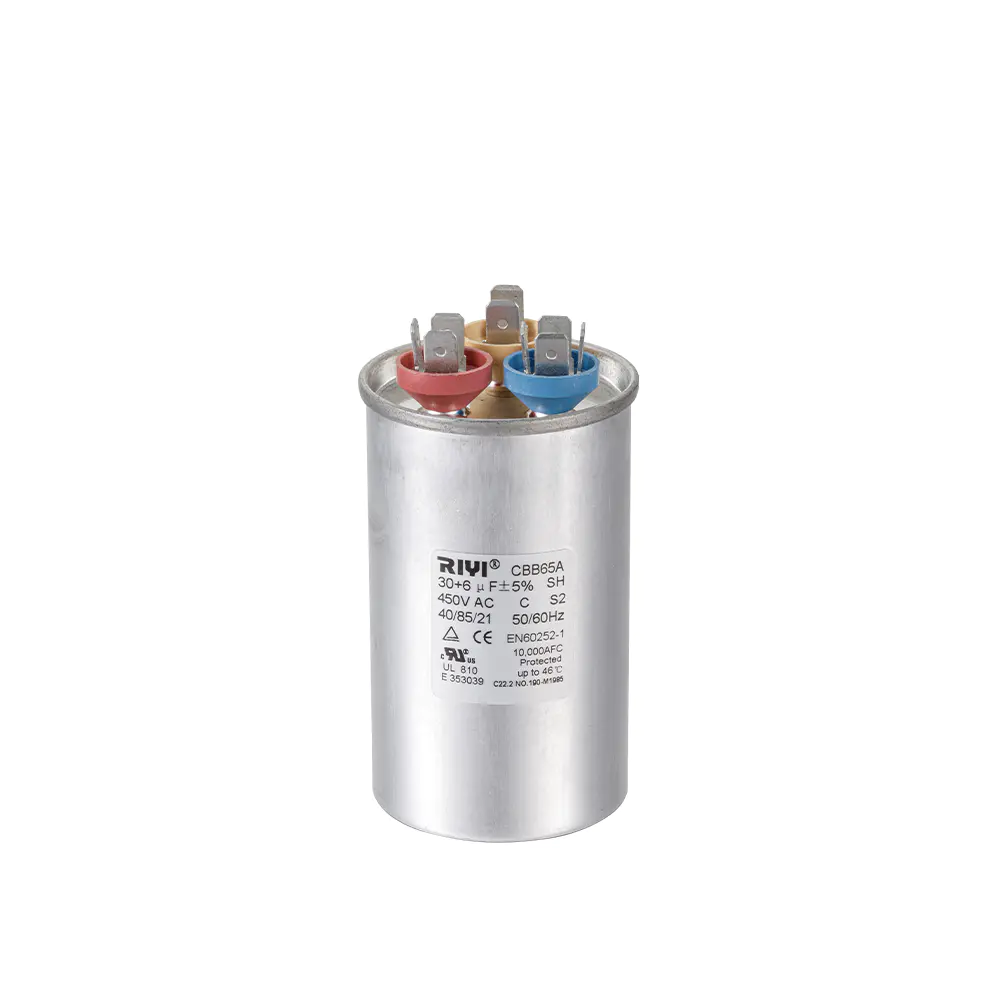
Core Technical Specifications and Performance Matrix
When evaluating a cbb65 capacitor or a specialized C65R equivalent, engineers evaluate specific electrical parameters to ensure system compatibility. The primary ratings include nominal capacitance, voltage capacity, frequency compatibility, and temperature tolerance thresholds.
| Parameter Metric | Standard CBB65 Range | Premium C65R Performance |
|---|---|---|
| Rated Voltage (VAC) | 370V to 440V AC | Up to 450V AC |
| Capacitance Range (µF) | 15 µF to 80 µF | Dual and Single values up to 100 µF |
| Capacitance Tolerance | plus or minus 5 percent | plus or minus 5 percent stable |
| Temperature Class | -40 degrees to 70 degrees C | -40 degrees to 85 degrees C |
| Dissipation Factor | less than 0.002 at 50Hz | less than 0.0015 enhanced |
Dual-Run Applications vs Single-Value System Frameworks
In typical air conditioning condenser systems, real estate within the electrical control box is highly limited. This limitation led to the development of dual-run designs, which are widely found in cbb65 capacitor options. A single-value unit features two terminals and supports a single motor, such as a dedicated furnace blower or an industrial exhaust fan.
Conversely, a dual-run configuration houses two distinct capacitors inside a single metallic canister sharing a common internal neutral path. This design is easily identified by three clearly labeled top terminals:
- HERM Terminal: This connects directly to the hermetic compressor motor winding, delivering the necessary high-capacitance phase shift, typically ranging from 35 µF to 60 µF.
- FAN Terminal: This routes straight to the outdoor condenser fan motor winding, requiring a lower capacitance rating, usually between 3 µF and 10 µF.
- COM Terminal: The common terminal serves as the return leg connecting directly to the incoming main power line contactor.
According to field data published by the HVAC Excellence Training Manual, over eighty percent of modern residential split-system air conditioners utilize a dual-run configuration to conserve space and reduce component counts during manufacturing assembly.
Internal Self-Healing Mechanics and Structural Safety Features
The Self-Healing Phenomenon
One of the primary structural benefits of the modern c65r capacitor is its inherent self-healing capability. When a localized voltage spike or dielectric breakdown occurs due to excessive operational heat, a minute electrical arc punctures the ultra-thin polypropylene film layer. Because the metalized coating is incredibly thin, the heat generated by the micro-arc vaporizes the metallic film surrounding the puncture point instantly. This vaporization removes the short circuit, allowing the device to continue running uninterrupted with a negligible loss in total microfarad output.
Pressure-Sensitive Interrupter Protection
When severe internal faults lead to gas generation from oil decomposition, an integrated safety mechanism protects the system. These capacitors feature an internal pressure-sensitive interrupter. As pressure builds within the seamless aluminum housing, the top cover expands outward slightly. This physical expansion breaks internal connection wires attached directly to the terminals, completely isolating the failed component before the outer casing can rupture or leak oil onto sensitive electrical controls.
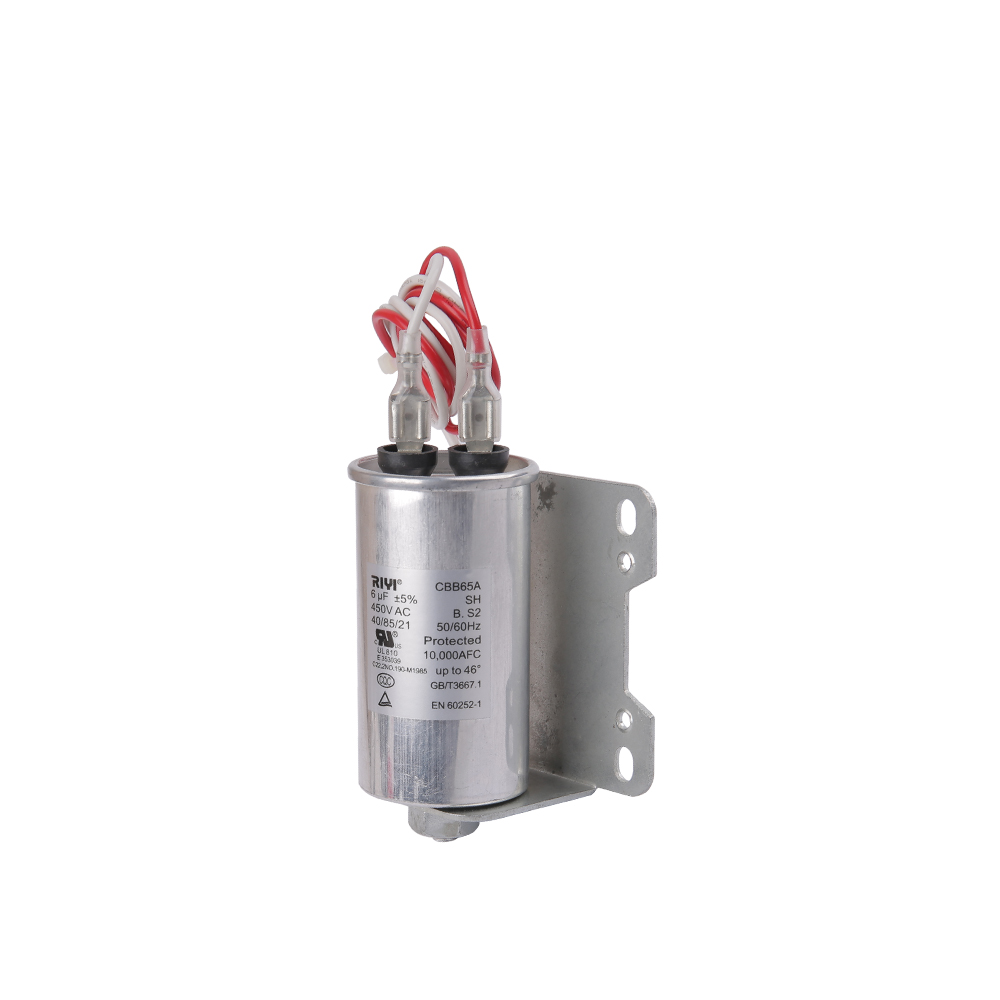
Step-by-Step Diagnostic Testing and Multimeter Verification
When an outdoor HVAC unit fails to engage, resulting in a distinct humming sound coming from the compressor, technicians must perform a physical and electrical diagnosis. This process requires precise execution to confirm the operational integrity of the component.
Phase 1: Safe Isolation and Visual Inspection
Before touching any internal component, technicians must disconnect the main service power pullout loop. They use a resistor to safely bleed off any stored electrical charge across the terminal combinations. A physical inspection follows: if the top lid appears domed or swollen, the internal pressure interrupter has tripped, requiring immediate replacement. Oil leakage around the terminal seals also confirms structural failure.
Phase 2: Microfarad Measurement and Evaluation
The technician detaches the wiring harness and switches a digital multimeter to the capacitance setting (denoted by the microfarad symbol). The testing procedure follows a strict path:
- Place one probe on the COM terminal and the second lead directly on the HERM terminal. Compare the read-out directly against the rated label value.
- Move the second lead over to the FAN terminal to verify the lower fan-circuit value independently.
- If a 45 plus 5 µF rated unit reads below 42.75 µF on the HERM circuit, the motor will suffer from slip loss, necessitating a replacement.
Selecting the Proper Replacement Component
When sourcing an identical or upgraded replacement for a failed c65r capacitor, specific compatibility guidelines prevent equipment damage. It is an industry rule that a technician can increase the operational voltage rating but must never lower it. For example, a 440V rated model can replace a 370V rated model safely because its thicker dielectric layer handles higher electrical stress. However, installing a 370V model into a 440V circuit causes rapid dielectric breakdown and premature failure.
Conversely, microfarad values must match the equipment design specifications exactly. Installing an incorrectly sized capacitor, such as a 55 µF unit into a circuit designed for a 45 µF motor, shifts the phase angle too far forward. This increases the total current draw in the auxiliary windings, causing motor winding insulation failure over time.

- Tel: +86-13600614158
- E-mail: mina@cxriyi.com
- Address: Zonghan Street,Cixi City, Zhejiang Province, China.
Copyright © CIXI RIYI CAPACITOR FACTORY
All Rights Reserved.
