 en
en
 English
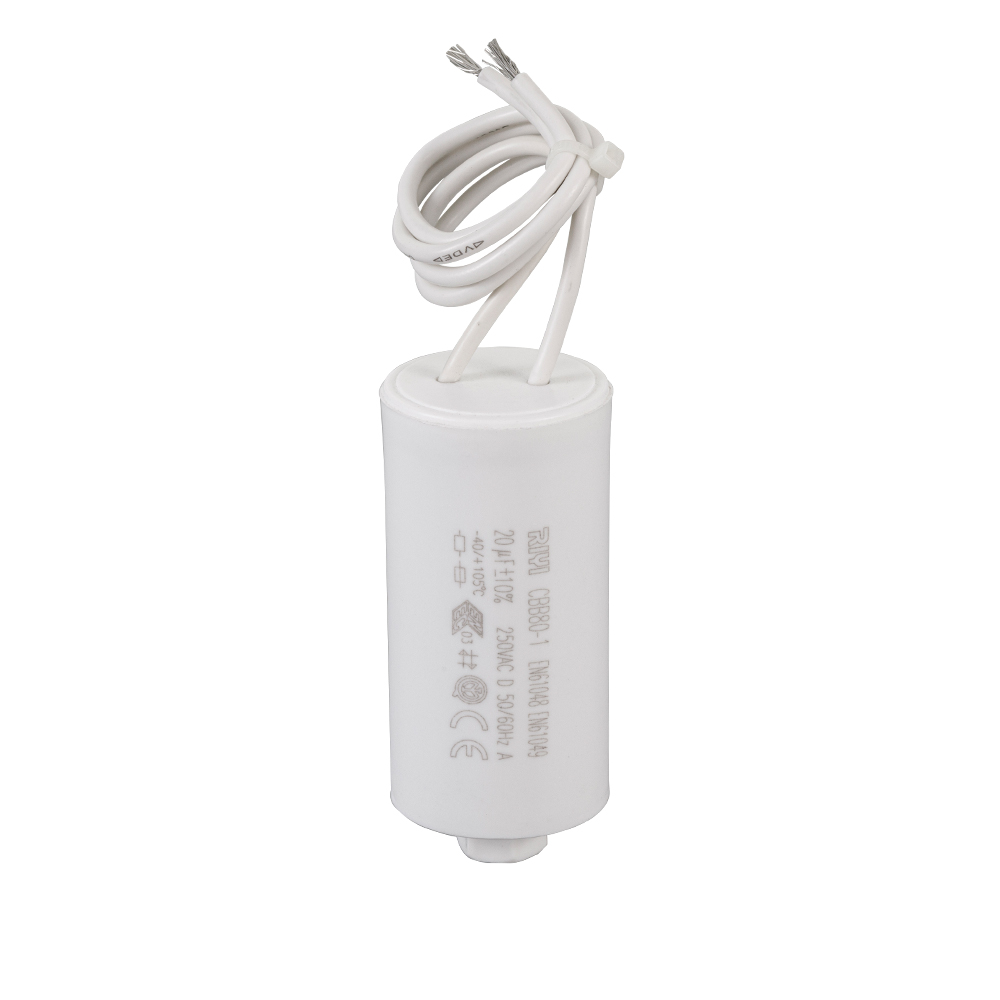

As China lamp capacitor manufacturers and cbb80 capacitor factory, CIXI RIYI CAPACITOR FACTORY is a professional enterprise specializing in the production of AC motor capacitors, compensation capacitors for lighting fixtures, filters, and other products. The company is located on the south bank of Hangzhou Bay Bridge, where traffic is very convenient.
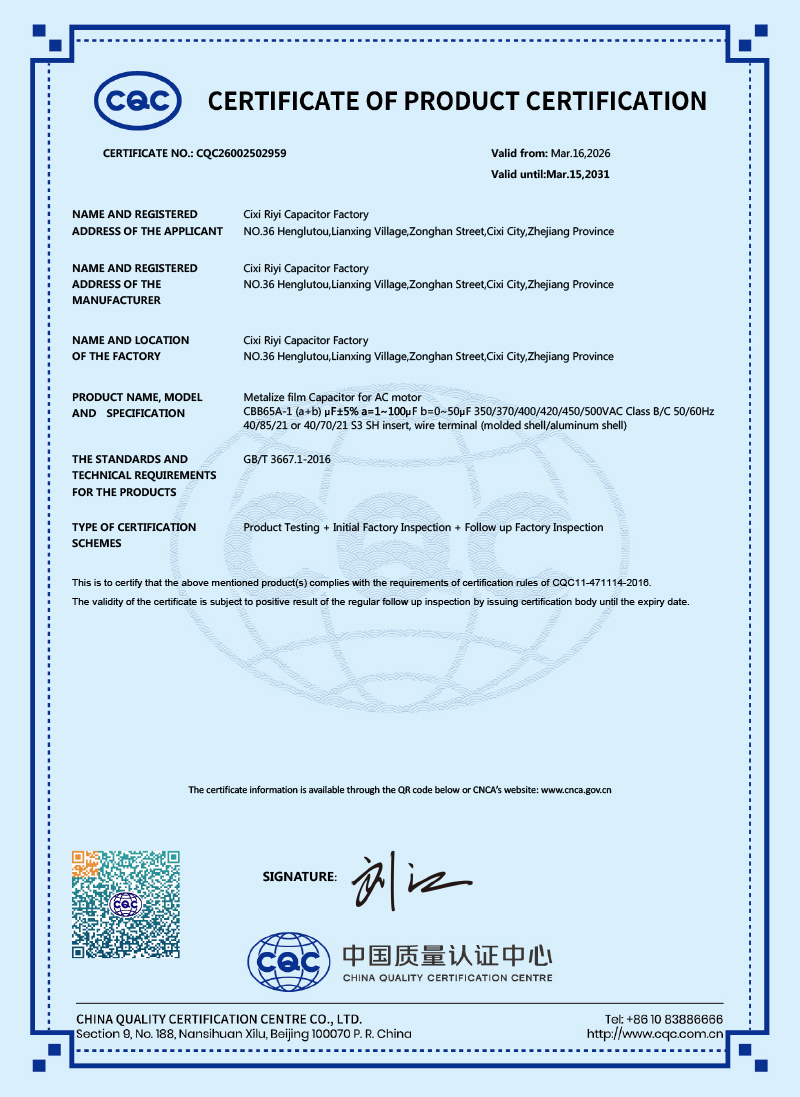
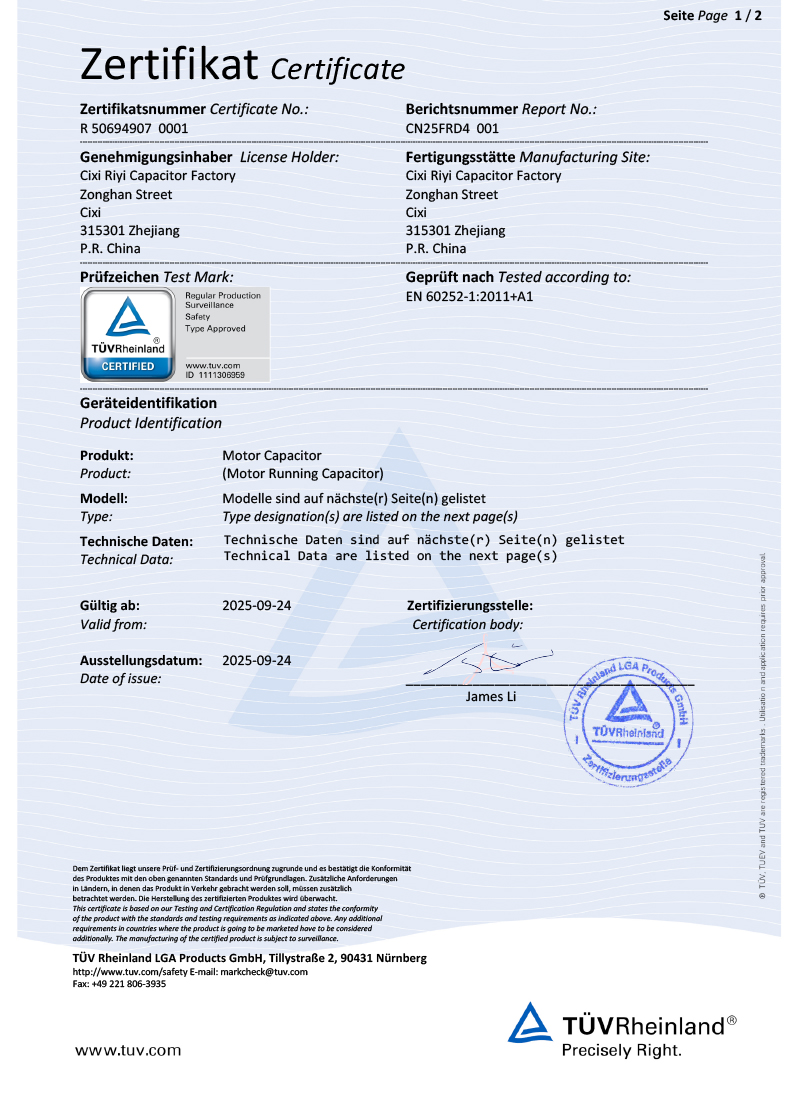
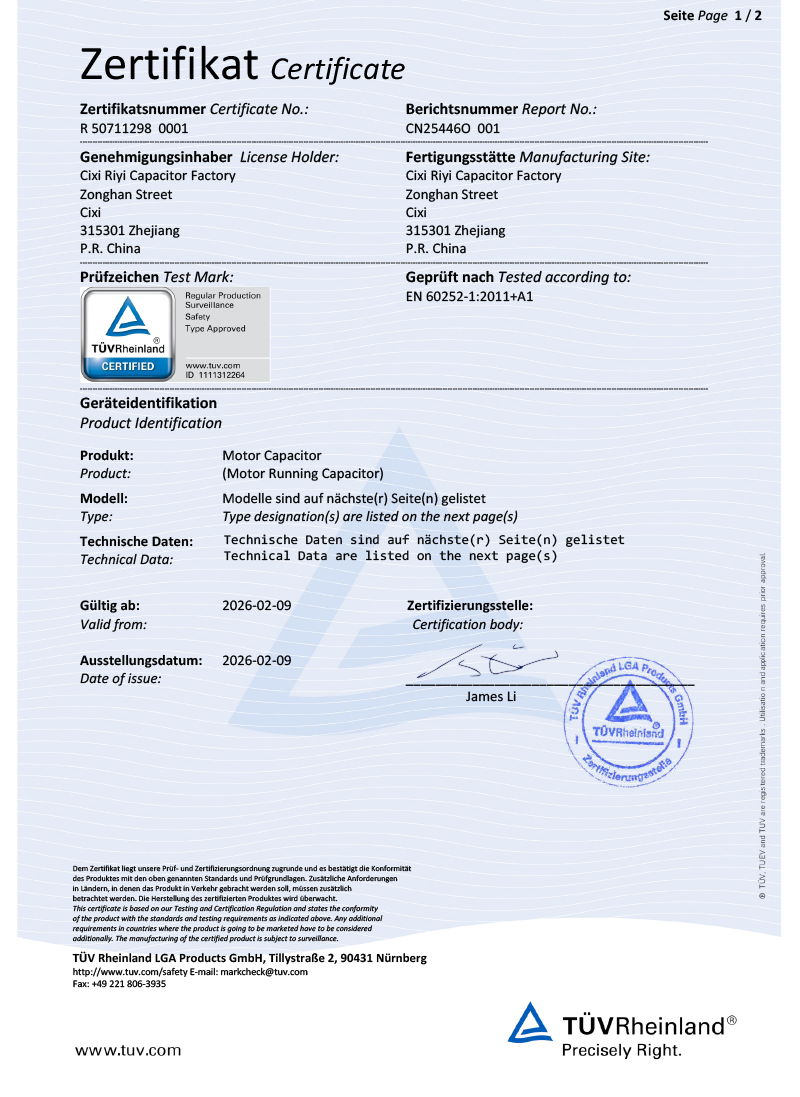
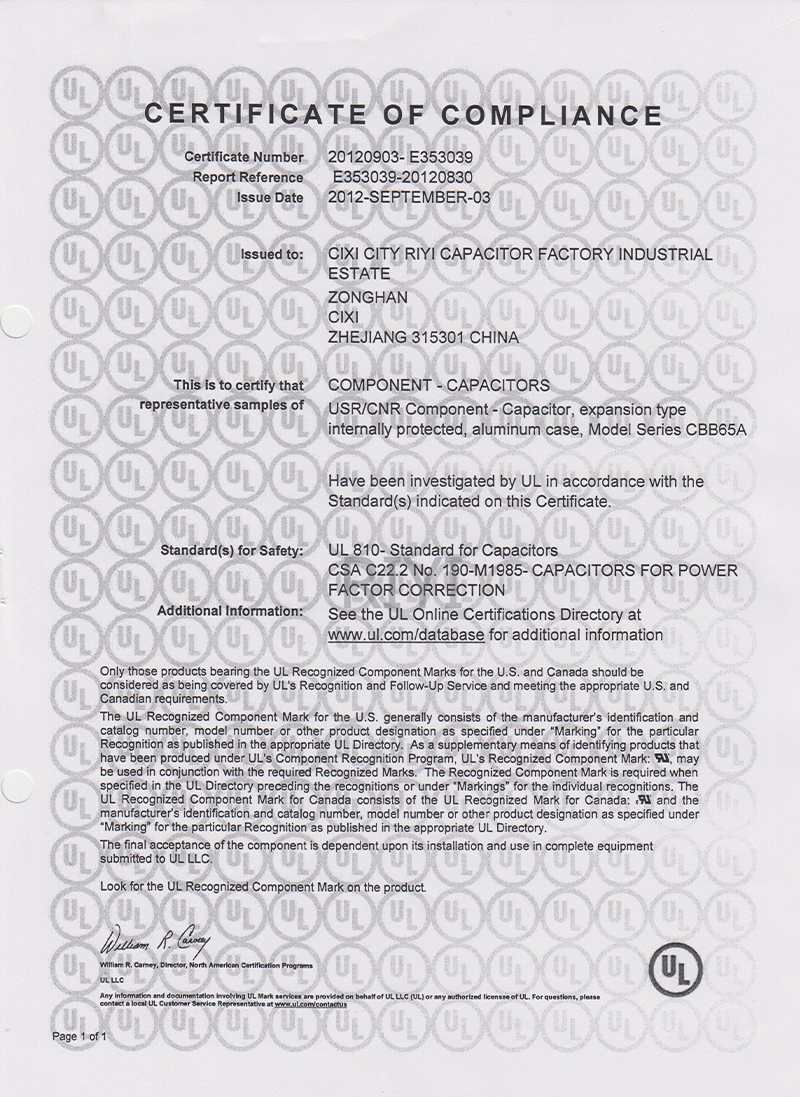
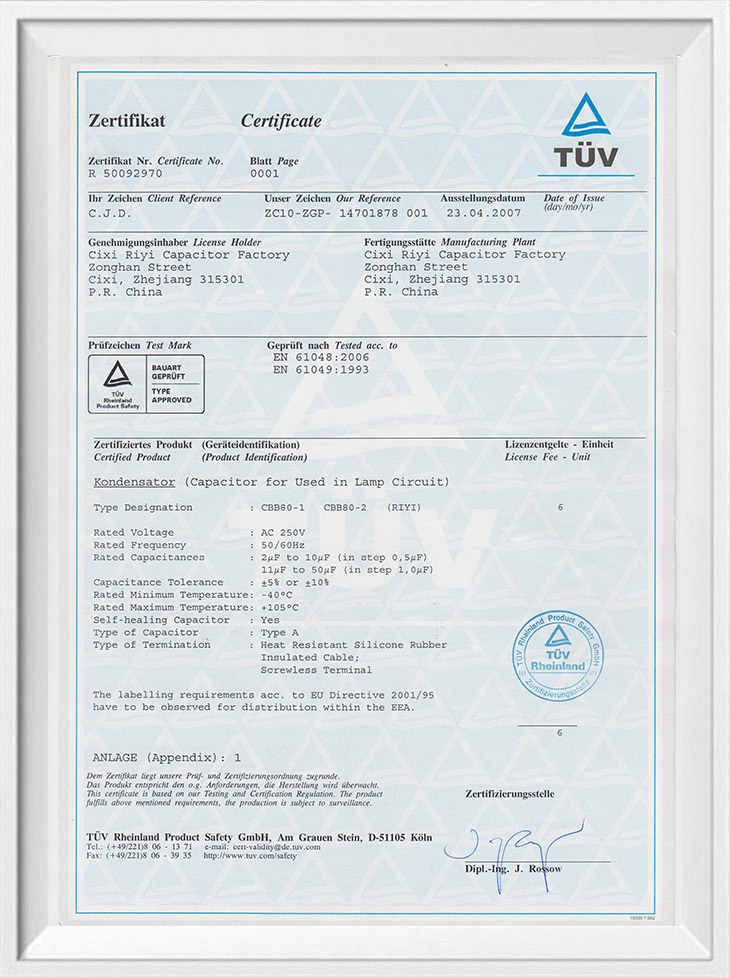
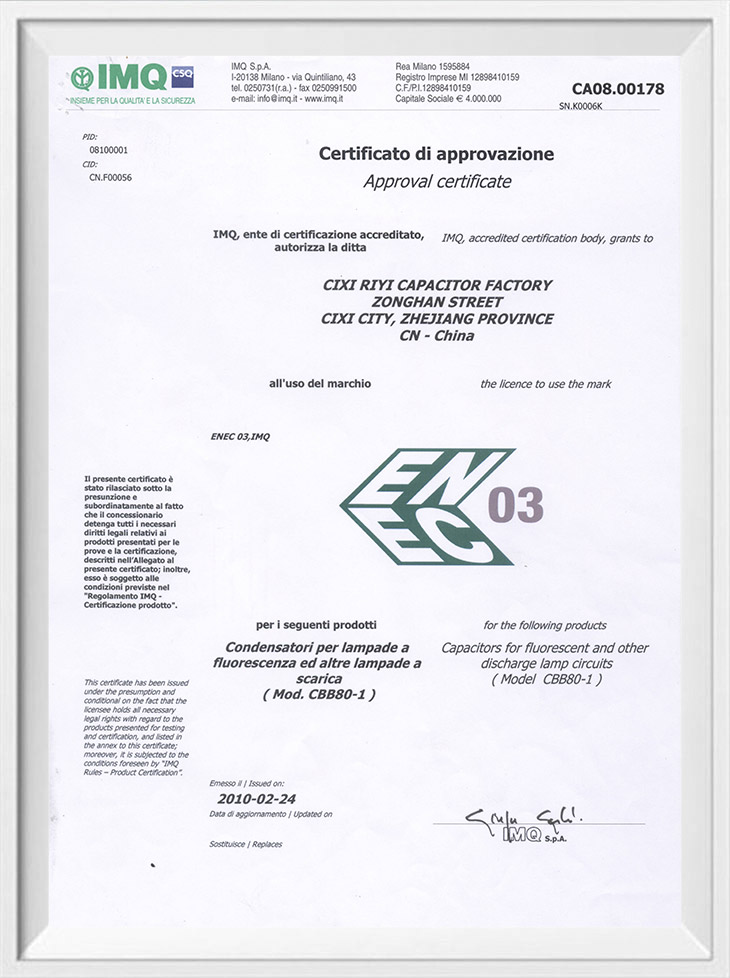
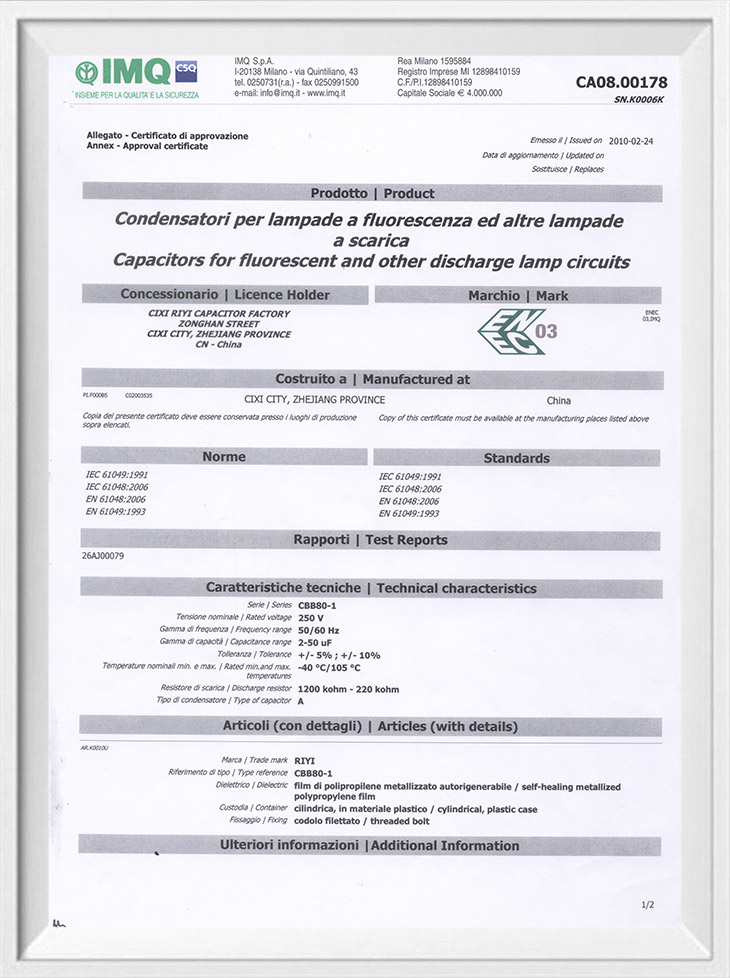
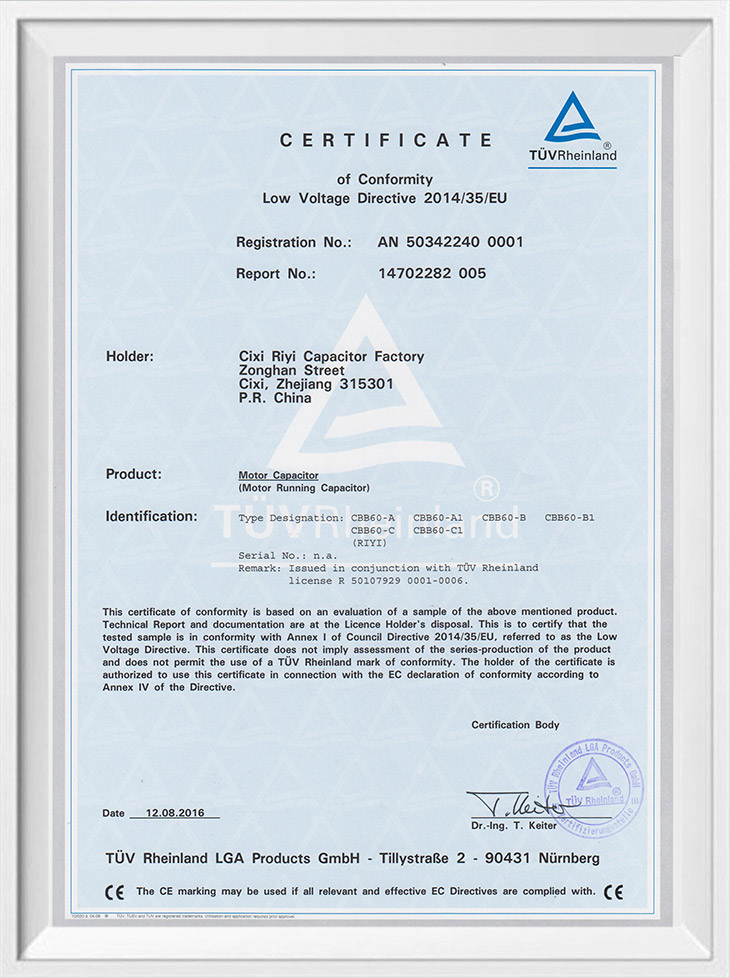
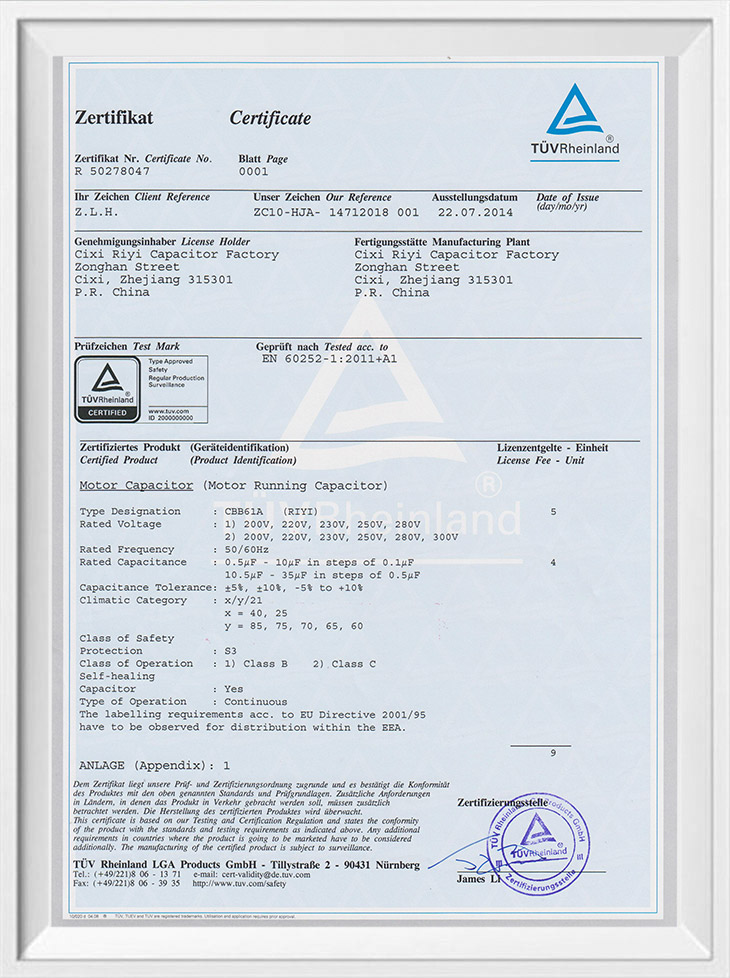
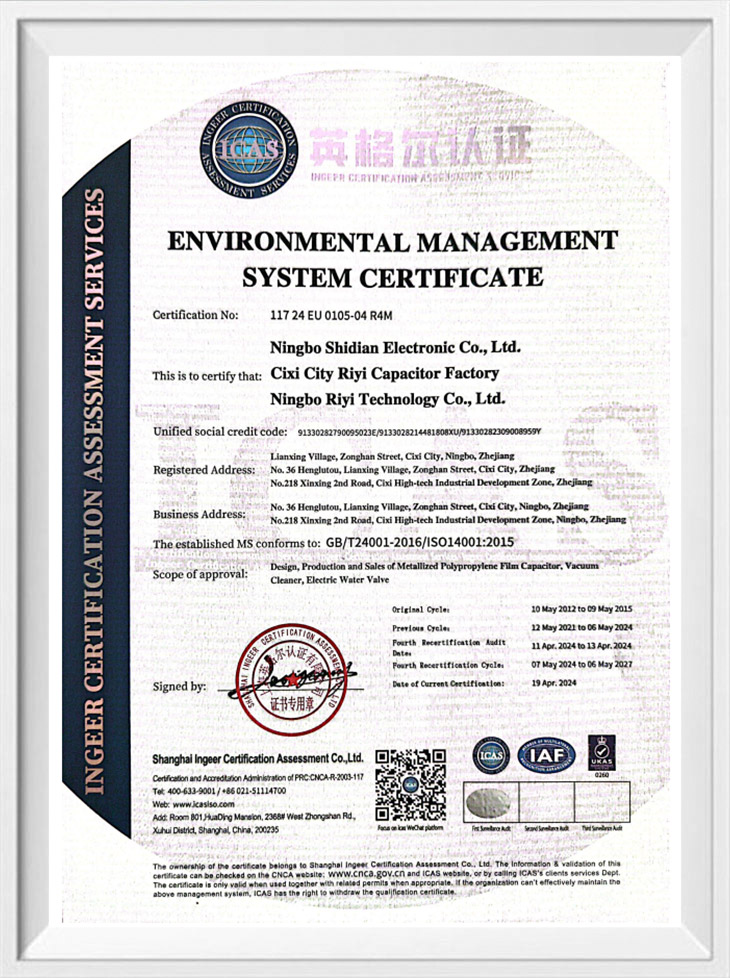
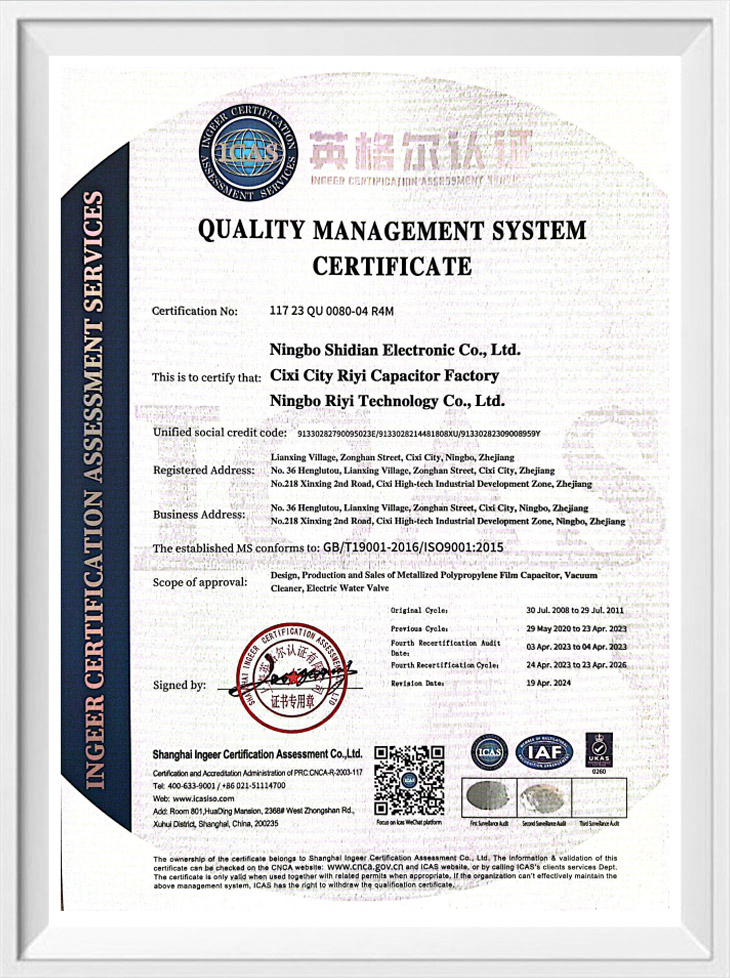
The company has 25,000 square meters of industrial plants and production for the workshop. Has strong technical force, advanced equipment, exquisite workmanship, and perfect detection means. It is market-oriented and based on the principle of meeting the customer's needs, while researching and producing a series of products. It had passed the ISO9001 quality management system and the ISO14001environmental management system certification, and all kinds of products have obtained certificates such as CQC, TUV, VDE, IMQ, UL, CE, etc.
Since its inception, the company has worked hard, strives for excellence, and with utmost dedication, it serves the electronics industry, power industry, household electrical appliance industry, and provides support services for high-tech enterprises. And as a result, we won the trust of our customers and became a well-known enterprise at home and abroad.
RIYI looks forward to working with your cooperation and creating a better tomorrow!

CBB80 Lamp Power Factor Compensation Capacitor Manufacturers
The CBB80 Lamp Power Factor Compensation Capacitor range provides power compensation for lighting equipment, one of the core product lines of the factory alongside AC motor capacitors and filters.
Product Types:
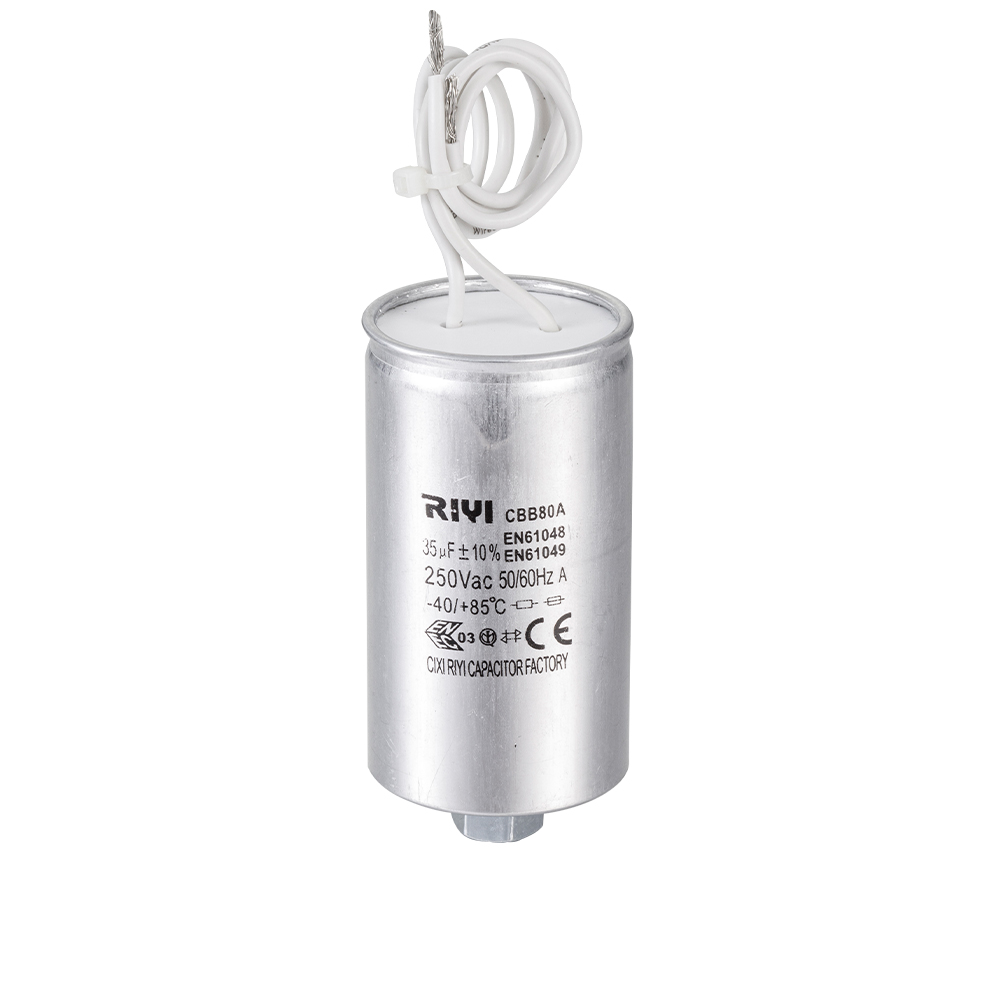
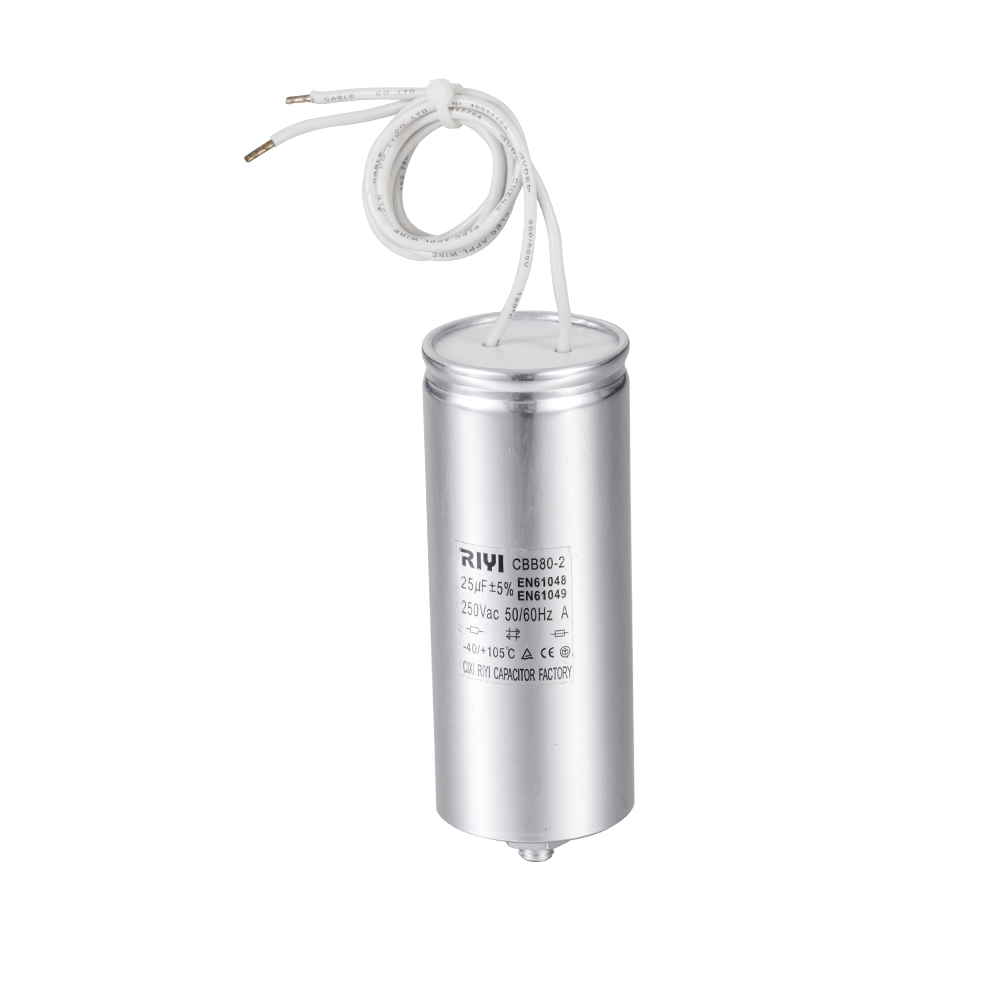
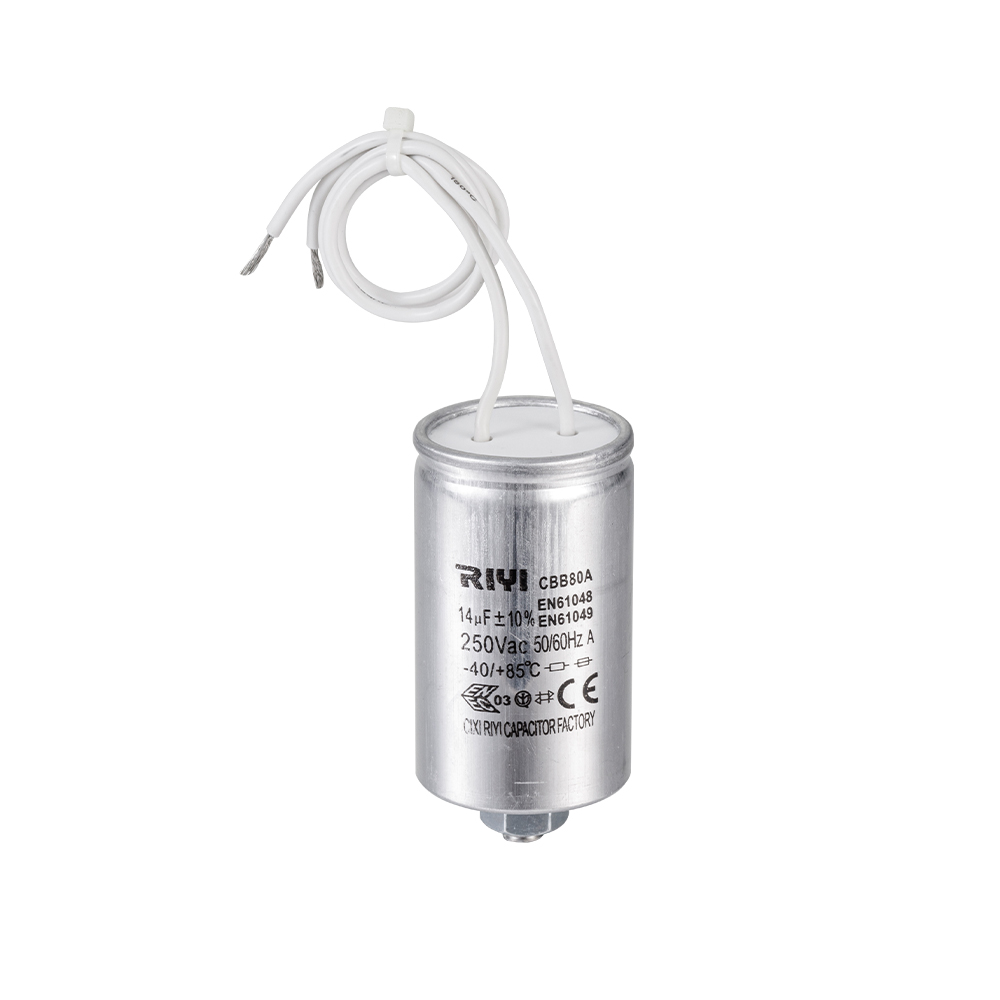
• Aluminum Housing: aluminum shell models with lead or VDE silicone wire, with screw, resistance and electric fuse, including 85℃ and 105℃ lead versions.
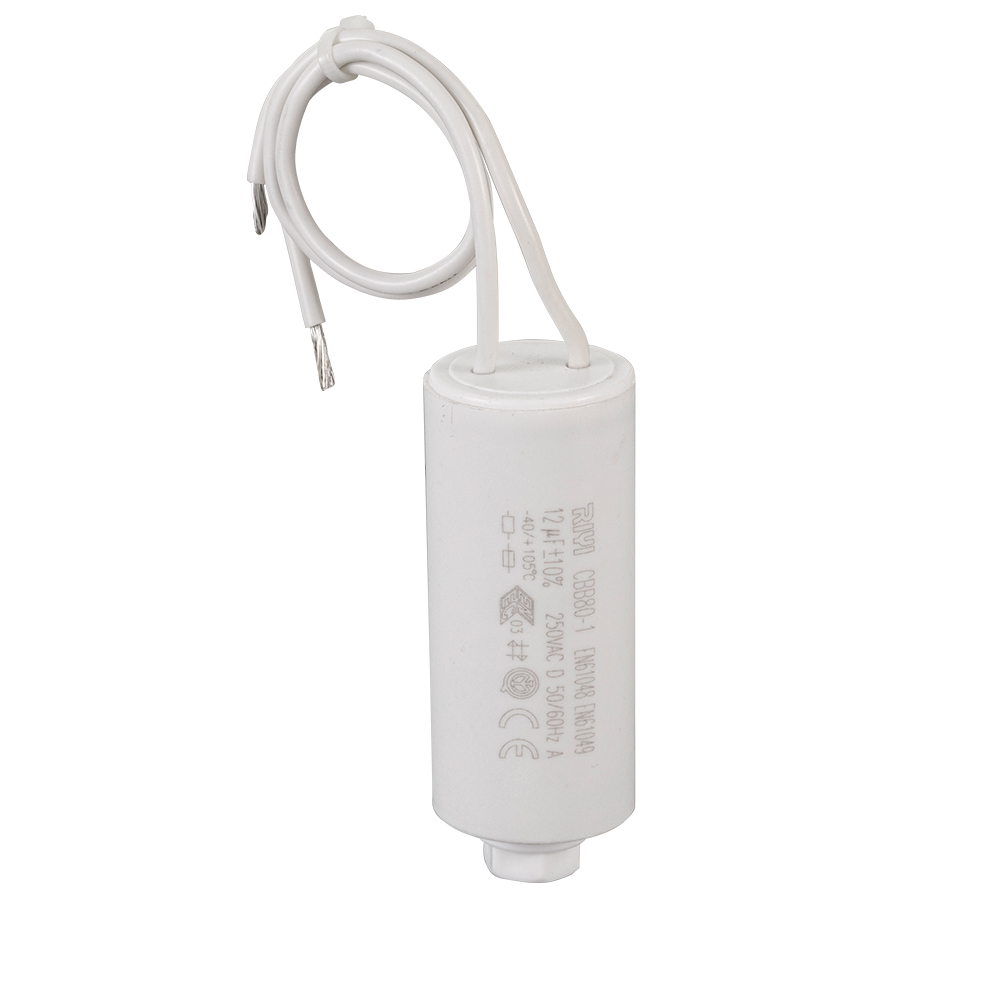
• Plastic Shell: 12uF, 20uF and 45uF 250V models with 85℃ VDE line, fuse, resistance and screw.
Key Features:
• Power factor compensation built on polypropylene film technology.
• Models supplied with resistance and an electric fuse.
• Temperature ratings of 85℃ and 105℃ named in the models.
• VDE line or VDE silicone wire on selected models.
Typical Applications:
• Industrial lighting.
• High-intensity discharge (HID) lamps.
Buying from Cixi Riyi:
• We wholesale lighting capacitors and compensation capacitors.
• Custom products are developed from your drawings or samples.
• The factory is ISO9001 and ISO14001 certified, and its products have obtained certificates such as CQC, TUV, VDE, IMQ, UL and CE.
CIXI RIYI CAPACITOR FACTORY
CERTIFICATE OF HONOR
- <
- <
- <
- <
- <
- <
- <
- <
- <
- <
- <
NEWS UPDATE
MESSAGE FEEDBACK
Industry knowledge
CBB80 Lamp Power Factor Compensation Capacitor, Built Around Lamp Circuits
Cixi Riyi Capacitor Factory manufactures the CBB80 Lamp Power Factor Compensation Capacitor for luminaires that run on magnetic ballasts: high-intensity discharge lamps, high-pressure sodium and metal halide fixtures, and the industrial lighting assemblies built around them. The capacitor supplies the reactive current the ballast draws, lifting the power factor at the fixture and reducing the current carried by the supply cable.
Every model uses a polypropylene film winding in a compact housing, supplied with a screw fixing, an internal electric fuse and a discharge resistance. Choose an aluminum housing where the luminaire runs hot or the capacitor sits inside a closed gear compartment, or a plastic shell model for open trays and standard 250 V fixtures.
| 25,000 m²plant and workshop area | 60,000 pcsdaily capacitor output | 150+staff, 21 technical, 3 engineers | ISO 9001 / 14001plus CQC, TUV, VDE, IMQ, UL, CE |
Two Housing Groups Across Our CBB80 Range
As CBB80 Lamp Power Factor Compensation Capacitor Manufacturers, we build both housing groups on one electrical platform and separate them by housing material, temperature class and termination.
Aluminum Housing
- Lead 85 ℃ with screw, resistance and electric fuse.
- Lead 105 ℃ with screw, resistance and electric fuse.
- VDE silicone wire 85 ℃ with screw, resistance and electric fuse, specified for HID lamp compensation.
Metal shells carry heat out of enclosed industrial luminaires.
Plastic Shell
- 12 µF, 20 µF and 45 µF at 250 V, 85 ℃.
- VDE line with fuse, resistance and screw on all three.
- Shared rating and temperature class, so capacitance is the deciding variable.
Suited to open gear trays and volume lighting programs.
Where the Compensation Capacitor Sits in the Lamp Circuit
- The magnetic ballast draws a lagging current from the mains through the luminaire.
- The CBB80 capacitor is connected across the supply side of the ballast and supplies leading reactive current.
- Net current drawn from the distribution board falls, and the power factor measured at the fixture improves.
- Lamp current is governed by the ballast, so the capacitance value is matched to the ballast rating and the fixture supply voltage.
- Series-mounted discharge resistors keep the terminals safe after switch-off, and the electric fuse isolates the element on internal failure.
Reading the Model Code: Capacitance and Temperature Class
The plastic-shell family shares one 250 V, 85 ℃ platform, so the model number tells you the capacitance directly. Bar length below is drawn to scale against the largest value in that group.
| Plastic-shell model | Capacitance | Relative section size |
|---|---|---|
| CBB80 12 µF 250 V 85 ℃, VDE line | 12 µF | |
| CBB80 20 µF 250 V 85 ℃, VDE line | 20 µF | |
| CBB80 45 µF 250 V 85 ℃, VDE line | 45 µF |
| 85 ℃ class Lead and VDE silicone wire |
105 ℃ class Lead version |
Configuration Table: What Each Model Carries
| Housing group | Model designation | Temperature | Termination | Included protection |
|---|---|---|---|---|
| Aluminum | Lead, screw fixing | 85 ℃ | Lead | Resistance + electric fuse |
| Aluminum | Lead, screw fixing | 105 ℃ | Lead | Resistance + electric fuse |
| Aluminum | VDE silicone wire, screw fixing | 85 ℃ | VDE silicone wire | Resistance + electric fuse |
| Plastic shell | 12 µF 250 V, VDE line, screw fixing | 85 ℃ | VDE line | Fuse + resistance |
| Plastic shell | 20 µF 250 V, VDE line, screw fixing | 85 ℃ | VDE line | Fuse + resistance |
| Plastic shell | 45 µF 250 V, VDE line, screw fixing | 85 ℃ | VDE line | Fuse + resistance |
Installation and Operating Boundaries
- Mount the body on the screw fitting inside the gear compartment so the housing does not touch the ballast or igniter.
- Connect the leads or VDE wire according to the luminaire wiring diagram; the film element is non-polarised, so orientation does not set the connection.
- Match the model voltage to the fixture supply voltage, and never combine values beyond the ballast design rating.
- Select 85 ℃ for open luminaires and 105 ℃ where measured ambient inside the housing is high, typically in enclosed high-bay fittings.
- Allow stored charge to bleed through the fitted resistance before touching terminals during service, and confirm with a meter.
Production Capacity and Quality Control Behind CBB80 Orders
Film slitting and element winding are handled in our own workshop, supported by inspection instruments on site. Eleven automatic slitting machines and fifteen imported automatic winding machines feed the capacitor lines, giving a daily output of 60,000 pieces across the product families.
| Slitting machines | 11 | |
| Automatic winding machines | 15 |
The factory holds ISO 9001 quality management and ISO 14001 environmental management system certification, and capacitor products carry certificates including CQC, TUV, VDE, IMQ, UL and CE. Certificate scope for a specific model is confirmed at order stage, and we agree the acceptance items with you before production begins.
Information We Use to Configure Your Solution
| Project input | What we need | Why it decides the build |
|---|---|---|
| Electrical duty | Capacitance, rated voltage, mains frequency, ballast type | Sets the element and the compensation level at the fixture |
| Thermal environment | Ambient inside the gear compartment, enclosed or open fixture | Points to the 85 ℃ or 105 ℃ class |
| Housing and fixing | Aluminum or plastic shell, screw position, available space | Determines housing group and mounting interface |
| Termination | Lead length, VDE line or VDE silicone wire, terminal style | Fixes the wiring interface to your ballast assembly |
| Marking and approval | Certificate requirement, printed rating, brand marking | Aligns the delivered part with your market entry |
| Custom development | Drawing or physical sample with target value | Basis for a non-standard capacitance or lead configuration |
Other Capacitor Lines From Our Factory
The same plant produces CBB65 explosion-proof run capacitors for air conditioning, pump and compressor motors — see AC CBB65 Explosion-Proof Capacitor Manufacturers — alongside CBB60 motor run capacitors in aluminum and plastic cases and CBB61 square motor capacitors with insert or lead terminals.
Frequently Asked Questions
What is a CBB80 capacitor used for?
It compensates the reactive current drawn by magnetic ballasts in discharge lighting. Fitting it at the luminaire raises the power factor of the fixture and lowers the current the supply cable has to carry, which matters most on high-bay and street lighting installations with many lamp points.
Which capacitance and voltage values do you build?
The plastic-shell group covers 12 µF, 20 µF and 45 µF at 250 V, 85 ℃, each with VDE line, fuse, resistance and screw fixing. Aluminum-housing models are supplied as lead or VDE silicone wire versions in 85 ℃ and 105 ℃ classes with the same fuse, resistance and screw arrangement.
How do I choose between aluminum and plastic housing?
Base it on heat and enclosure. Aluminum shells suit industrial luminaires where heat is trapped around the capacitor and where the 105 ℃ class is needed. Plastic shells suit open trays and standard 250 V fixtures, where all three models share one rating and differ only by capacitance.
Can you supply a non-standard capacitance or lead length?
Yes. We develop custom capacitors from customer drawings or samples, including capacitance values, lead or VDE wire length, housing dimensions and marking. Send the target value, the operating voltage and the space envelope, and we return a configuration for confirmation.
What production capacity stands behind a CBB80 order?
Our 25,000 m² workshop runs 11 automatic slitting machines and 15 imported automatic winding machines with a daily output of 60,000 pieces. Around 150 employees work on site, including 21 technical staff and 3 engineers, and shipments leave through the Ningbo and Shanghai port area.
Which approvals apply to these capacitors?
Cixi Riyi Capacitor Factory holds ISO 9001 and ISO 14001 system certification, and capacitor products have obtained certificates such as CQC, TUV, VDE, IMQ, UL and CE. We confirm the certificate that applies to the exact model, capacitance and termination you order before the order is released.

CONTACT US
MESSAGE US RIGHT NOW!
QR Code
Quick Links
Our Product
Contact us
- Tel: +86-13600614158
- E-mail: mina@cxriyi.com
- Address: Zonghan Street,Cixi City, Zhejiang Province, China.
Copyright © CIXI RIYI CAPACITOR FACTORY
All Rights Reserved.
 China capacitor lamp factory
Custom Cbb80 Lighting Capacitor Compensation Capacitor Manufacturers
China capacitor lamp factory
Custom Cbb80 Lighting Capacitor Compensation Capacitor Manufacturers